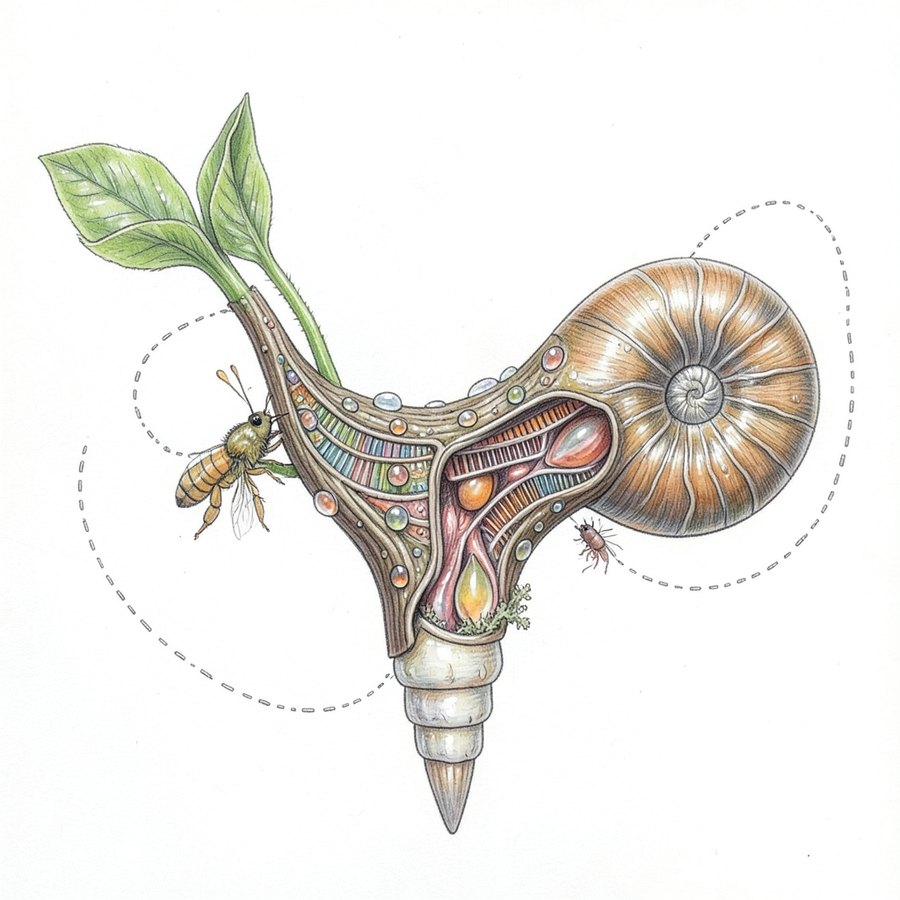
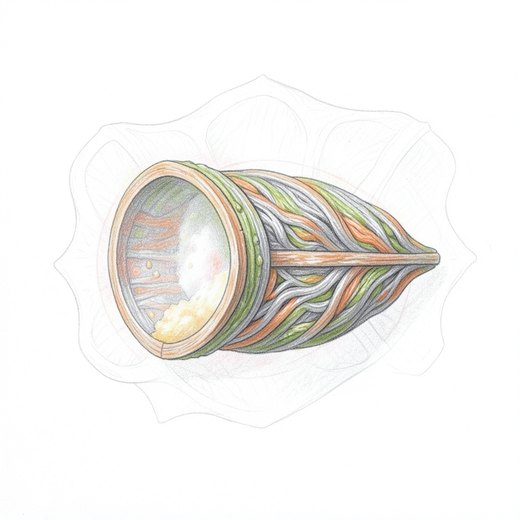
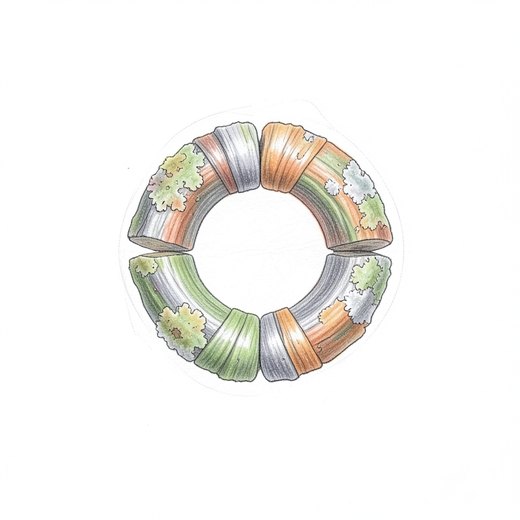
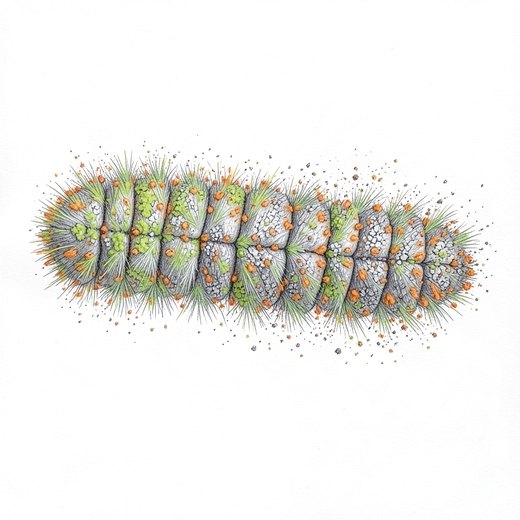
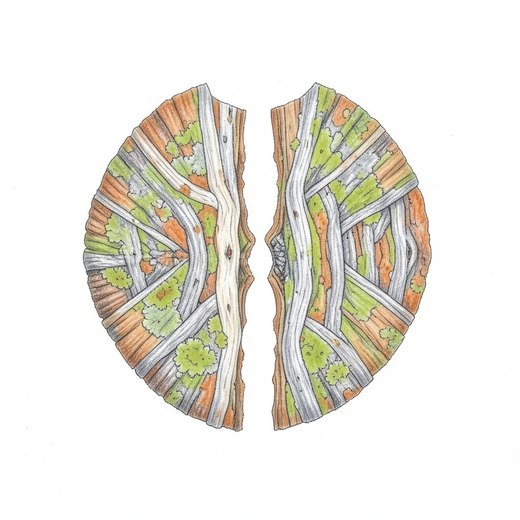
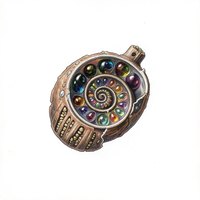
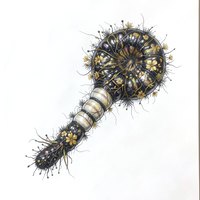
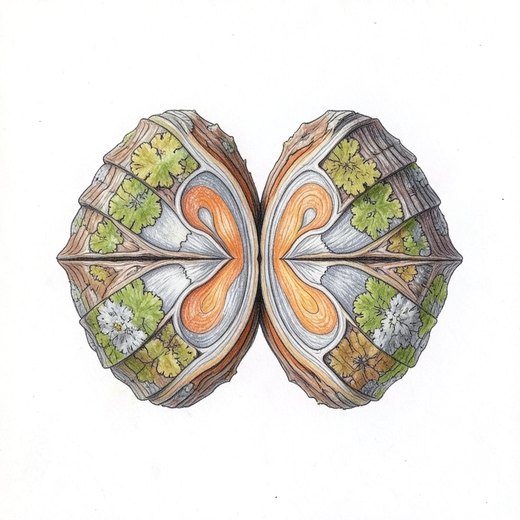
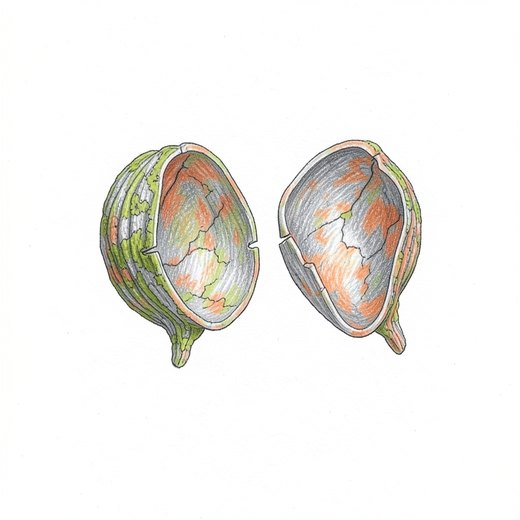
Plate LV. Pausiphonia articulans, the whole specimen.
Silence shapes music; a pause sets how long the listener waits, so what is withheld decides how the next sound is heard.
What is withheld decides what is heard.
behavior Two forms that never sound at once; each falls still exactly as the other begins.
provocation
Where would a pause make what you say next be heard?
Each draw is the being derived afresh by the current laws at another seed (laws §11); the chosen one leads (where they sit in the morphospace).
I Dissection
Each organ answers one question about the idea. The framed one, its mechanism, is
the dominant organ: the being's class, the one the idea could not lose and stay itself.
Fig. 1. Kernel
Negative space
Which premise, if it were false, would kill this idea?
Silence shapes music; a pause sets how long the listener waits, and the next sound is heard by how it ends that waiting.1
drawn as: pattern · view: series
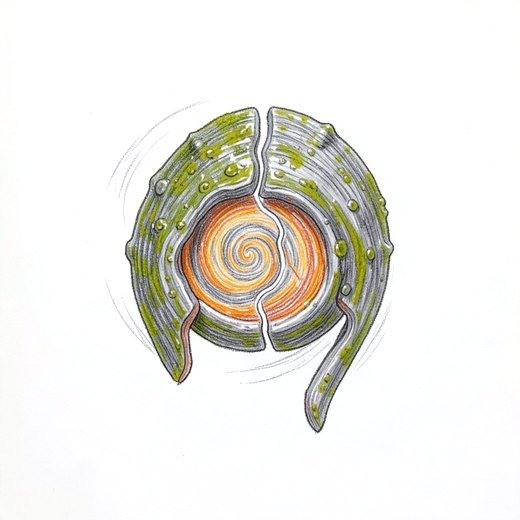
Fig. 2. Boundary
Rest
What sets it apart from what it is not, and how does it keep that distinction?
It is set apart from an interruption by being placed; a rest written into the form is music, and the same silence by accident is only a gap.2
drawn as: ring · view: in situ
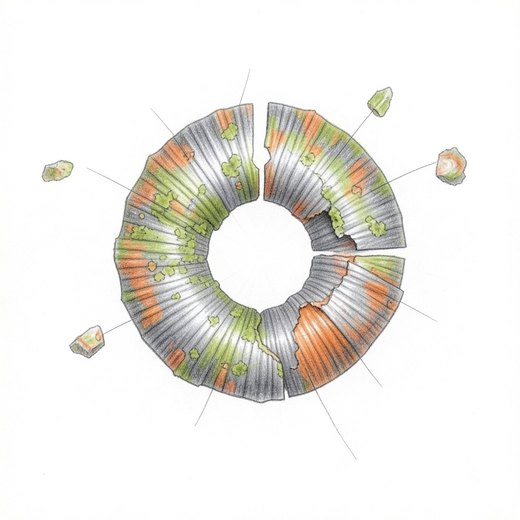
Fig. 3. Intake
Half cadence
What must it feed on to work? What has to be present, noticed or supplied?
It feeds on sounds that set up an expectation, and on a pause long enough to make that expectation felt.1
drawn as: materials · view: cast
Fig. 4. Mechanism
Caesura
❦ dominant organ
How does it turn what it takes in into what it gives out?
The pause holds the expectation open, and the brain marks the boundary between phrases most strongly in the silence itself.4
drawn as: spinneret · view: at work
Fig. 5. Output
Held breath
What does it make possible, visible or knowable?
It gives phrasing, suspense and weight, the held breath before a final chord, the gap that lets a melody speak.4
drawn as: structure · view: at work
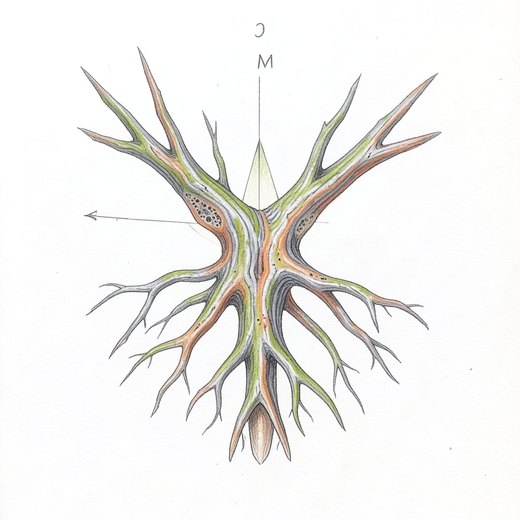
Fig. 6. Dispersal
Ma
What part of it travels into other minds, ideas and fields, and by what vector?
It travels as the rest and the fermata in notation, as the Japanese ma, the interval that gives form its time, and as the pause any speaker learns to hold.3, 2
drawn as: larva · view: magnified
Fig. 7. Decay
Dead air
What can it not digest, where does it fail, and what does it leave behind for others?
Too long a pause loses the thread and becomes a gap, and music with no pauses at all loses its shape; it cannot live at either extreme.1
Silence gives music its intervals; music gives silence a frame in which it is heard.
Fig. 9. Bond
Dovetail
What does each partner give the other, and in which direction does the claim run?
Silence gives music the time in which expectation grows, and music gives silence an edge that makes it heard. The claim runs from silence to music, the pause shaping what follows.1, 4
drawn as: bond · view: cross section
Fig. 10. Condition
Question and answer
Under what conditions does the bond hold, and when does it break?
The bond holds while a pause is framed by sounds that set up an expectation; without a phrase before it a pause is only quiet, and without one after it, it is an end.2
drawn as: condition · view: exploded
II Meaning associations
descent membership food web resemblance or friction
Brain activity at the boundaries between movements of a piece peaks in the silence between them, not in the last or first notes.
Listeners judge the same final chord more resolved after a longer pause, up to a limit beyond which the pause is heard as an ending.
Performers who vary their pauses are heard as more expressive than performers who vary their loudness by the same amount.
Fruits
study
The length of a held breath
Play listeners the same cadence after pauses of different lengths and record when it feels most resolved and when the pause starts to be heard as an ending, to find how long a silence can hold an expectation open.4, 1
How long can a pause hold a listener before it stops being music?
artwork
A concert of rests
A piece in which the performers play only the edges of phrases and hold the pauses between them, each pause lit and timed, and the audience marks where the music was felt most strongly, in the sounds or in the silences.
Where does music happen, in the notes or between them?
tool
The pause gauge
A practice tool for musicians and speakers that measures each pause against the phrase before it and shows when a pause holds the listener and when it has gone on so long that it becomes an end.1
Where would a pause make what you say next be heard?
bridge Music is built of waiting, and a silence is the purest form of waiting.
friction Silence asks to be left alone; music always fills it.
tension Is a rest in music a silence, or the opposite of one?
questions neither parent could ask
How long can a pause hold a listener before it stops being music?
Does the brain hear the boundary between phrases in the sound or in the silence?
What would a music made mostly of rests teach about listening?
symbiosis: What claim joins silence and music, and which way does it run?
candidate
emergence
depth
ground
distance
total
shaping-pause
3
2
3
2
10
A claim with a direction, from the pause to what follows. Meyer's account of expectation and brain recordings that mark phrase boundaries in the silence ground it. Close to what musicians already know, hence 2 on distance.
measured-rest
1
1
3
1
6
A notation, not a claim.
ma
2
3
2
2
9
Wider than music; it belongs to space and time in general, and becomes an echo of the principle.
dead-air
2
1
2
1
6
The silence music cannot frame; the principle's failure rather than the principle.
symbiosis: What principle, beyond the pause inside music, holds Silence and Music together?
candidate
emergence
depth
ground
distance
total
afterlistening
3
3
2
3
11
Neither parent alone; close to Cage's framing of a room's sounds, but caused by the music itself. The author's stars, 4.
civic-rests
2
2
2
2
8
A metaphor of a whole society as a score. The author's stars, 2.
counted-rest
2
2
2
2
8
True of ensembles, narrow. The author's stars, 2.
Record 2026-10-25-silence-x-music in lab/.
How it was drawn
its draw 1, a point in the morphospace (laws §8), drawn by flux-2-klein-4b.safetensors.
axis
value
from
book
artes
mutation
symmetry
radial 8
level
organization
parasitic
level
silhouette
ribbon
mutation
scale
microscopic
Music
proportion
tapering
mutation
growth
intercalary
Music
articulation
sutured
Silence
openness
lattice latent
Silence
skeleton
test latent
Music
locomotion
gliding latent
Silence
pattern
rosettes latent
Silence
coloration
eyespots latent
Silence
substance
bark
Silence
surface
glossy
Music
palette
lichen
Silence
luminosity
none
mutation
transparency
opaque latent
Music
gesture
interlaces
Music
unity
unmarked latent
mutation
modality
necessary latent
level
causation
formal latent
mutation
determinacy
unmarked latent
Silence
fusion
becoming
Silence
anomaly
none
Silence
graft
lenses
Silence
technique
crayon
Music
viewpoint
cutaway
mutation
value
unmarked latent
Silence
balance
cantilevered
Music
density
graded detail latent
Music
rhythm
regular latent
Silence
saturation
accent latent
mutation
appendages
beaded filaments, comb rows
Music
anchor (body)
a sensitive plant, its leaflets folding shut at a touch
Silence
anchor (detail)
an ammonite, a coiled chambered shell with frilled suture lines
Music
Sources
Leonard B. Meyer, Emotion and Meaning in Music (1956)
John Cage, Silence: Lectures and Writings (1961)
Arata Isozaki, Ma: Space-Time in Japan (exhibition, Cooper-Hewitt Museum, 1979)
Devarajan Sridharan, Daniel J. Levitin, Chris H. Chafe, Jonathan Berger and Vinod Menon, Neural Dynamics of Event Segmentation in Music: Converging Evidence for Dissociable Ventral and Dorsal Networks (Neuron, 2007)