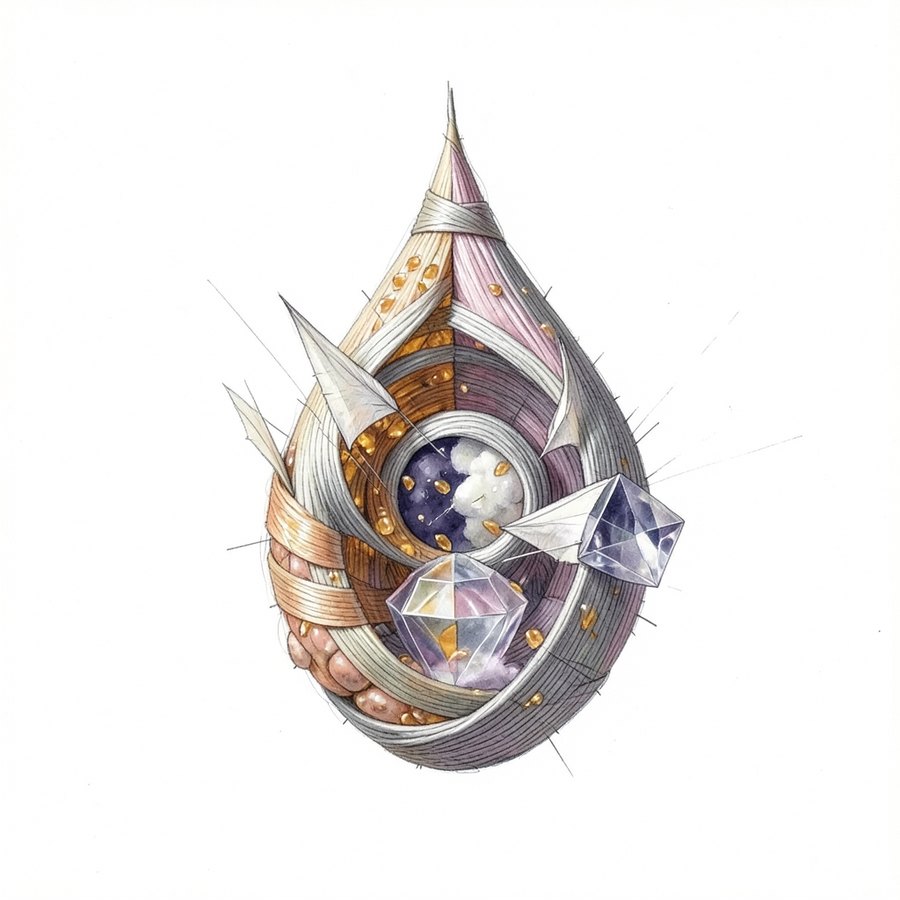
From Greek anamnesis, recollection, also the memorial prayer of a liturgy, and palimpsestos, scraped and written again; a recollection written over at each return.
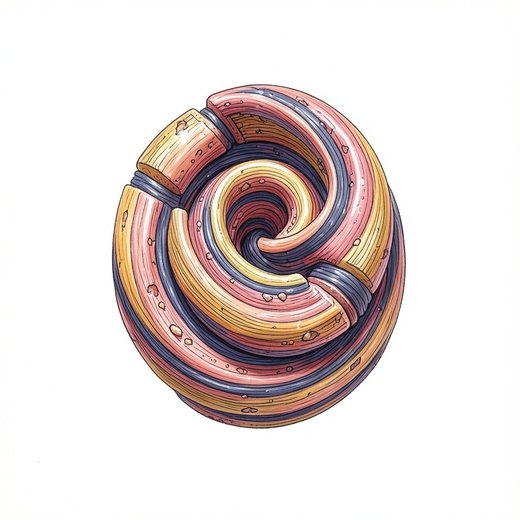
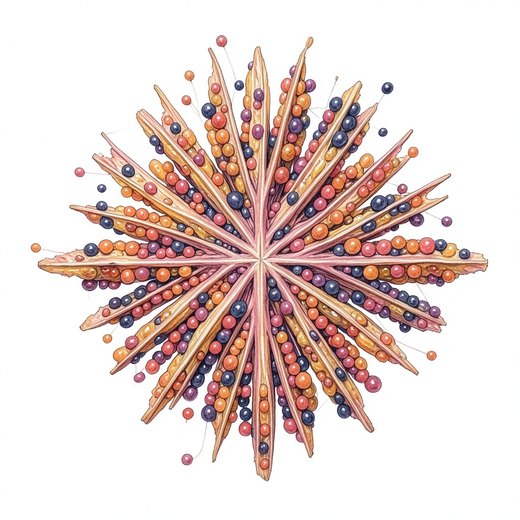
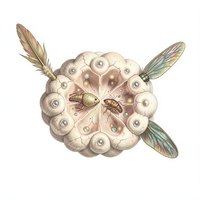
Plate LIII. Anamnestes palimpsestus, the whole specimen.
Each performance of a rite reopens the memory it marks to change, so a group's past is rewritten in steps, on the dates of its rites, while the form stays the same.
A people rewrites its past on the days it has set aside to remember it.
behavior Lies folded and still for most of the year; on the same day each year it unfolds, scrapes off its outer layer and grows a new one over the faint marks of the last.
provocation
Which anniversary do you keep, and how has what it means changed each time you kept it?
Each draw is the being derived afresh by the current laws at another seed (laws §11); the chosen one leads (where they sit in the morphospace).
I Dissection
Each organ answers one question about the idea. The framed one, its mechanism, is
the dominant organ: the being's class, the one the idea could not lose and stay itself.
Fig. 1. Kernel
Reconsolidation
Which premise, if it were false, would kill this idea?
Each performance of a rite is a recall, and each recall makes what is remembered changeable again, so a group rewrites its past on the calendar of its rites rather than continuously.1, 4
drawn as: first cell · view: exploded
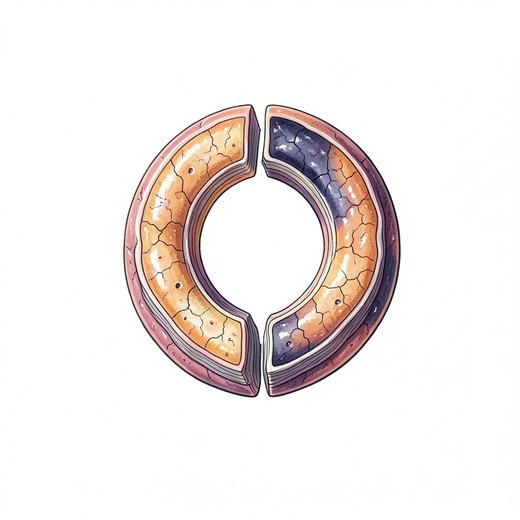
Fig. 2. Boundary
Rubric
What sets it apart from what it is not, and how does it keep that distinction?
It is set apart from tradition, which keeps the past, and from propaganda, which replaces it at will; here the form stays fixed and the meaning is rewritten only at the appointed returns.5
drawn as: wall · view: cross section
Fig. 3. Intake
Red-letter days
What must it feed on to work? What has to be present, noticed or supplied?
It feeds on dates that come back, a fixed form to perform, participants who still recall something, and whatever has happened since the last return.4, 6
drawn as: gathered material · view: detached
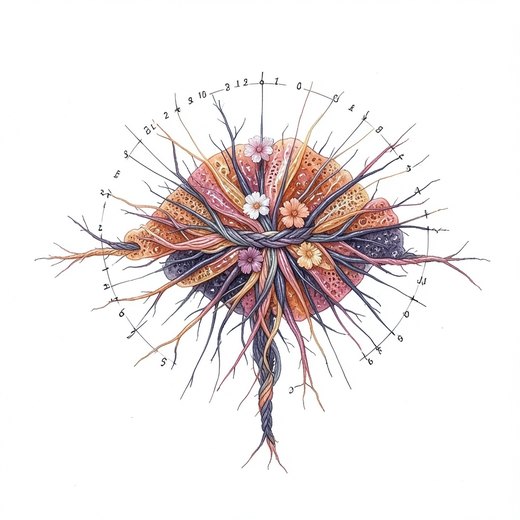
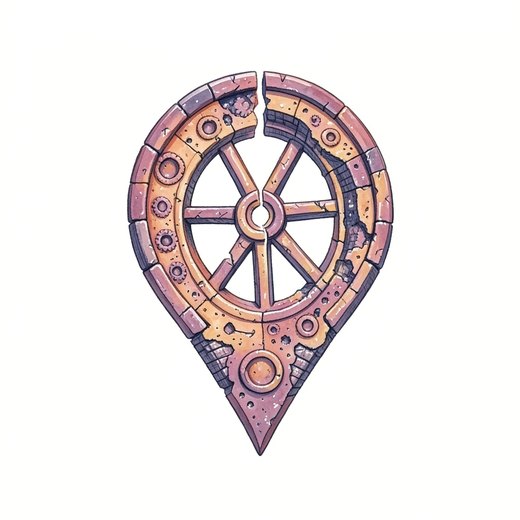
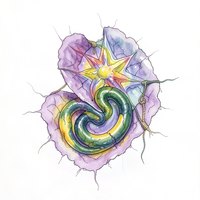
Fig. 4. Mechanism
Wheel of the year
❦ dominant organ
How does it turn what it takes in into what it gives out?
At each return the rite reopens the shared memory, the present lends it new meanings, and the form closes it again until the next date, so the past changes in steps, like a text scraped and written over.1, 2, 5
drawn as: weave · view: cast
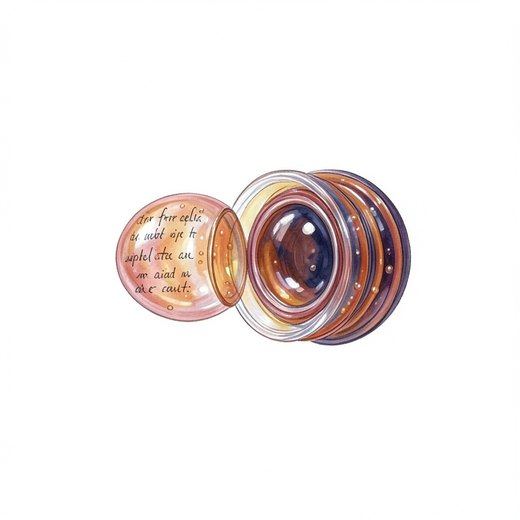
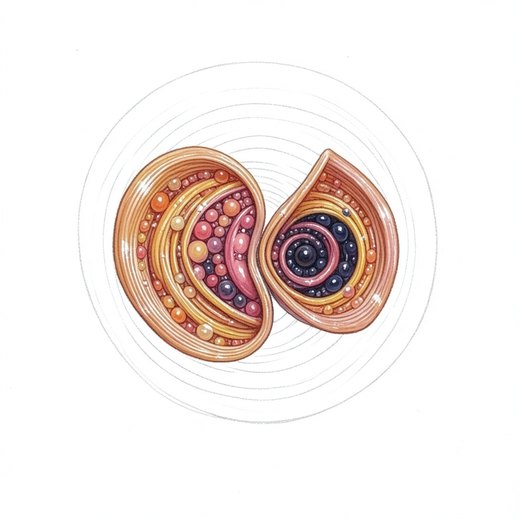
Fig. 5. Output
Palimpsest
What does it make possible, visible or knowable?
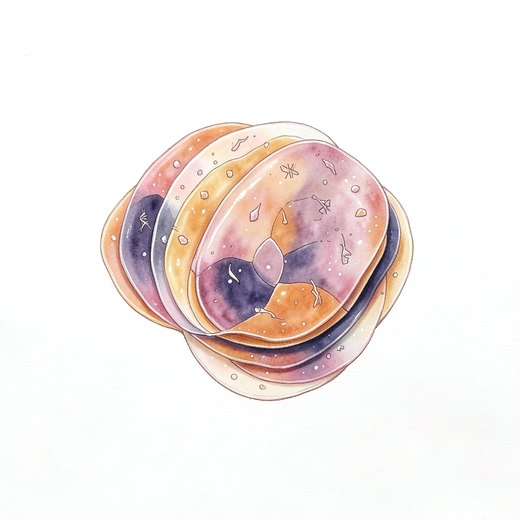
It gives a past that stays recognizable while its meaning keeps pace with the living, and dates on which a group can see how it has changed by what it now remembers.3, 6
drawn as: chamber · view: pressed
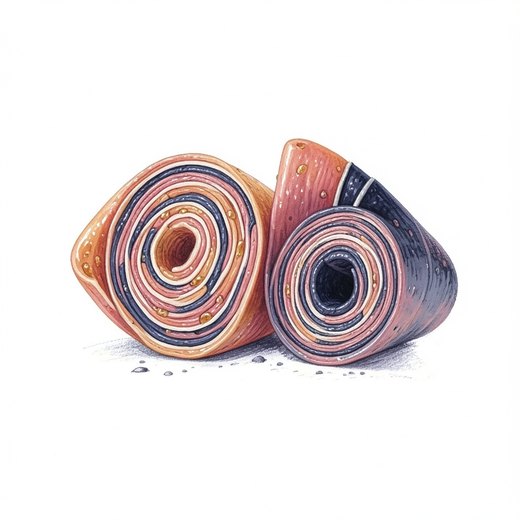
Fig. 6. Dispersal
Haggadah
What part of it travels into other minds, ideas and fields, and by what vector?
It travels in liturgies told as if each generation had been there itself, in national days whose meaning each generation argues over again, and in family stories retold each year.4
drawn as: copy · view: series
Fig. 7. Decay
Dead letter
What can it not digest, where does it fail, and what does it leave behind for others?
It breaks both ways; a form performed long after anyone recalls what it reopened rewrites nothing and becomes empty routine, and a memory recalled with no fixed form drifts unseen, with no date on which the change could be noticed.7
Ritual gives the fixed form and the date; Memory gives the trace that each return reopens.
Fig. 9. Bond
Escapement
What does each partner give the other, and in which direction does the claim run?
Ritual gives Memory a calendar and a form that does not change, so its rewritings come in steps that can be seen; Memory gives Ritual the reason each return still matters. The claim runs from rite to memory; the rite sets when the past is rewritten.4, 1
drawn as: bond · view: at work
Fig. 10. Condition
Living memory
Under what conditions does the bond hold, and when does it break?
It holds while the rite is performed by people who still recall something of what it marks, and while its returns are spaced widely enough for the world to change between them; it breaks when the form outlives every recall, or is repeated so often that it reopens nothing.7, 8
drawn as: condition · view: cross section
II Meaning associations
descent membership food web resemblance or friction
Bred by symbiosis, complementary ideas held together, in the ritual habitat, which selects repetition, shared attention, the sacred.
What it changes in its parents
Ritual: Ritual does more than keep a form. Its fixed calendar is what lets memory change in visible steps; it keeps the form so that the meaning can be revised.
Memory: Memory's rewriting is not only a private drift; groups schedule it. The calendar decides when the past is open.
the Passover Seder, told each year as if those at the table had left Egypt themselves
a national holiday whose meaning each generation argues over again
a family story told differently at every wedding
a yearly visit to a grave
If it is right
How a group describes a past event changes more around the event's anniversary than in the rest of the year, so a record of its descriptions over time, in newspapers, speeches or encyclopedia revisions, changes in steps rather than smoothly.
Fights over the meaning of the past gather on the dates of its rites, as when Columbus Day became Indigenous Peoples' Day in many places, or in the protests held on Australia Day.
A rite performed often fixes its meaning and reopens little, while a rare rite, once a year or once in a life, reopens more.
For a person, the anniversaries of a loss are when its memory is most open to change, which may be why grief so often returns on those dates.
Fruits
study
Anniversary steps
Take the revision histories of encyclopedia articles about historical events, and decades of newspaper coverage, and measure how much their wording changes on each day of the year. The being predicts peaks at the anniversaries, and steps in meaning from one anniversary to the next.
Does a group rewrite its past on its own calendar?
ritual
The yearly rereading
A rite for a family, a team or a town. Once a year, on a fixed date, its founding story is told again from memory and then set beside last year's written version. What changed is written beneath it, and every version is kept. The rewriting that a rite usually hides is made visible, a palimpsest kept on purpose.
Which anniversary do you keep, and how has what it means changed each time you kept it?
institution
The layered memorial
A monument whose words are never replaced. Once a year a new plate is added beneath the old ones, written by those alive that year, so the memorial shows how a people's reading of the same event has changed.
What would a memorial look like if it remembered its own rewritings?
practice
The appointed recall
In mourning or in therapy, a small deliberate rite on an anniversary that reopens a painful memory and retells it in a new light. It is the rescripting rite that came close in judgement, returning as a fruit.9, 1
Can a date be chosen on which a memory is allowed to change?
bridge Both are the past acting in the present through repetition, and both are kept by groups, not only by individuals.
friction Ritual assumes the form must stay fixed to work; Memory assumes the trace must change to stay alive. One carries the past by keeping its shape, the other by losing it.
tension When a group repeats a fixed form in order to remember, what in the past is kept and what is rewritten?
questions neither parent could ask
If every recall rewrites, is every performance of a rite a rewriting of what it commemorates?
Is a handshake a memory with nothing left to remember?
Can a rite be designed to make a memory change, rather than to keep it?
symbiosis: What principle binds a form that must not change to a trace that must?
candidate
emergence
depth
ground
distance
total
anniversary-rewriter
3
3
2
3
11
It needs Memory's rewriting on recall and Ritual's fixed date and form. Reconsolidation is shown in individuals; that a group's memory changes in steps on its ritual dates is a reasoned extension, not a measured fact.
rescripting-rite
2
3
3
2
10
Mostly Memory's mechanism with a small rite around it; imagery rescripting and reconsolidation-based therapy ground it.
songline
2
2
3
1
8
The rite as a memory device is a well-known reading.
recitation
1
1
3
0
5
Rote learning, the most familiar meeting of the two. A zero fails it.
Record 2026-10-21-ritual-x-memory in lab/.
How it was drawn
its draw 1, a point in the morphospace (laws §8), drawn by flux-2-klein-4b.safetensors.
axis
value
from
book
nidi
Ritual
symmetry
biradial
mutation
organization
paired
level
silhouette
spire
mutation
scale
microscopic
Ritual
proportion
even latent
mutation
growth
accretion
Memory
articulation
tethered latent
Memory
openness
sheet latent
Memory
skeleton
spicules latent
Memory
locomotion
drifting latent
Memory
pattern
rosettes latent
mutation
coloration
plain latent
Memory
substance
amber
mutation
surface
scaled
Ritual
palette
dusk
Ritual
luminosity
none
Ritual
transparency
layered
Memory
gesture
bursts
Ritual
unity
integral latent
Ritual
modality
necessary latent
mutation
causation
efficient
Memory
determinacy
unmarked latent
mutation
fusion
replaced
mutation
anomaly
petrified
Memory
graft
none
Ritual
technique
gouache
mutation
viewpoint
profile
Memory
value
flat latent
Ritual
balance
cantilevered latent
Ritual
density
graded detail latent
mutation
rhythm
unmarked latent
Memory
saturation
muted
Memory
appendages
sails
Memory
anchor (body)
a silk cocoon, an oval case of wound threads around an insect pupa
Ritual
anchor (detail)
a fluorite octahedron, glassy and colour-zoned
Memory
Sources
Karim Nader, Glenn Schafe and Joseph LeDoux, on memory reconsolidation (Nature, 2000)
Frederic Bartlett, Remembering (1932)
Maurice Halbwachs, Les cadres sociaux de la mémoire (1925)
Paul Connerton, How Societies Remember (1989)
Eric Hobsbawm and Terence Ranger, eds., The Invention of Tradition (1983)
Jan Assmann, Das kulturelle Gedächtnis (1992)
Harvey Whitehouse, Modes of Religiosity (2004)
David Rubin, Memory in Oral Traditions (1995)
George Pollock, Anniversary reactions, trauma, and mourning (Psychoanalytic Quarterly, 1970)