a founder of the codex
Equinox
Isohemera bifrons·the Hinge of the Year
From Greek isos, equal, and hemera, day, and Latin bifrons, two-faced like Janus; the equal day that faces both ways.
- Level
- Conceptorganism
- Book
- Uranographiathe celestial atlas
- Phylum
- Balanceimage schema
- Class
- Boundaryits orbit
- Niche
- Producerraw experience
- Mode
- Referencehow it keeps existing
- Stage
- Matureindividuated
- Status
- Living
- Habitat
- Ruin
Its kinds · Roget, 1852: Time · Wilkins, 1668: Space · WordNet, 1990: Time · Llull, 1308: D · Heaven
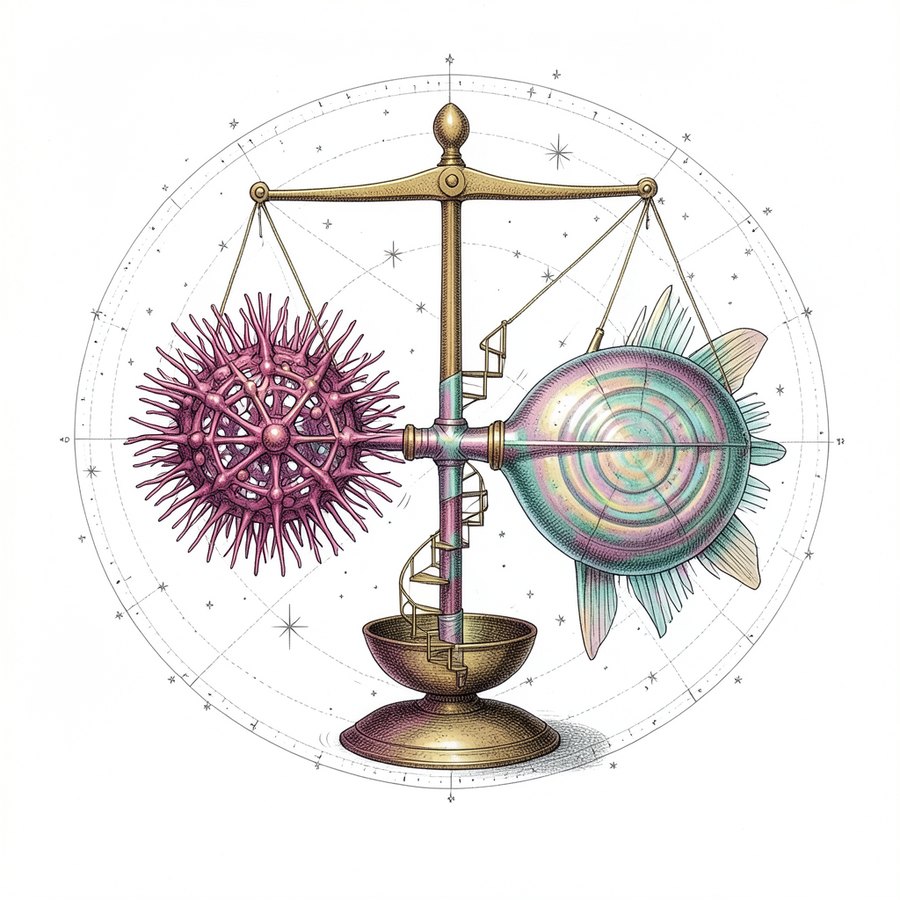
Day and night are equal only at the instant the year passes from one side to the other, so a balance can be a crossing that no one can stay in.
Balance is not a state but a crossing.
behavior Turns slowly to keep one half lit and one half dark, and holds level for a single moment twice a year.
What else in your life is balanced only at the moment it changes sides?
I Dissection
Each organ answers one question about the idea. The framed one, its boundary, is the dominant organ: the being's class, the one the idea could not lose and stay itself.
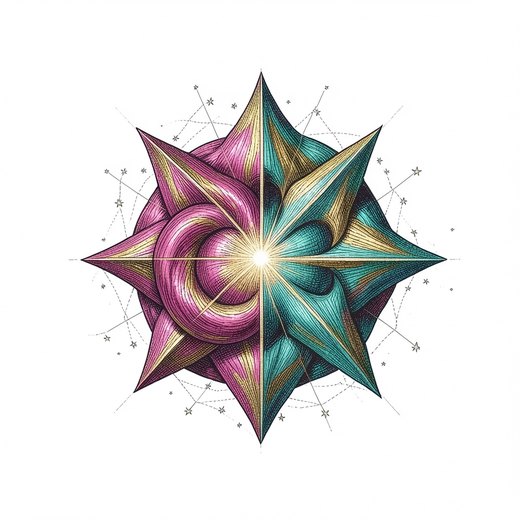
Fig. 1. Kernel
Subsolar point
Which premise, if it were false, would kill this idea?
For one day the sun stands over the equator, and light and dark are shared equally across the whole earth.1
drawn as: nucleus star · view: series
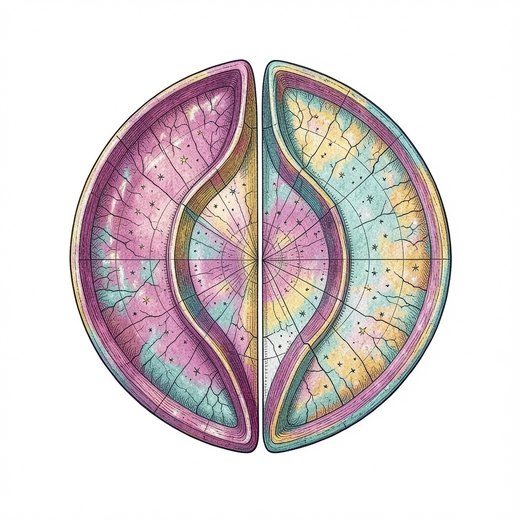
Fig. 2. Boundary
Terminator
❦ dominant organWhat sets it apart from what it is not, and how does it keep that distinction?
It is set apart from every other day by a line, the edge between day and night running from pole to pole; the day before and the day after already lean.1
drawn as: orbit · view: pressed
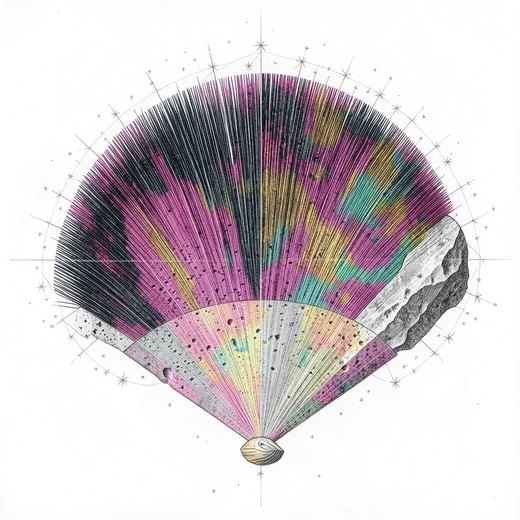
Fig. 3. Intake
Axial tilt
What must it feed on to work? What has to be present, noticed or supplied?
It feeds on the tilt of the earth and its path around the sun, and on someone watching where the sun rises against the horizon.4
drawn as: corona · view: magnified
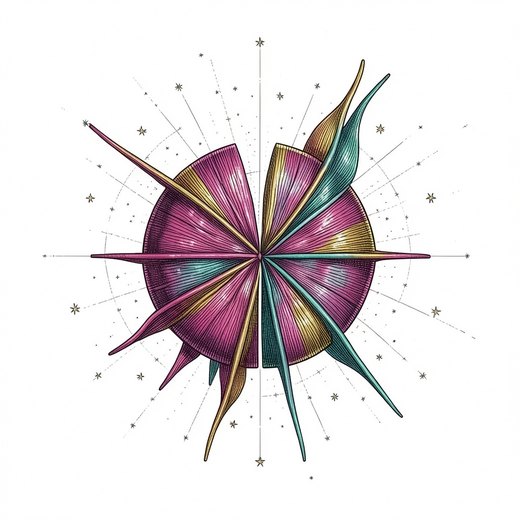
Fig. 4. Mechanism
Libra's scales
How does it turn what it takes in into what it gives out?
The tilted earth carries each half of the world from leaning toward the light to leaning away; the equinox is the instant the leaning changes sides.1
drawn as: orrery · view: magnified
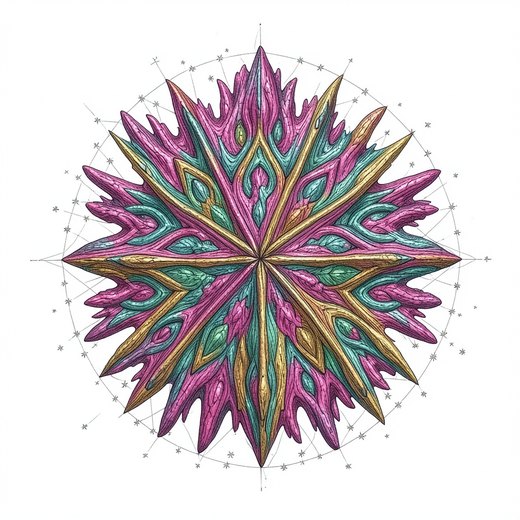
Fig. 5. Output
Vernal point
What does it make possible, visible or knowable?
It makes the year measurable, a fixed point from which seasons, calendars and the date of Easter are counted.2
drawn as: rays · view: detached
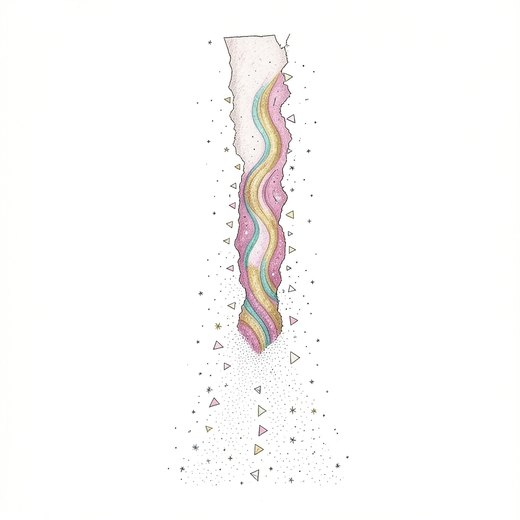
Fig. 6. Dispersal
Light serpent
What part of it travels into other minds, ideas and fields, and by what vector?
It travels in festivals and aligned stones, Nowruz, Easter, the serpent of light that descends the steps at Chichén Itzá.4, 2
drawn as: meteor shower · view: in situ
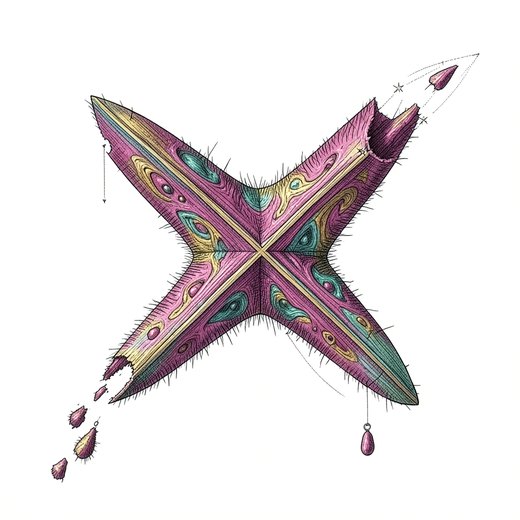
Fig. 7. Decay
Precession
What can it not digest, where does it fail, and what does it leave behind for others?
It cannot hold still against the stars; it slides slowly backward, the precession Hipparchus found, so every calendar built on it drifts and must be corrected.1, 3
drawn as: burnt-out star · view: cross section
II Meaning associations
descent membership food web resemblance or friction
Lineage
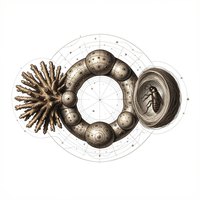
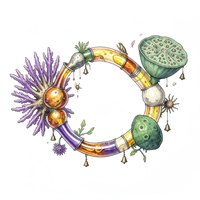
A founder, dissected by hand.
Offspring
Food web
- feeds its output → the intake of Ritual
Equinox gives a fixed point from which seasons and feasts are counted; Ritual needs a time set apart. The sky supplies the rite's time. - feeds the output of Memory → its intake
Memory gives the stories a group tells about itself; Equinox feeds on someone watching the horizon, and only a group that remembers keeps watching. - friction its decay rubs against the boundary of Ritual
The equinox drifts against the stars, while a rite holds to its fixed form; over centuries the feast and the season part.
Kin
same kind in Roget The Shaping Pause, The Festival Calendar
same kind in Wilkins The Shaping Pause, The Festival Calendar
same kind in WordNet The Shaping Pause, The Festival Calendar
same phylum Chiaroscuro, Salt, Symmetry, The Shaping Pause
same dominant organ Amber, Solitude, Tongue Horizon, The Shared Cell
Genome
- balance also in Symmetry
- threshold also in Ritual, Self-Fulfilling Alarm, Storm, Tongue Horizon
- return also in Commemorative Revision, The Festival Calendar, Nostalgia, Rain
- light also in Chiaroscuro
- measure also in Salt
III In the world
Echoes
- the serpent of light on the steps of El Castillo
- a Nowruz table laid for the new year
- Easter, counted from the first full moon after it
- standing stones aligned with the rising sun
IV Record
How it was drawn
its draw 2, a point in the morphospace (laws §8), drawn by flux-2-klein-4b.safetensors.
| axis | value | |
|---|---|---|
| book | uranographia | |
| symmetry | concentric | |
| organization | solitary | |
| silhouette | bushy | |
| scale | microscopic | |
| proportion | even latent | |
| growth | intercalary | |
| articulation | telescoping latent | |
| openness | sheet latent | |
| skeleton | unmarked latent | |
| locomotion | rolling latent | |
| pattern | gradient latent | |
| coloration | disruptive latent | |
| substance | calcite | |
| surface | beaded | |
| palette | bismuth | |
| luminosity | none | |
| transparency | layered latent | |
| gesture | pulses | |
| unity | unmarked latent | |
| modality | necessary latent | |
| causation | formal | |
| determinacy | crisp latent | |
| fusion | seam | |
| anomaly | sideways | |
| graft | stair | |
| technique | engraving | |
| viewpoint | motion | |
| value | chiaroscuro | |
| balance | grounded latent | |
| density | graded detail latent | |
| rhythm | unmarked latent | |
| saturation | accent | |
| appendages | sails | |
| anchor (body) | a radiolarian, a lattice sphere of silica with radiating spines | |
| anchor (detail) | a comb jelly, an oval glassy body with eight rows of beating iridescent combs |
Sources
- Claudius Ptolemy, Almagest (c. 150), which records Hipparchus's discovery of the precession of the equinoxes
- Bede, The Reckoning of Time (De temporum ratione, 725)
- Pope Gregory XIII, Inter gravissimas (1582), the bull that reformed the calendar
- Anthony Aveni, Skywatchers (2001)
❦