a founder of the codex
Rain
Pluviaria reddens·the Returning Fall
From Latin pluvia, rain, and reddens, giving back, the rain that returns to the ground what rose from it.
- Level
- Conceptorganism
- Book
- Meteorathe meteorological atlas
- Phylum
- Verticalityimage schema
- Class
- Outputits precipitation
- Niche
- Symbionta partner
- Mode
- Religionhow it keeps existing
- Stage
- Matureindividuated
- Status
- Living
- Habitat
- Forest
Its kinds · Roget, 1852: Inorganic Matter · Wilkins, 1668: Element · WordNet, 1990: Phenomenon · Llull, 1308: I · Elementative
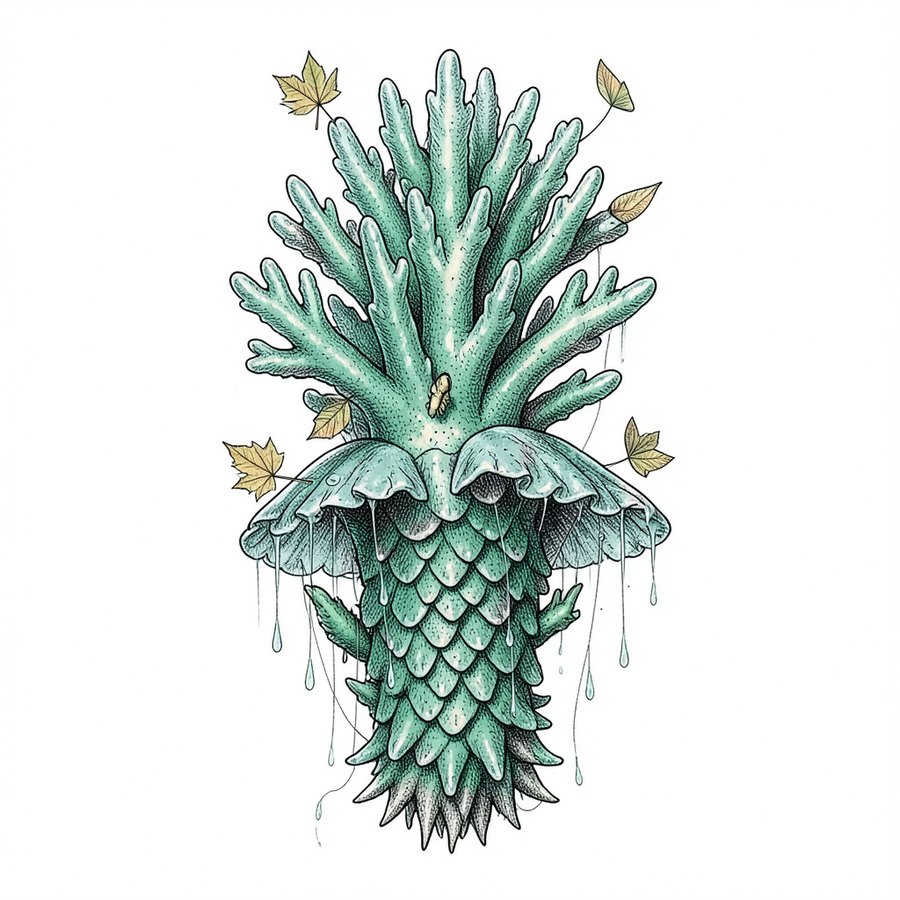
Rain is water that rose as vapour and falls back to the ground, so the land lives by a return it partly feeds itself.
What rises from the earth comes back to it as rain, and the ground lives on that return.
behavior It gathers out of sight, falls in sudden lines, and leaves pools that hold the sky for an hour after it has passed.
What have you given off that is now falling back on you?
I Dissection
Each organ answers one question about the idea. The framed one, its output, is the dominant organ: the being's class, the one the idea could not lose and stay itself.
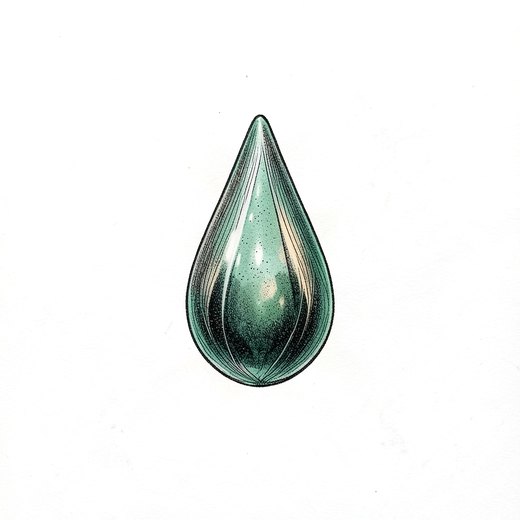
Fig. 1. Kernel
Water cycle
Which premise, if it were false, would kill this idea?
Rain is water that rose as vapour and falls back as drops once they grow too heavy for the air to hold.1, 3
drawn as: condensation nucleus · view: detached
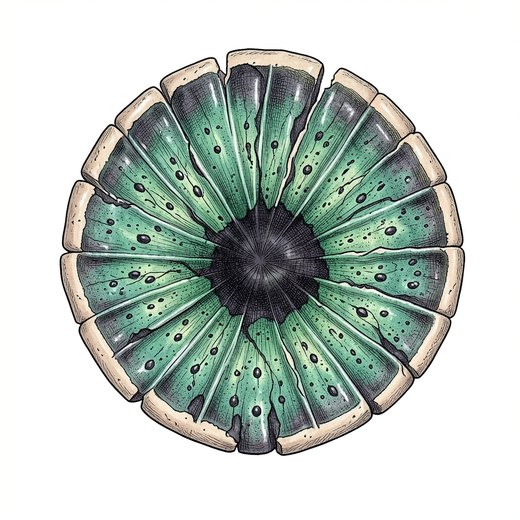
Fig. 2. Boundary
Drought
What sets it apart from what it is not, and how does it keep that distinction?
Its edge is drought, the dry season and the desert, where moist air seldom arrives and people have long tried to call it back.5
drawn as: front · view: magnified
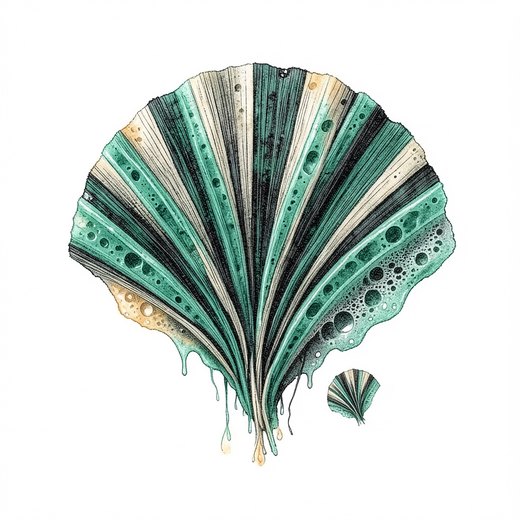
Fig. 3. Intake
Flying rivers
What must it feed on to work? What has to be present, noticed or supplied?
It feeds on vapour lifted from seas, lakes and leaves, and over the Amazon about half the rain comes from water the forest itself gave off.2
drawn as: inflow · view: cast
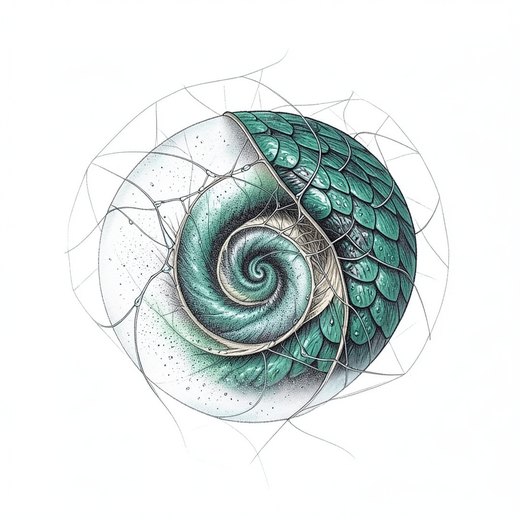
Fig. 4. Mechanism
Condensation nuclei
How does it turn what it takes in into what it gives out?
Rising air cools, vapour condenses on specks of dust and salt into droplets, and droplets merge until they are heavy enough to fall.3
drawn as: convection cell · view: cross section
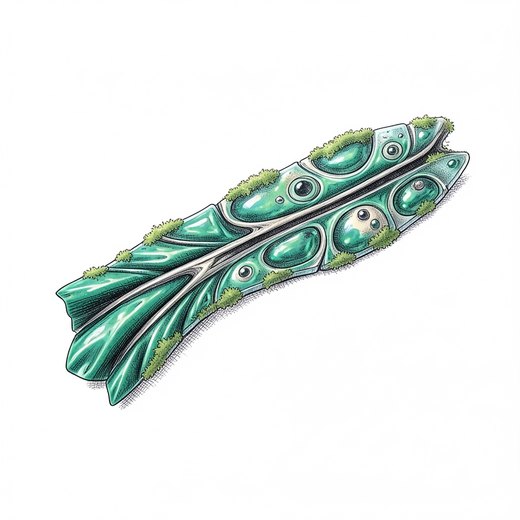
Fig. 5. Output
Vernal pool
❦ dominant organWhat does it make possible, visible or knowable?
It soaks the soil, fills springs and rivers, and leaves still pools on the ground that mirror the sky.1
drawn as: precipitation · view: series
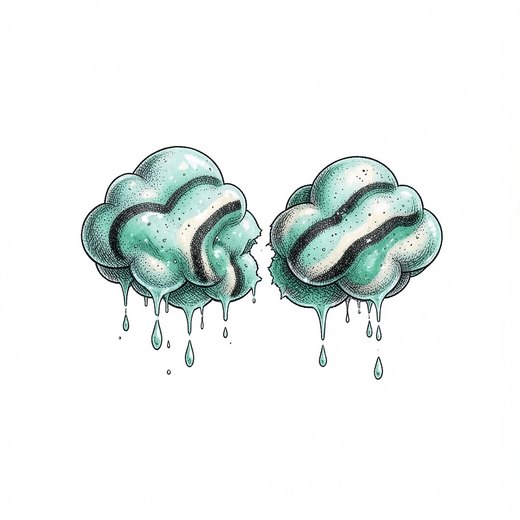
Fig. 6. Dispersal
Runoff
What part of it travels into other minds, ideas and fields, and by what vector?
It runs off in streams and rivers back to the sea, and it travels in belief as the answer of the sky, called down by rain dances and prayers.1, 5
drawn as: plume · view: in situ
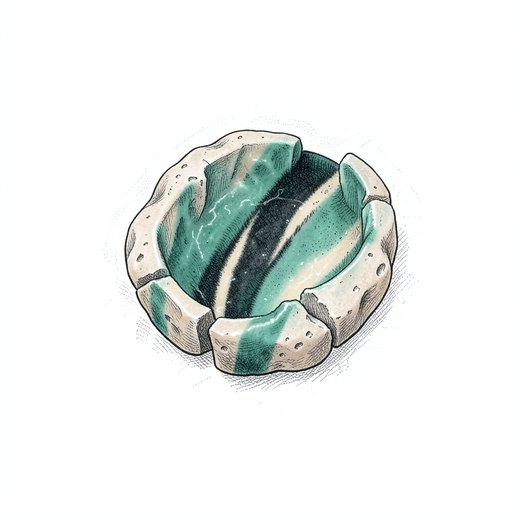
Fig. 7. Decay
Acid deposition
What can it not digest, where does it fail, and what does it leave behind for others?
Rain falling through smoke turns acid, pitting stone and leaching soils until forests and lakes lose their life.4
drawn as: dissipation · view: at work
II Meaning associations
No relations recorded yet.
descent membership food web resemblance or friction
Lineage
A founder, dissected by hand.
Kin
same kind in Roget Erosion, Fire, Salt, Storm, Wind
same kind in Wilkins Fire, Storm, Wind
same kind in WordNet Emergence, Placebo, Resonance, Resonance (Automata), Storm, Wind
same kind in Llull Amber, Emergence, Entanglement, Entropy, Erosion, Fire, Resonance, Resonance (Automata), Salt, Storm, Wind, Self-Ending Order
same phylum Erosion, Faith, Innocence, Vertigo
same dominant organ Apophenia, Chiaroscuro, Echolalia, Emergence, Erosion, Mimesis, Nostalgia, Placebo, Babelhum, Afterlistening, The Festival Calendar
Genome
- water
- return also in Commemorative Revision, Equinox, The Festival Calendar, Nostalgia
- nourishment
- reflection
- omen also in Prophecy
III In the world
Echoes
- the monsoon
- a puddle holding the sky
- a rain dance
- the flying rivers over the Amazon
IV Record
How it was drawn
its draw 1, a point in the morphospace (laws §8), drawn by flux-2-klein-4b.safetensors.
| axis | value | |
|---|---|---|
| book | meteora | |
| symmetry | dendritic | |
| organization | segmented | |
| silhouette | bell | |
| scale | hand | |
| proportion | elongated latent | |
| growth | swelling | |
| articulation | seamless latent | |
| openness | sheet latent | |
| skeleton | woody latent | |
| locomotion | drifting latent | |
| pattern | spots latent | |
| coloration | nuptial latent | |
| substance | ice | |
| surface | scaled | |
| palette | malachite | |
| luminosity | none | |
| transparency | translucent | |
| gesture | sinks | |
| unity | fragment latent | |
| modality | possible latent | |
| causation | final | |
| determinacy | unmarked latent | |
| fusion | sprouting | |
| anomaly | petrified | |
| graft | strings | |
| technique | hatching | |
| viewpoint | below | |
| value | chiaroscuro latent | |
| balance | unmarked latent | |
| density | unmarked latent | |
| rhythm | regular | |
| saturation | muted latent | |
| appendages | sails | |
| anchor (body) | a coral fungus, a dense tuft of branching upright prongs | |
| anchor (detail) | a maple samara, a winged seed that spins as it falls |
Sources
- Pierre Perrault, De l'origine des fontaines (1674)
- Eneas Salati and others, Recycling of Water in the Amazon Basin: An Isotopic Study (Water Resources Research, 1979)
- B. J. Mason, The Physics of Clouds (1957)
- Robert Angus Smith, Air and Rain: The Beginnings of a Chemical Climatology (1872)
- James George Frazer, The Golden Bough (1890), on the magical control of rain
❦