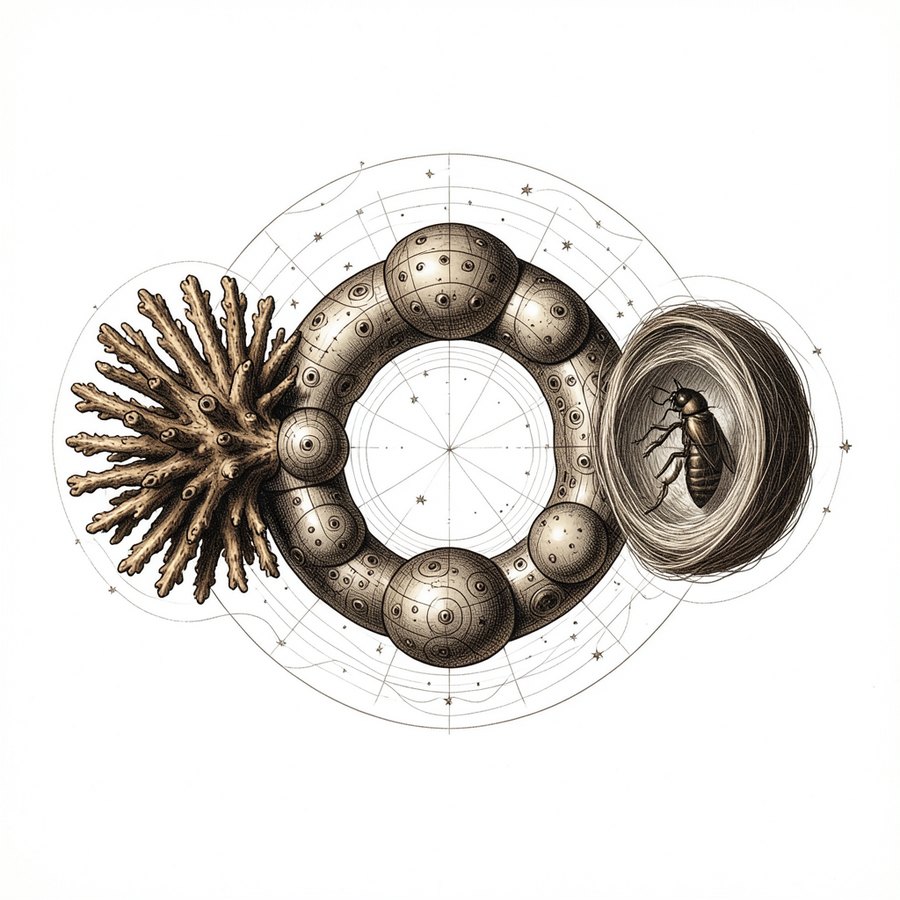
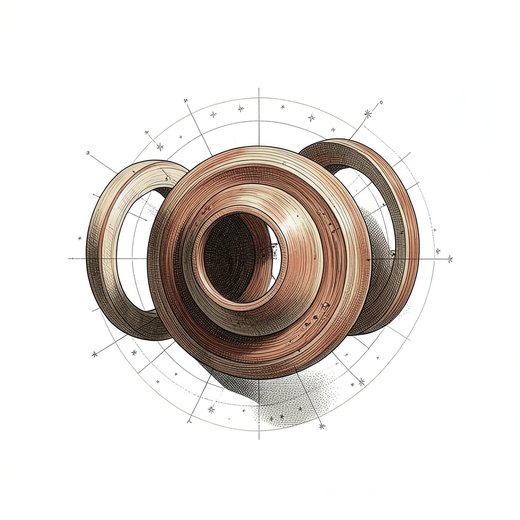
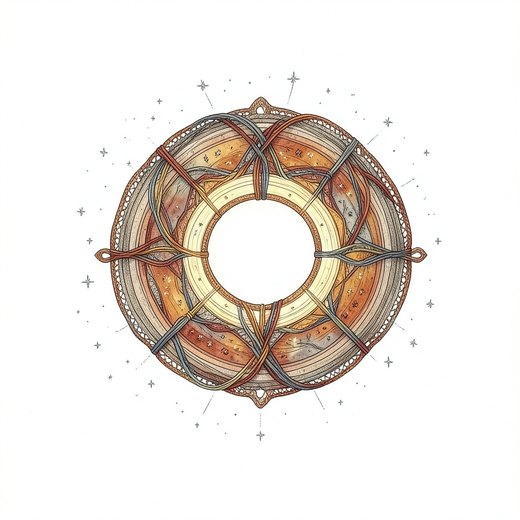
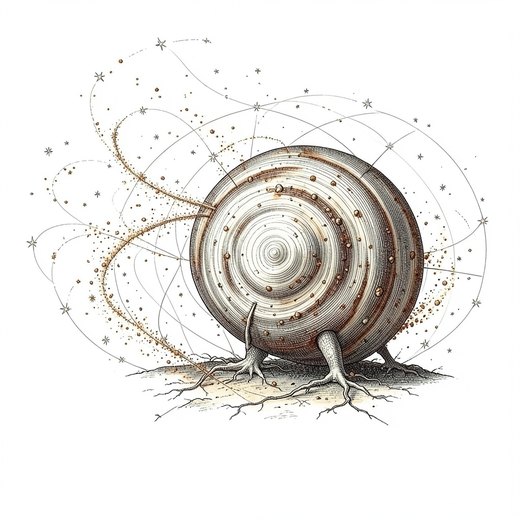
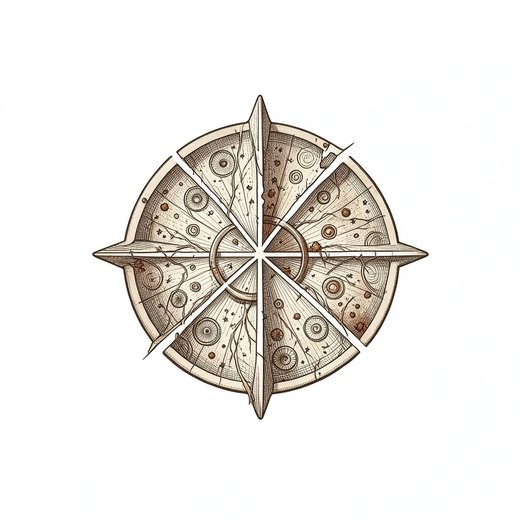
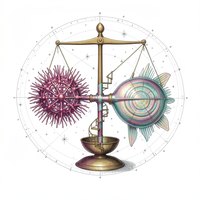
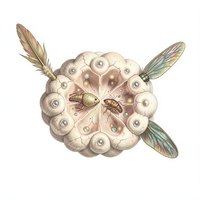
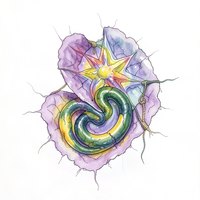
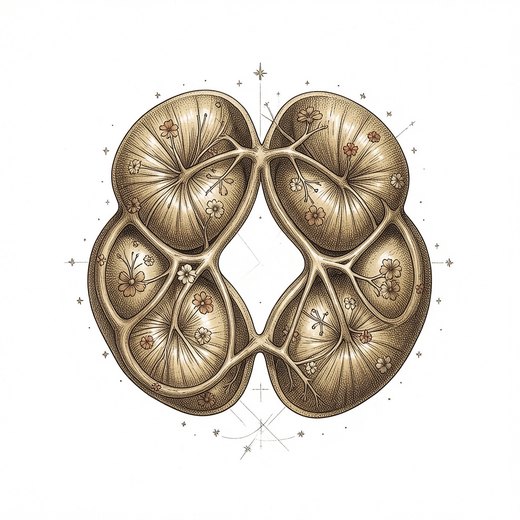
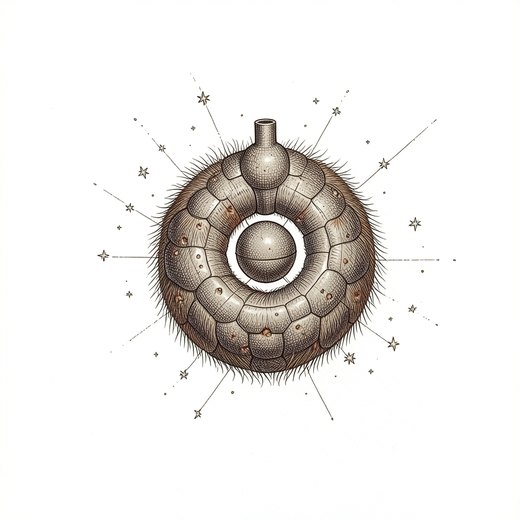
Plate LVII. Fastocyclus communis, the whole specimen.
A calendar is a system in which the sky gives fixed points, rites give them forms and memory gives them meaning, so a group keeps returning together to the same days and the same past.
A people keeps time together or not at all.
behavior Turns slowly as a ring of chambers, each lighting in its season and dimming as the next one brightens.
provocation
Which days of your year would you keep if no one else did?
Each draw is the being derived afresh by the current laws at another seed (laws §11); the chosen one leads (where they sit in the morphospace).
I Dissection
Each organ answers one question about the idea. The framed one, its output, is
the dominant organ: the being's class, the one the idea could not lose and stay itself.
Fig. 1. Kernel
Zodiac
Which premise, if it were false, would kill this idea?
A shared calendar ties the sky's fixed points to rites and to remembered events, so a group returns together to the same days and the same past.2, 3
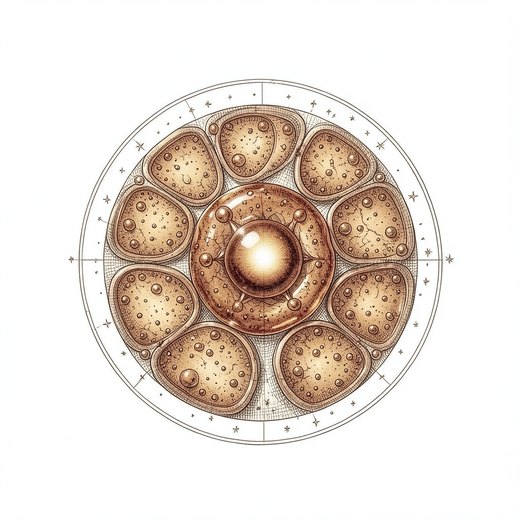
drawn as: nucleus star · view: microscope
Fig. 2. Boundary
Red-letter days
What sets it apart from what it is not, and how does it keep that distinction?
It is set apart from a list of dates by its circulation; a calendar lives only while the sky is watched, the rites are kept and the days are remembered.3
drawn as: orbit · view: pressed
Fig. 3. Intake
Heliacal rising
What must it feed on to work? What has to be present, noticed or supplied?
It feeds on observations of the sky, on the rites a group keeps, and on the events it chooses to remember.1
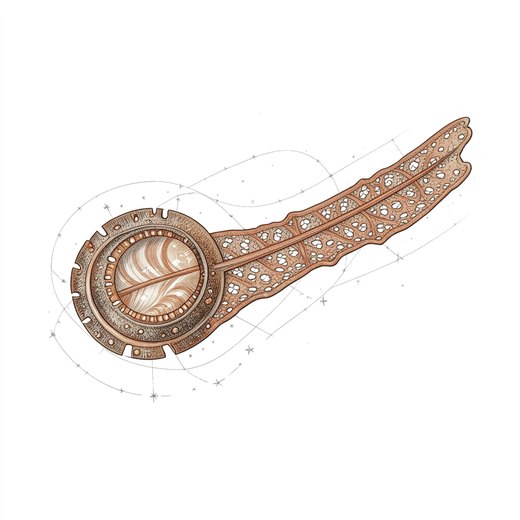
drawn as: corona · view: magnified
Fig. 4. Mechanism
Eternal return
How does it turn what it takes in into what it gives out?
The equinox fixes the points, rites give each point a form to repeat, and memory, rewritten at each return, gives the forms their meaning; each keeps the others turning.4
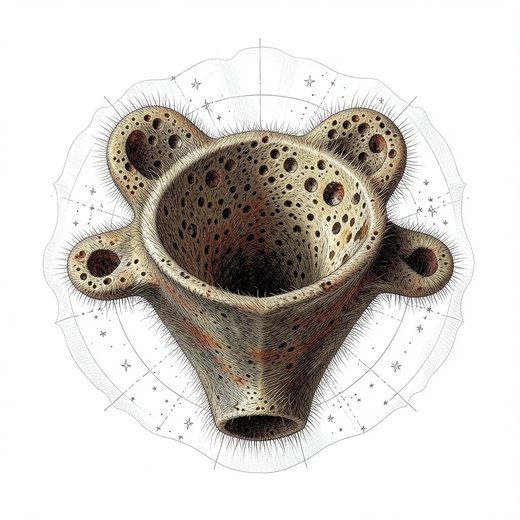
drawn as: orrery · view: exploded
Fig. 5. Output
Seasonal round
❦ dominant organ
What does it make possible, visible or knowable?
It gives a group shared time, feasts and fasts, anniversaries, seasons of work and rest, and the feeling of a year that comes back.3
drawn as: rays · view: detached
Fig. 6. Dispersal
Palimpsest
What part of it travels into other minds, ideas and fields, and by what vector?
It travels by being adopted, as churches, conquerors and states impose their calendars and fold older feasts into new ones.3
drawn as: meteor shower · view: series
Fig. 7. Decay
Wandering year
What can it not digest, where does it fail, and what does it leave behind for others?
It cannot hold the sky and the rites together for ever; the equinox drifts, feasts fall out of their season, and a calendar reformed by decree loses the memory its days carried.1
Which beings are its members, and what role does each play?
Equinox gives the fixed points, Ritual the forms that fill them, and Memory the meaning that each return renews.
Fig. 9. Circulation
Movable feast
What flows between the members?
Attention flows from the sky to the rites, and meaning flows from memory back into the days, so each feast is set by the sun, kept by the rite and charged by what is remembered.4
drawn as: circulation · view: cast
Fig. 10. Regulation
Leap day
What keeps it stable, and what pushes it out of balance?
Reckoning keeps it stable, intercalary days, computed feasts and councils that fix dates; drift, conquest and decree push it out of balance.1, 3
drawn as: regulation · view: series
II Meaning associations
descent membership food web resemblance or friction
the date of Easter computed from the equinox and the moon
Nowruz on the day of the vernal equinox
an anniversary kept by a whole town
a harvest festival out of season after centuries of drift
If it is right
Feasts tied to the sky and also to a remembered event outlast calendar reforms better than feasts tied to only one of the two.
Where a calendar is reformed by decree, the feasts whose meaning people remember are kept on their old dates alongside the new ones.
Groups that keep more shared feast days report a stronger sense of a common past.
Fruits
study
The drifting feasts
Trace which feasts survived the great calendar reforms, the Julian, the Gregorian, the French Republican, and which fell away, and test whether the survivors were those tied both to the sky and to a remembered event.3, 1
Which days of your year would you keep if no one else did?
ritual
The equinox table
A meal held twice a year at the equinox, at which each guest brings one event of the past half-year to be remembered by everyone at the table. The sky fixes the day, the meal is the rite, and the memories fill it, so the calendar's three members are kept together in one evening.
Which days of your year would you keep if no one else did?
artwork
The drifting almanac
An almanac printed as a long scroll, which shows each great feast against its season across two thousand years, as the old calendar drifted, was reformed and drifted again, so that the gap between the rite and the sky can be seen at a glance.1, 3
What keeps a feast in its season when the sky drifts?
bridge All three return. The sun comes back to the equator, the rite comes back each year, and memory comes back to its traces.
friction The sky's returns are exact but drift; the rite's are fixed by people; memory's are never the same twice.
tension Who keeps a group's time, the sky, the rite or the remembering, and what happens when they disagree?
questions neither parent could ask
What keeps a feast in its season when the sky drifts?
Why do calendars imposed by decree lose the memory their days carried?
Can a group keep time together without any of the three?
colonization: What system do the sky's fixed points, the rite's forms and memory's returns make together?
candidate
emergence
depth
ground
distance
total
festival-calendar
3
3
3
2
11
Needs all three members and the flow between them. Bede's reckoning, Zerubavel on the social making of time and Connerton on commemorative ceremonies ground it. Near Commemorative Revision, but it adds the sky's points and the regulation that holds them, hence 2 on distance.
computus
2
2
3
2
9
The system's regulation alone, without its rites or memory.
agricultural-round
2
2
3
1
8
Leaves out memory; a cycle of work rather than of meaning.
national-holidays
2
2
3
1
8
Leaves out the sky; memory and rite set by law.
colonization: What does a system of sky, rite and memory do, beyond keeping a calendar?
candidate
emergence
depth
ground
distance
total
simultaneous-remembering
3
3
3
2
11
Collective memory is known; that it converges when timed, and drifts between, is not named. Grounded in studies of mnemonic convergence and of shared forgetting. The author's stars, 4.
held-drift
2
2
1
2
7
An abstract mechanism of three drifts. The author's stars, 2.
returning-occasion
2
2
2
1
7
Close to Eliade's eternal return. The author's stars, 3.
Record 2026-10-25-equinox-x-ritual-x-memory in lab/.
How it was drawn
its draw 1, a point in the morphospace (laws §8), drawn by flux-2-klein-4b.safetensors.
axis
value
from
book
uranographia
Equinox
symmetry
tessellated
mutation
organization
chained
Memory
silhouette
crown
Ritual
scale
hand
Equinox
proportion
elongated latent
Equinox
growth
accretion
Memory
articulation
sutured latent
Ritual
openness
sheet latent
Ritual
skeleton
spicules latent
Memory
locomotion
undulating
Equinox
pattern
rosettes
Ritual
coloration
warning latent
Ritual
substance
amber
Memory
surface
veined
Memory
palette
sepia
mutation
luminosity
none
Memory
transparency
clouded latent
mutation
gesture
bursts
Ritual
unity
fragment latent
Memory
modality
contingent latent
Memory
causation
efficient latent
Equinox
determinacy
unmarked latent
Memory
fusion
becoming
Ritual
anomaly
echoes
mutation
graft
none
mutation
technique
engraving
mutation
viewpoint
profile
Memory
value
low key
Memory
balance
grounded latent
Equinox
density
unmarked latent
mutation
rhythm
clustered latent
Ritual
saturation
muted latent
mutation
appendages
ocelli
mutation
anchor (body)
a coral fungus, a dense tuft of branching upright prongs
Equinox
anchor (detail)
a silk cocoon, an oval case of wound threads around an insect pupa
Ritual
Sources
Bede, The Reckoning of Time (De temporum ratione, 725)
Mircea Eliade, The Myth of the Eternal Return (1949)
Eviatar Zerubavel, The Seven Day Circle: The History and Meaning of the Week (1985)