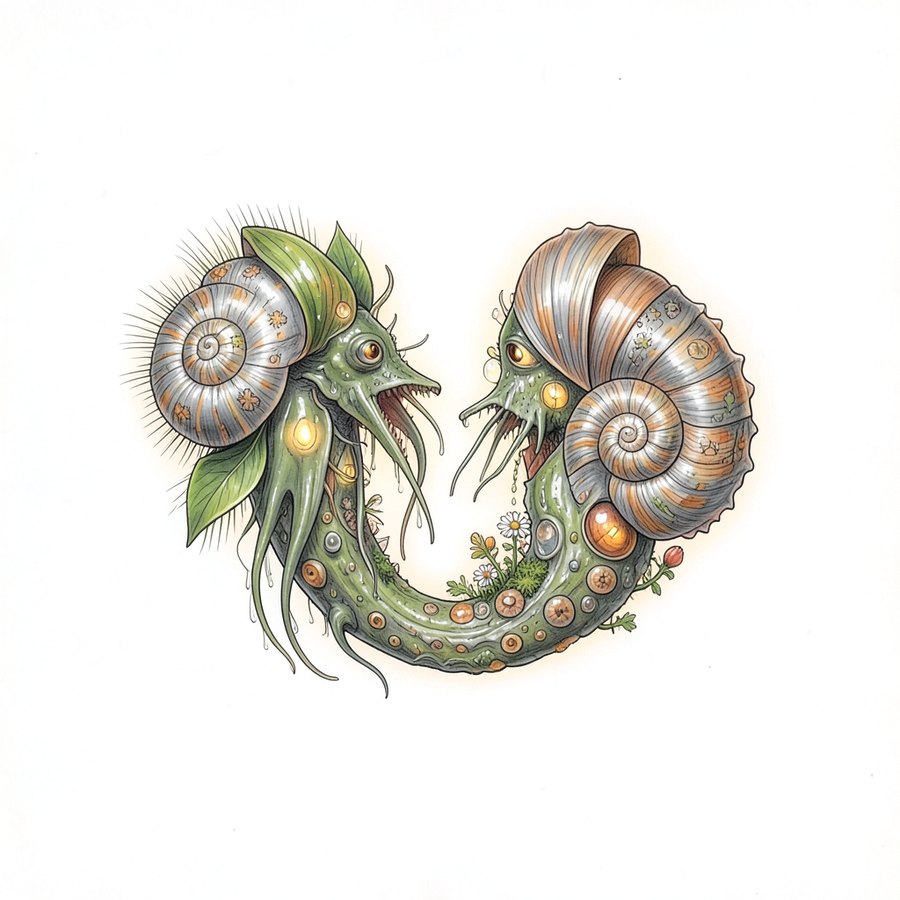
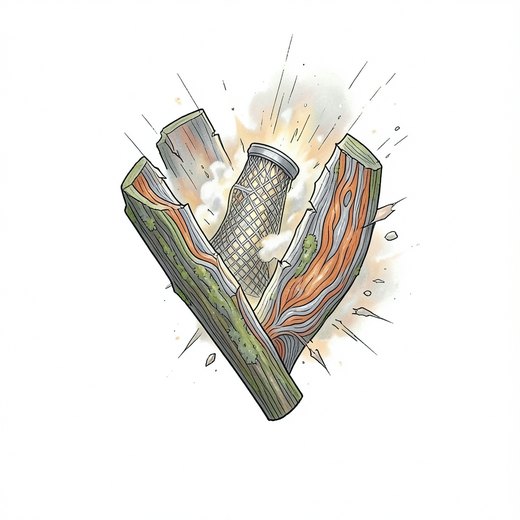
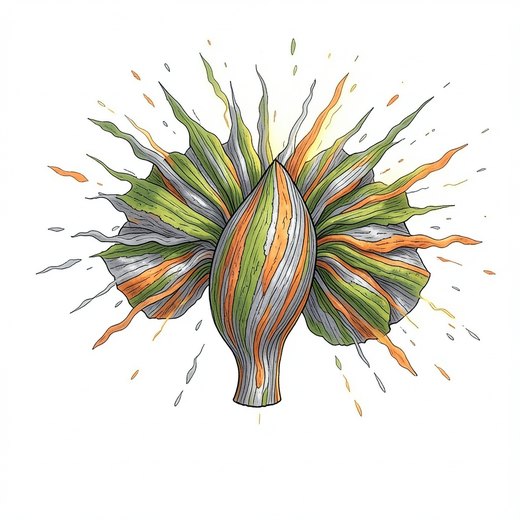
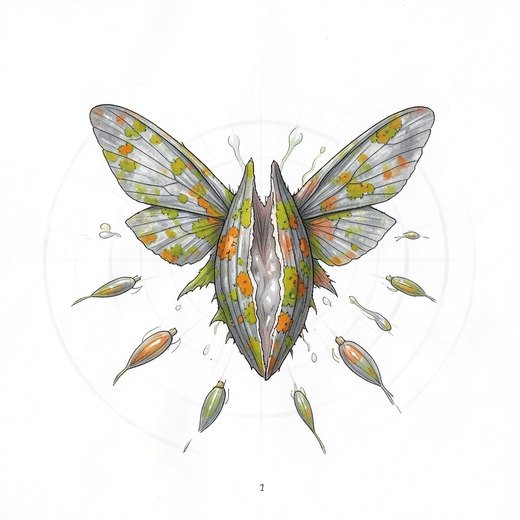
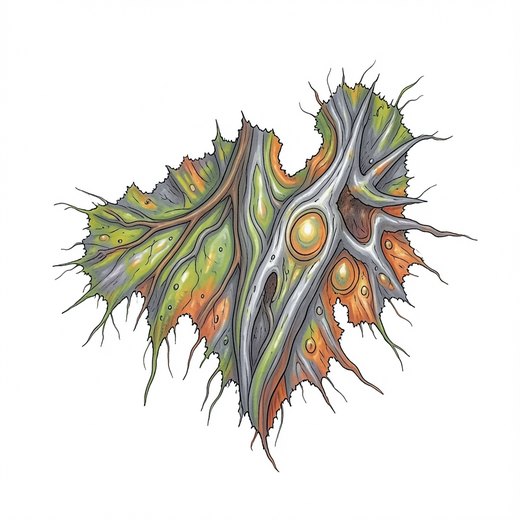
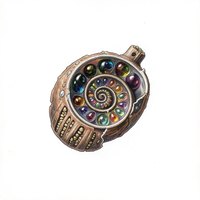
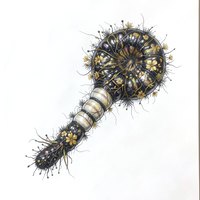
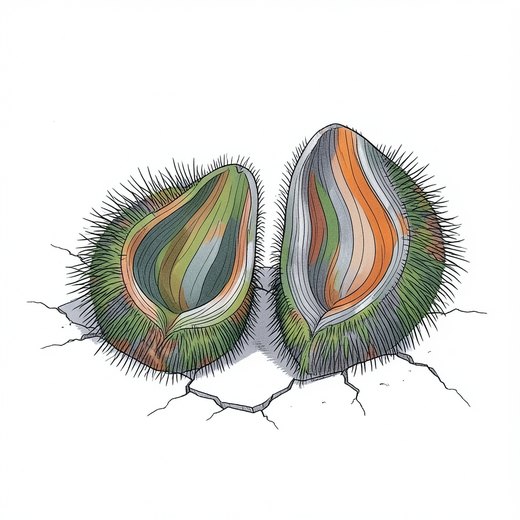
Plate LII. Postaudia expectans, the whole specimen.
Music leaves its listeners expecting, so the silence after it is heard as music; for a while a cough lands like a cadence and the street sounds composed.
Music goes on in whoever was listening.
behavior Lingers in a room after a sound has stopped, faintly glowing, and catches each small noise in its glow until it fades.
provocation
What did the world sound like in the minute after the last music that moved you?
Each draw is the being derived afresh by the current laws at another seed (laws §11); the chosen one leads (where they sit in the morphospace).
I Dissection
Each organ answers one question about the idea. The framed one, its output, is
the dominant organ: the being's class, the one the idea could not lose and stay itself.
Fig. 1. Kernel
Leading tone
Which premise, if it were false, would kill this idea?
Music leaves its listeners expecting, and the expectation outlives the sound, so the silence after a piece is heard as music; the room's small sounds take on tension and release.1
drawn as: spark · view: transparent
Fig. 2. Boundary
Reverb tail
What sets it apart from what it is not, and how does it keep that distinction?
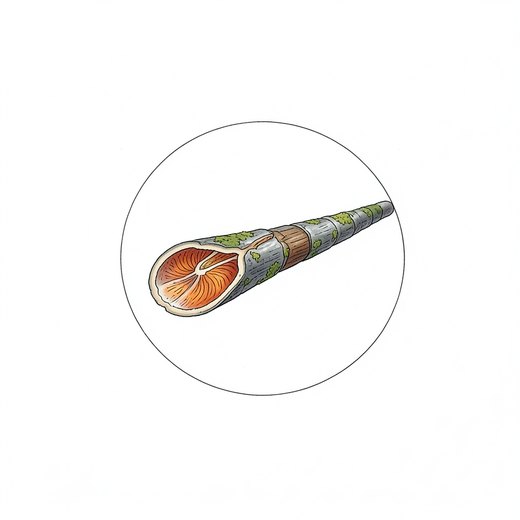
It is set apart from silence by what came before it, and from music by having no notes; it lasts only as long as the expectation does, seconds or minutes.1
drawn as: skin · view: microscope
Fig. 3. Intake
Room tone
What must it feed on to work? What has to be present, noticed or supplied?
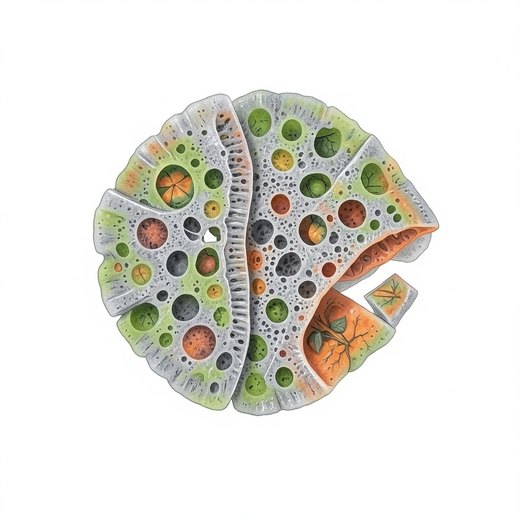
It feeds on the end of a piece heard closely, and on the small sounds of the room after it, a cough, a chair, traffic, rain.3
drawn as: nerve net · view: pinned
Fig. 4. Mechanism
Metric grid
How does it turn what it takes in into what it gives out?
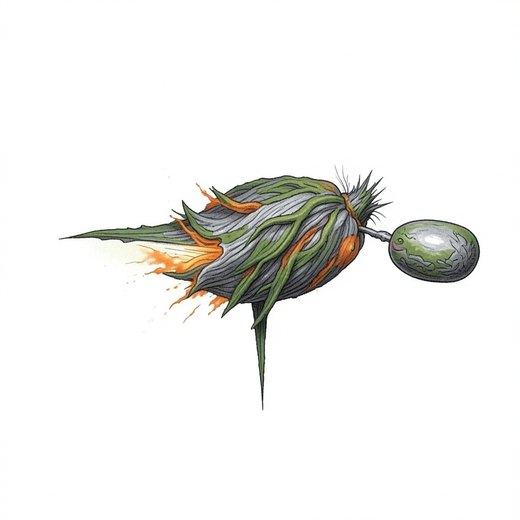
The ear goes on predicting what comes next after the music stops, and fits whatever it hears to the patterns the music set, so a cough lands like a cadence and a passing car like a closing chord.1, 2
drawn as: flush · view: at work
Fig. 5. Output
Found sound
❦ dominant organ
What does it make possible, visible or knowable?
It gives the minute after a concert, when the world sounds composed, and to those who listen closely a way of hearing the ordinary as music.3
drawn as: signal · view: series
Fig. 6. Dispersal
Tacet
What part of it travels into other minds, ideas and fields, and by what vector?
It travels with the listeners out of the hall, and in the composers who wrote silence into their works so that it would be heard, Cage first.3
drawn as: contagion · view: in situ
Fig. 7. Decay
Premature applause
What can it not digest, where does it fail, and what does it leave behind for others?
It fades as the expectation fades, and is broken at once by applause too soon or a ringing phone, which is why some audiences hold still to keep it.1
Silence gives the frame in which it is heard; Music gives the expectation that hears it.
Fig. 9. Bond
Al niente
What does each partner give the other, and in which direction does the claim run?
Music lends silence its expectation, and silence lets music go on after its sound; the claim runs from music into silence.1, 3
drawn as: bond · view: exploded
Fig. 10. Condition
Noise floor
Under what conditions does the bond hold, and when does it break?
The bond holds while the music was listened to closely and the silence after it is kept; it breaks with distraction, with noise, or with music heard only in the background.1
drawn as: condition · view: cast
II Meaning associations
descent membership food web resemblance or friction
the held silence at the end of a requiem, before anyone claps
a street that sounds like music on the way home from a concert
Cage's 4′33″
a drive in silence after a song on the radio
If it is right
In the seconds after a piece ends, listeners judge the room's ambient sounds as more ordered and more fitting than the same sounds heard before it began.
The effect is stronger and lasts longer after music with strong expectations, a tonal cadence, than after music without them.
It is broken by applause or speech, and listeners interrupted at once report it as a loss more often than listeners who were not attending.
Fruits
study
The minute after
Play listeners a piece and then a recording of the room's own sounds, and have them rate how ordered those sounds seem, before the piece and after it; vary how strongly the piece sets up expectation, and time how long the effect lasts.1
How long does a piece of music go on after it ends?
artwork
A concert for the after
A concert whose last piece ends with the doors opened onto the street and five minutes in which the audience, asked not to clap, listens to the hall and the city as the music left them.3
Can you hear the world the way the music left you?
interface
The kept silence
A setting for music players that leaves the room's own sound for a while after each piece, its length set by how the piece ended, instead of starting the next one at once.
What do you lose when the next song starts at once?
bridge Music is built of waiting, and a silence is the purest form of waiting.
friction Silence asks to be left alone; music always fills it.
tension Is a rest in music a silence, or the opposite of one?
questions neither parent could ask
How long can a pause hold a listener before it stops being music?
Does the brain hear the boundary between phrases in the sound or in the silence?
What would a music made mostly of rests teach about listening?
symbiosis: What claim joins silence and music, and which way does it run?
candidate
emergence
depth
ground
distance
total
shaping-pause
3
2
3
2
10
A claim with a direction, from the pause to what follows. Meyer's account of expectation and brain recordings that mark phrase boundaries in the silence ground it. Close to what musicians already know, hence 2 on distance.
measured-rest
1
1
3
1
6
A notation, not a claim.
ma
2
3
2
2
9
Wider than music; it belongs to space and time in general, and becomes an echo of the principle.
dead-air
2
1
2
1
6
The silence music cannot frame; the principle's failure rather than the principle.
symbiosis: What principle, beyond the pause inside music, holds Silence and Music together?
candidate
emergence
depth
ground
distance
total
afterlistening
3
3
2
3
11
Neither parent alone; close to Cage's framing of a room's sounds, but caused by the music itself. The author's stars, 4.
civic-rests
2
2
2
2
8
A metaphor of a whole society as a score. The author's stars, 2.
counted-rest
2
2
2
2
8
True of ensembles, narrow. The author's stars, 2.
Record 2026-10-25-silence-x-music in lab/.
How it was drawn
its draw 1, a point in the morphospace (laws §8), drawn by flux-2-klein-4b.safetensors.
axis
value
from
book
pathemata
Silence
symmetry
amorphous
mutation
organization
paired
level
silhouette
cluster
Music
scale
microscopic
Music
proportion
tapering latent
Silence
growth
accretion
Silence
articulation
imbricate latent
Music
openness
spongy latent
Music
skeleton
test latent
mutation
locomotion
undulating
Music
pattern
stripes
Music
coloration
eyespots latent
Silence
substance
bark
Silence
surface
glossy
Music
palette
lichen
Silence
luminosity
inner glow
Silence
transparency
transparent latent
Silence
gesture
coils
mutation
unity
aggregate latent
Silence
modality
possible latent
Music
causation
unmarked latent
Music
determinacy
dissolving latent
Music
fusion
built of
Music
anomaly
wound bloom
Music
graft
lenses
Silence
technique
chromolith
Silence
viewpoint
motion
mutation
value
high key
mutation
balance
top heavy latent
Silence
density
intricate latent
Silence
rhythm
regular latent
Silence
saturation
vivid latent
Silence
appendages
lanterns, tentacles
Silence
anchor (body)
a sensitive plant, its leaflets folding shut at a touch
Silence
anchor (detail)
an ammonite, a coiled chambered shell with frilled suture lines
Music
Sources
David Huron, Sweet Anticipation: Music and the Psychology of Expectation (2006)
Leonard B. Meyer, Emotion and Meaning in Music (1956)