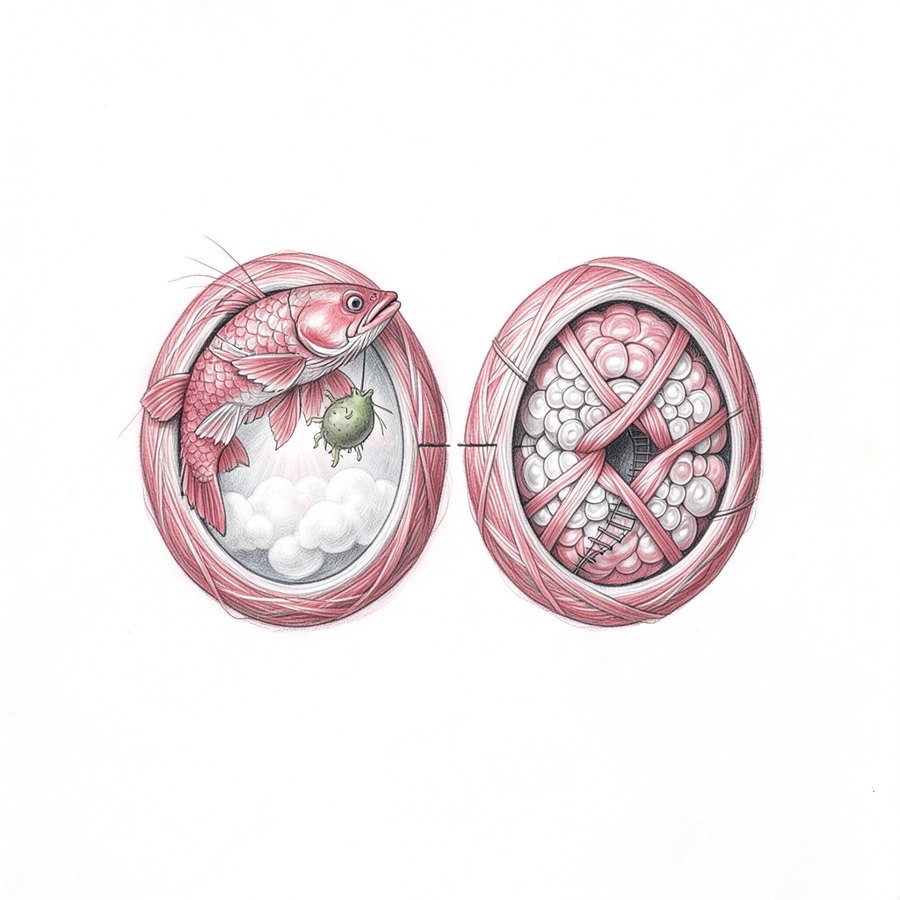
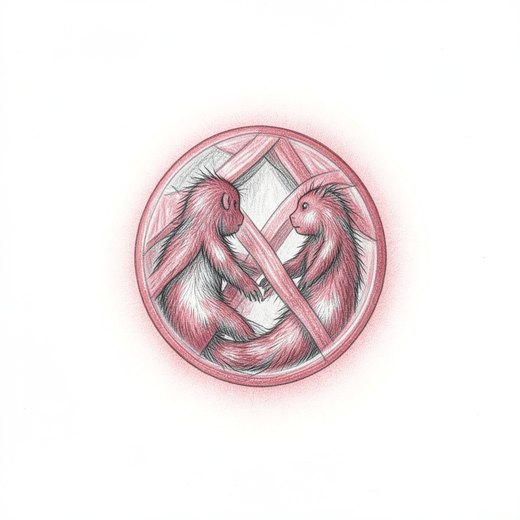
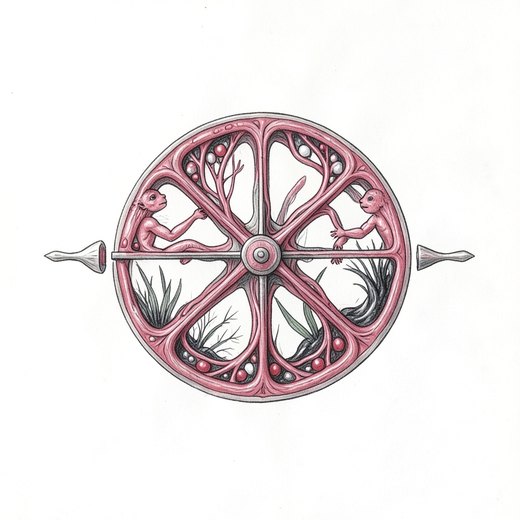
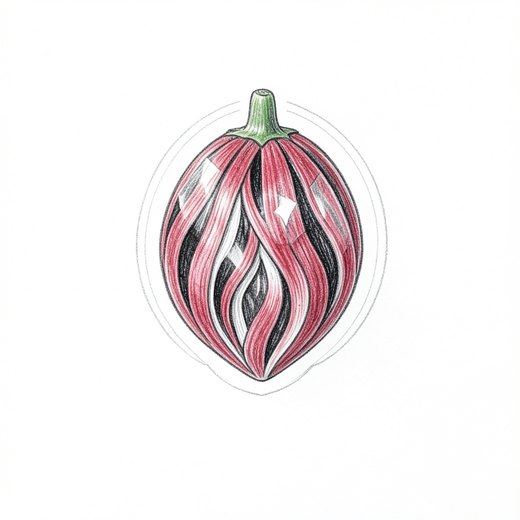
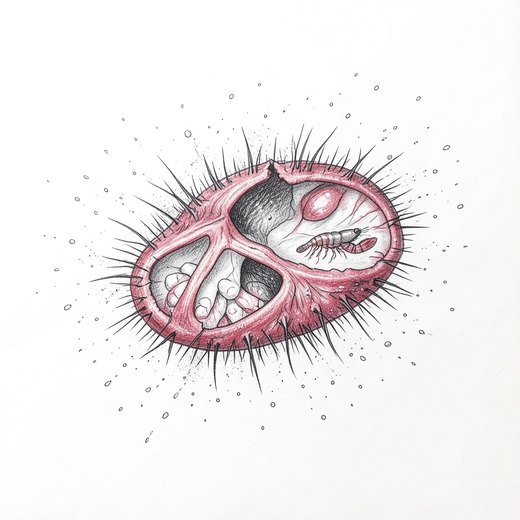
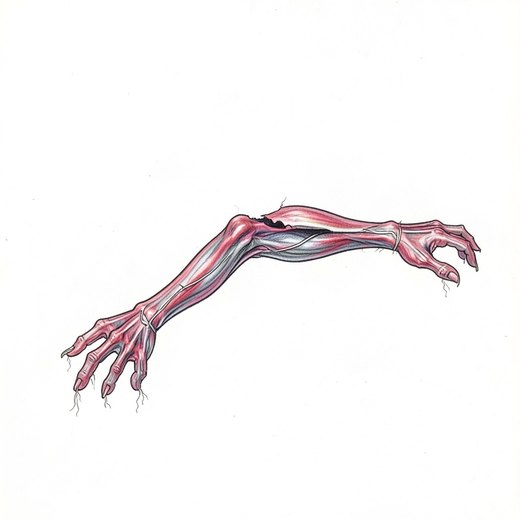
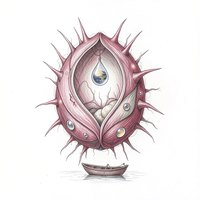
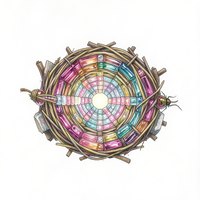
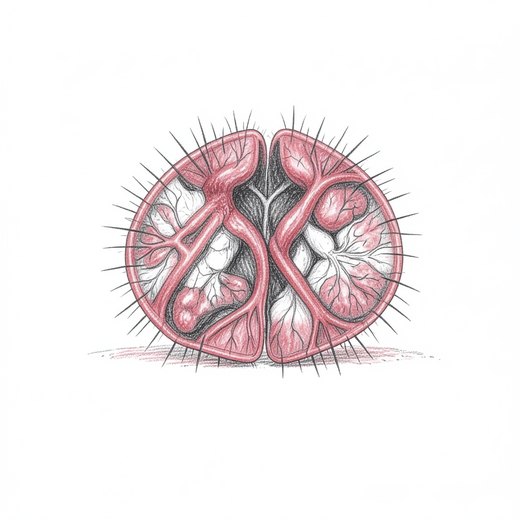
Plate LVI. Anachoretes binatus, the whole specimen.
A pair can be solitary; two people who withdraw from the world together, an anchoress and her companion, an old couple in a remote house, keep a solitude neither could keep alone, because each guards the other from everyone else.
Two can be alone together, and better guarded than one.
behavior Two forms that live inside one sealed shell, each turned outward to face whatever approaches, so that the other can turn inward.
provocation
Who would you share a cell with, and whom would you keep out for them?
Each draw is the being derived afresh by the current laws at another seed (laws §11); the chosen one leads (where they sit in the morphospace).
I Dissection
Each organ answers one question about the idea. The framed one, its boundary, is
the dominant organ: the being's class, the one the idea could not lose and stay itself.
Fig. 1. Kernel
Dyadic withdrawal
Which premise, if it were false, would kill this idea?
A pair can be solitary; two people who withdraw from the world together keep a solitude that neither could keep alone, because each guards the other from everyone else.1
drawn as: spark · view: transparent
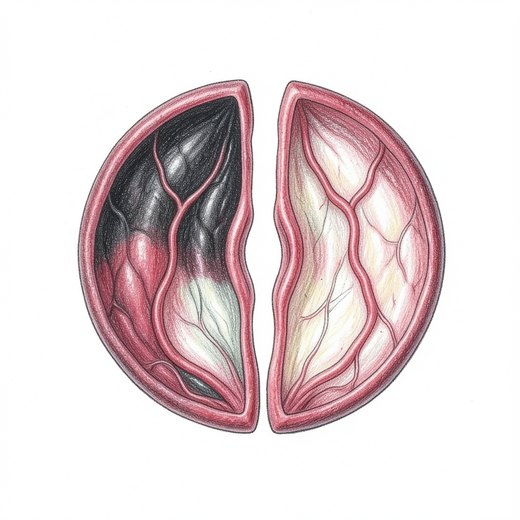
Fig. 2. Boundary
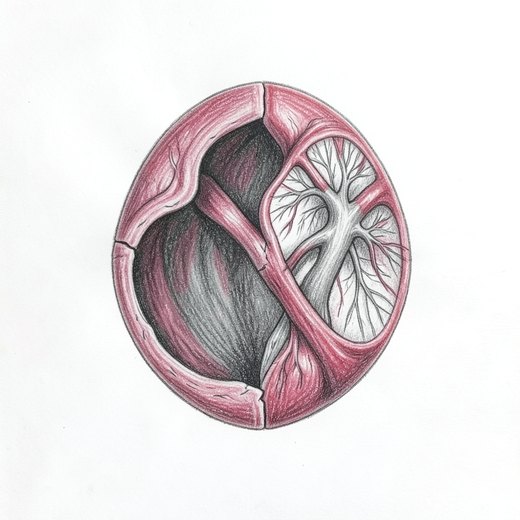
Enclosure
❦ dominant organ
What sets it apart from what it is not, and how does it keep that distinction?
It is set apart from a couple's ordinary life by the wall it keeps against everyone else, and from solitude by the one it lets in.2
drawn as: skin · view: magnified
Fig. 3. Intake
Desert
What must it feed on to work? What has to be present, noticed or supplied?
It feeds on a place apart, an anchorhold, a remote house, a long voyage, and on two people who were close before they withdrew.3
drawn as: nerve net · view: pinned
Fig. 4. Mechanism
Porter
How does it turn what it takes in into what it gives out?
Each keeps the world off the other, answering the door, the post and the news, so that inside the cell attention can turn inward as it does in solitude, while what the two share is touched by no one else.2
drawn as: flush · view: exploded
Fig. 5. Output
Contemplative life
What does it make possible, visible or knowable?
It gives a solitude that can last for decades, the work of a lifetime done side by side, and a closeness the world does not wear down.2
drawn as: signal · view: at work
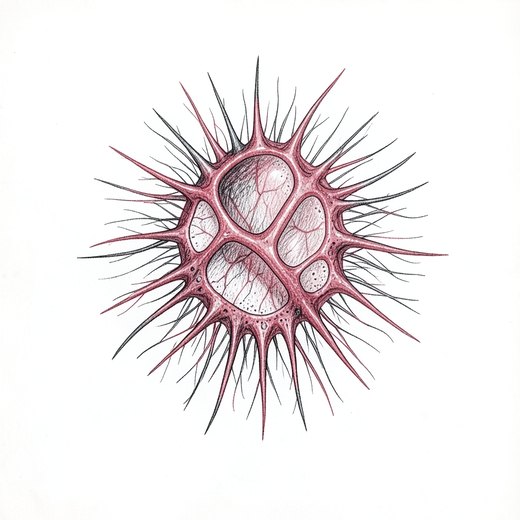
Fig. 6. Dispersal
Two solitudes
What part of it travels into other minds, ideas and fields, and by what vector?
It travels in the figures of the anchoress and her maid, the old couple in the lighthouse, two hermits on one mountain, and in Rilke's two solitudes that protect and greet each other.1, 3
drawn as: contagion · view: in situ
Fig. 7. Decay
Empty chair
What can it not digest, where does it fail, and what does it leave behind for others?
When one dies the other is left in a solitude that was never theirs alone, and when the wall fails, to visitors, quarrels or the world, the pair is worn down like any couple.2
Solitude gives the withdrawal; Entanglement gives the pair that shares one state and is kept by isolation from everything else.
Fig. 9. Bond
Party wall
What does each partner give the other, and in which direction does the claim run?
Entanglement gives solitude a second within it, and solitude gives the pair the isolation that keeps what it shares; the claim runs both ways, each guarding what the other needs.1
drawn as: bond · view: cast
Fig. 10. Condition
Vow of stability
Under what conditions does the bond hold, and when does it break?
The bond holds while both chose the withdrawal and both keep it; forced on one by the other it becomes a prison, and opened to the world it becomes an ordinary household.2
drawn as: condition · view: pressed
II Meaning associations
descent membership food web resemblance or friction
an anchoress walled into a church, her maid at the outer window
an old couple keeping a lighthouse
two monks sharing one hermitage
a poet and her sister in a cottage, turning visitors away
If it is right
Couples who withdraw together report more of solitude's gifts, reflection and absorbed work, than either partner reports when withdrawing alone.
When one of such a pair dies, the survivor's loneliness is reported as unlike that of the widowed who lived among others, a solitude that cannot be gone back to.
Pairs whose withdrawal was chosen by both last longer and report more closeness than pairs in which one withdrew for the other.
Fruits
study
Two in the lighthouse
Interview couples who have lived withdrawn together, lighthouse keepers, sailing couples, two hermits of one hermitage, about attention, work and closeness, and compare them with solitaries and with couples who live among others.2
Is a pair alone together more alone, or less?
story
The other window
The story of the anchoress's companion, told by her, who for thirty years answers the outer window so that the anchoress never has to, and who is in none of the books written about the anchoress.3
Who keeps the world off the one who is alone?
artwork
The double cell
A small building of two rooms with one shared wall, pierced by a single window, offered to pairs who wish to withdraw for a week, with one rule, that each answers the door for the other.