a founder of the codex
Patience
Patientaria maturans·the Slow Ripener
From Latin patientia, endurance, and maturare, to ripen, for an enduring creature that ripens what it waits for.
- Level
- Conceptorganism
- Book
- Automatathe atlas of invented invertebrates
- Phylum
- Scaleimage schema
- Class
- Intakeits receptor
- Niche
- Extremophileabsence
- Mode
- Habithow it keeps existing
- Stage
- Matureindividuated
- Status
- Living
- Habitat
- Body
Its kinds · Roget, 1852: Individual Volition · Wilkins, 1668: Habit · WordNet, 1990: Attribute · Llull, 1308: K · Instrumentative
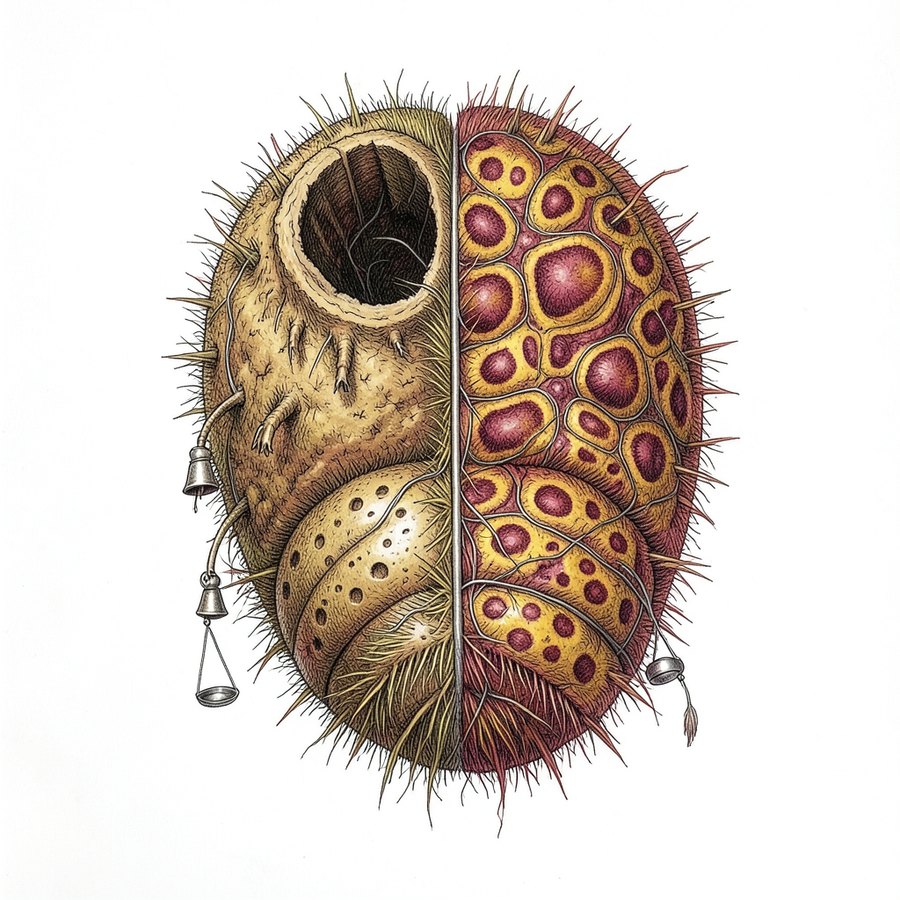
Some goods ripen only with time, and patience bears that time while the nearer reward is left alone, for as long as the promise looks worth keeping.
What is worth having often comes only to the one who can bear the wait.
behavior Stays in one place for seasons, swaying a little, and grows heavier at its tip each year.
What in your life is still ripening, and what would picking it now cost you?
I Dissection
Each organ answers one question about the idea. The framed one, its intake, is the dominant organ: the being's class, the one the idea could not lose and stay itself.
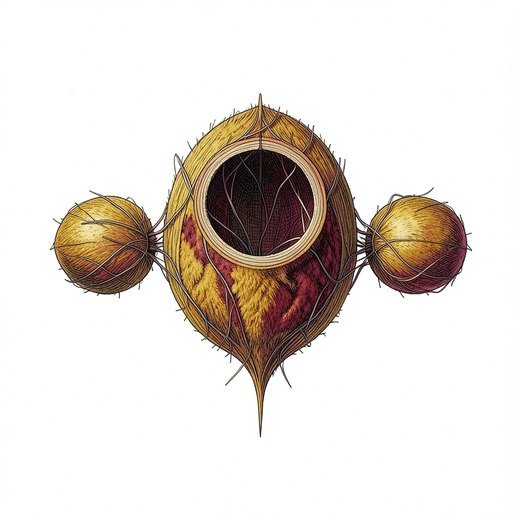
Fig. 1. Kernel
Delayed gratification
Which premise, if it were false, would kill this idea?
Its premise is that some goods come only with time, and that the waiting and its pains can be borne while the good is held in view.2, 3
drawn as: core capsule · view: cross section
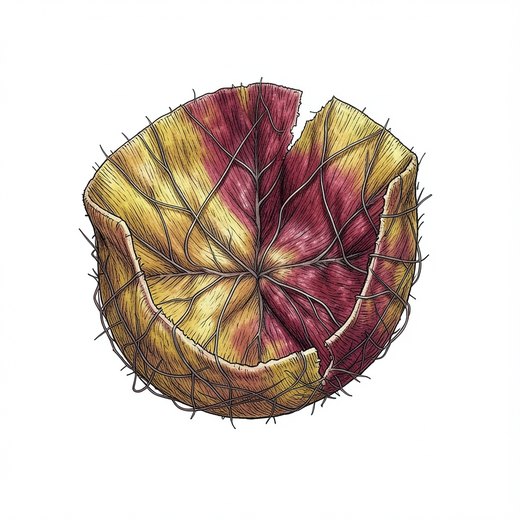
Fig. 2. Boundary
Marshmallow test
What sets it apart from what it is not, and how does it keep that distinction?
It is set against haste, the reach for a good before its time, and it holds that line each time the nearer, smaller reward is left untouched.4
drawn as: membrane · view: pressed
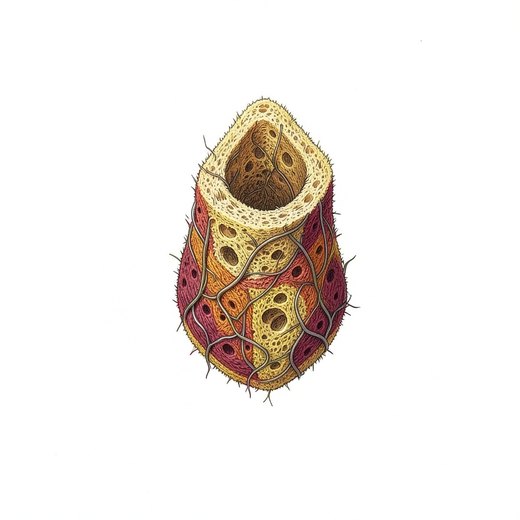
Fig. 3. Intake
Dripping water
❦ dominant organWhat must it feed on to work? What has to be present, noticed or supplied?
It feeds on time, and on trust that the promise will be kept. Children wait far longer for a treat when the adult offering it has kept an earlier promise.5
drawn as: receptor · view: detached
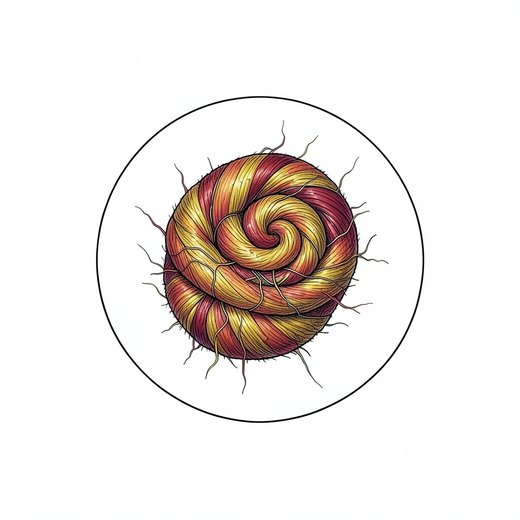
Fig. 4. Mechanism
Averted gaze
How does it turn what it takes in into what it gives out?
It works by restraint held steady, with attention turned away from the reward. Children who looked away or thought of something pleasant waited longest.4
drawn as: ganglion · view: microscope
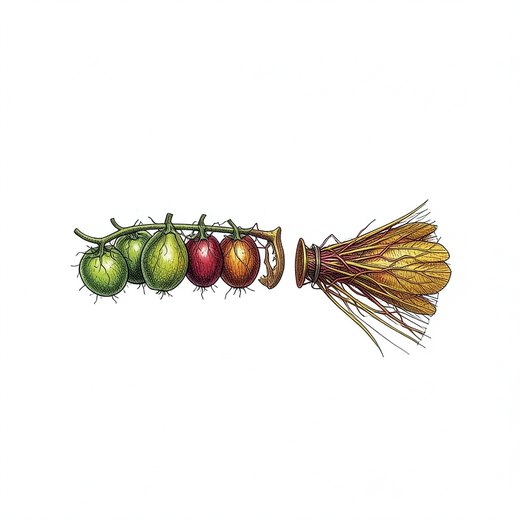
Fig. 5. Output
Precious fruit
What does it make possible, visible or knowable?
It yields what only time can ripen, the farmer's crop after the early and late rains, the larger reward, a skill formed over years.1
drawn as: effector · view: exploded
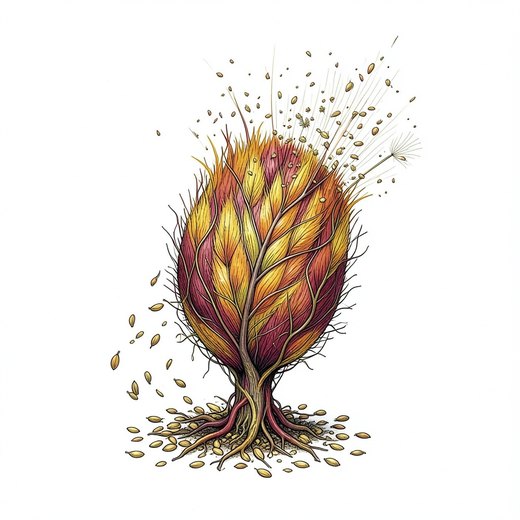
Fig. 6. Dispersal
Cloud of witnesses
What part of it travels into other minds, ideas and fields, and by what vector?
It travels by example, as the Epistle of James holds up the farmer and the prophets as patterns of endurance for others to follow.1
drawn as: signal · view: magnified
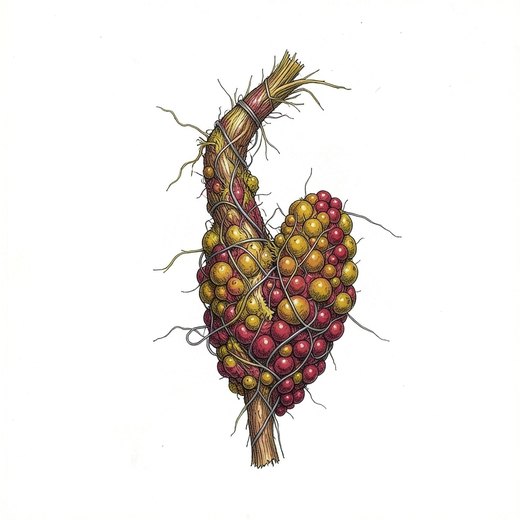
Fig. 7. Decay
Last straw
What can it not digest, where does it fail, and what does it leave behind for others?
It breaks when the promise looks unreliable, since waiting then stops paying off. Held past all reason, it sours into resignation, an endless wait for nothing.5
drawn as: corrosion · view: detached
II Meaning associations
No relations recorded yet.
descent membership food web resemblance or friction
Lineage
A founder, dissected by hand.
Kin
same kind in Roget Volition
same kind in Wilkins Geomancy, Innocence, Music, Hesychology, Subtractive Phenomenology
same kind in WordNet Innocence, Symmetry
same kind in Llull Chiaroscuro, Faith, Geomancy, Innocence, Music, Ritual, Syllable, Symbol, The Shaping Pause, The Festival Calendar, Subtractive Phenomenology
same phylum Entropy, Silence, Hesychology
same dominant organ Faith, Fear, Prophecy, Resonance (Automata), Silence
Genome
III In the world
Echoes
- the marshmallow test
- a farmer waiting for rain
- a bonsai shaped over decades
- a vigil at a bedside
IV Record
How it was drawn
its draw 1, a point in the morphospace (laws §8), drawn by flux-2-klein-4b.safetensors.
| axis | value | |
|---|---|---|
| book | automata | |
| symmetry | asymmetric | |
| organization | segmented | |
| silhouette | coil | |
| scale | microscopic | |
| proportion | swollen | |
| growth | sedimentary | |
| articulation | seamless latent | |
| openness | sheet latent | |
| skeleton | test | |
| locomotion | jetting | |
| pattern | spots latent | |
| coloration | eyespots latent | |
| substance | woven fibre | |
| surface | pitted | |
| palette | saffron | |
| luminosity | sheen | |
| transparency | opaque latent | |
| gesture | balances | |
| unity | unmarked latent | |
| modality | necessary latent | |
| causation | final latent | |
| determinacy | crisp latent | |
| fusion | seam | |
| anomaly | scale clash | |
| graft | scales pans | |
| technique | hatching | |
| viewpoint | below | |
| value | high key latent | |
| balance | grounded latent | |
| density | intricate latent | |
| rhythm | alternating latent | |
| saturation | accent latent | |
| appendages | bells, valves | |
| anchor (body) | a termite mound cut open to show its ventilation shafts | |
| anchor (detail) | a reaction-diffusion pattern of spots and labyrinthine stripes |
Sources
- The Epistle of James 5:7 to 11
- Thomas Aquinas, Summa Theologiae, II-II, question 136, on patience (c. 1270)
- Simone Weil, Attente de Dieu (1950)
- Walter Mischel, Ebbe B. Ebbesen and Antonette Raskoff Zeiss, Cognitive and Attentional Mechanisms in Delay of Gratification (Journal of Personality and Social Psychology, 1972)
- Celeste Kidd, Holly Palmeri and Richard N. Aslin, Rational Snacking: Young Children's Decision-Making on the Marshmallow Task Is Moderated by Beliefs about Environmental Reliability (Cognition, 2013)
❦