a founder of the codex
Mimesis
Similimorpha reddens·the Returning Moth
From Latin similis, like, Greek morphe, form, and Latin reddere, to give back; a form that gives back what it sees.
- Level
- Conceptorganism
- Book
- Semaphorathe bestiary of display
- Phylum
- Linkimage schema
- Class
- Outputits display
- Niche
- Consumerother ideas
- Mode
- Fictionhow it keeps existing
- Stage
- Matureindividuated
- Status
- Living
- Habitat
- City
Its kinds · Roget, 1852: Relation · Wilkins, 1668: Operation · WordNet, 1990: Act · Llull, 1308: F · Imaginative
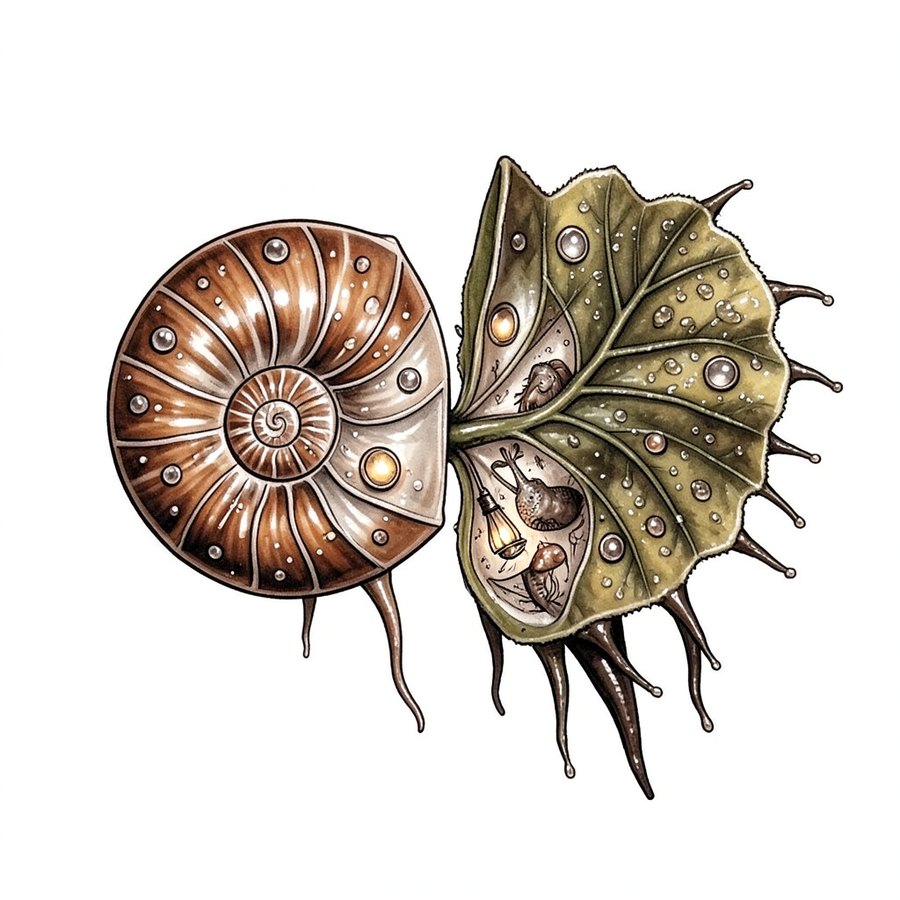
Making a likeness is a way of knowing and of becoming, and also the oldest way of being deceived.
We become what we copy, and we copy what we see others want.
behavior Settles beside whatever it watches and slowly takes on its pattern, until the two can no longer be told apart.
Which of your desires did you first see in someone else?
I Dissection
Each organ answers one question about the idea. The framed one, its output, is the dominant organ: the being's class, the one the idea could not lose and stay itself.
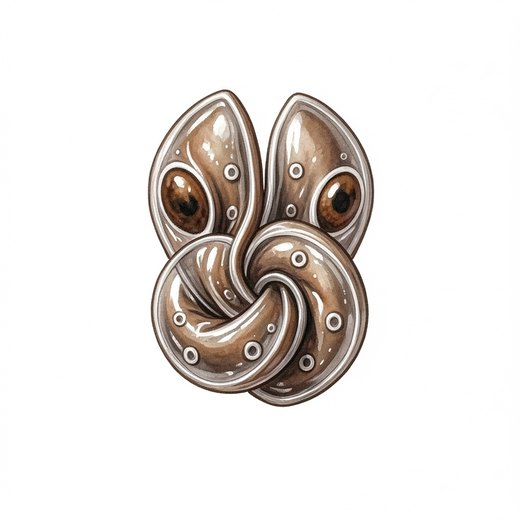
Fig. 1. Kernel
Speaking likeness
Which premise, if it were false, would kill this idea?
Making a likeness of something lets the likeness stand in for it, show it and teach it.1, 3
drawn as: glyph · view: magnified
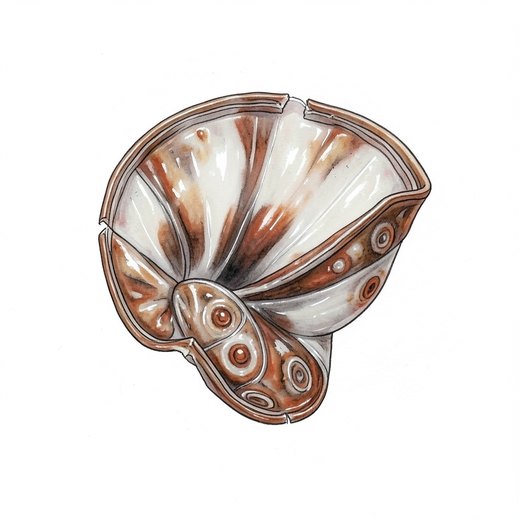
Fig. 2. Boundary
Picture plane
What sets it apart from what it is not, and how does it keep that distinction?
It is set apart from the thing itself by the gap that keeps a copy a copy; close the gap and there is no likeness, only a second thing.2
drawn as: margin · view: series
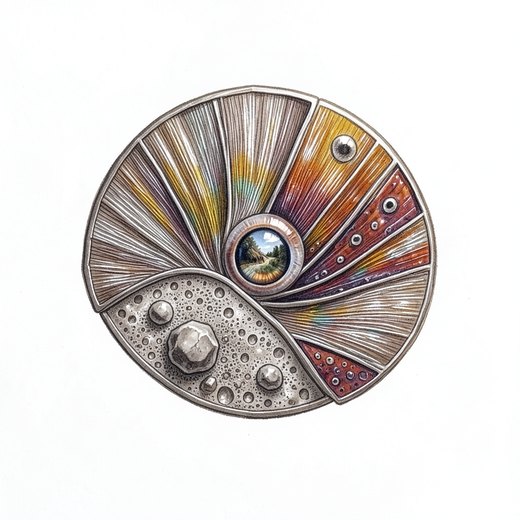
Fig. 3. Intake
Life model
What must it feed on to work? What has to be present, noticed or supplied?
It feeds on a model, a person, a gesture or a world, watched closely enough to be taken in.1
drawn as: ocellus · view: magnified
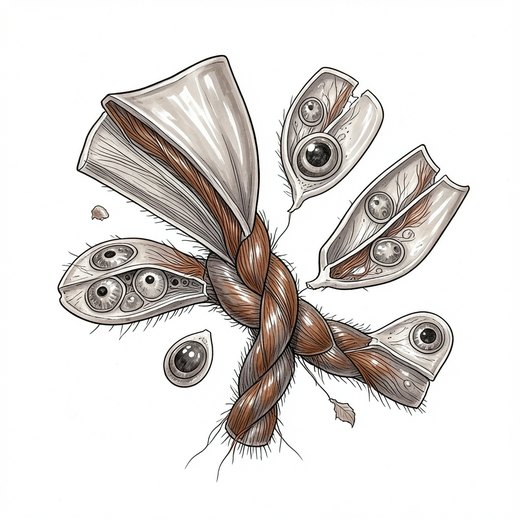
Fig. 4. Mechanism
Squaring up
How does it turn what it takes in into what it gives out?
It selects what it watches and carries it into another medium, voice, paint, gesture or skin, keeping the relations and changing the matter.3
drawn as: chromatophore · view: pinned
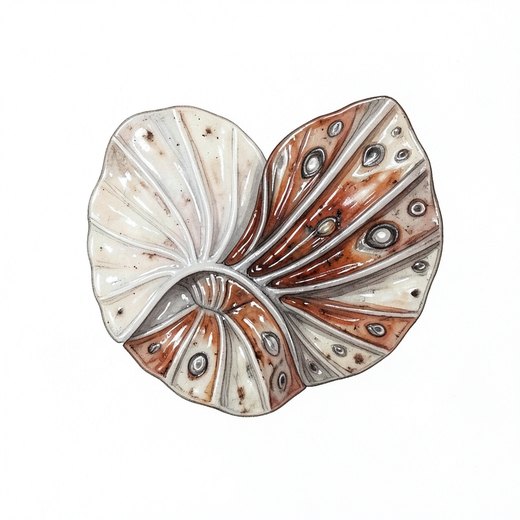
Fig. 5. Output
Trompe-l'oeil
❦ dominant organWhat does it make possible, visible or knowable?
It gives copies that can be learned from, believed, desired or mistaken for their model.1, 5
drawn as: display · view: detached
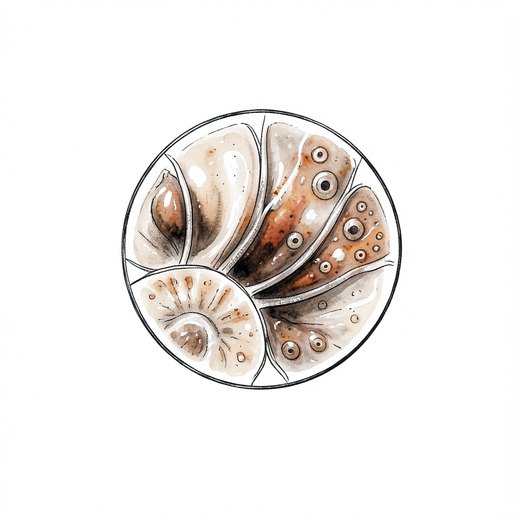
Fig. 6. Dispersal
Triangular desire
What part of it travels into other minds, ideas and fields, and by what vector?
It spreads the way imitation spreads, children copying adults and rivals copying each other's desires.4
drawn as: ink · view: microscope
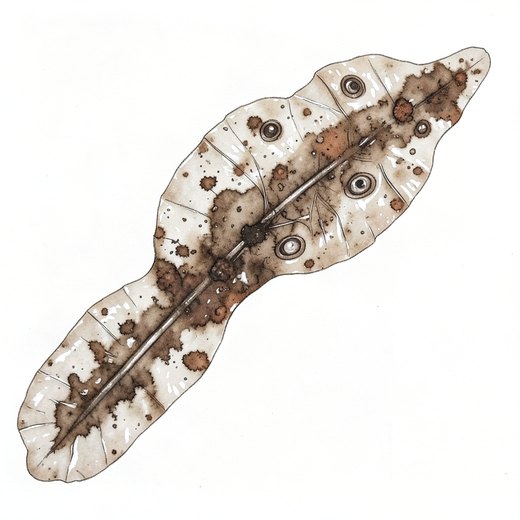
Fig. 7. Decay
Simulacrum
What can it not digest, where does it fail, and what does it leave behind for others?
It cannot reach what has no model, and it slides into deception, rivalry or the empty copy of a copy.2, 4
drawn as: palimpsest · view: pressed
II Meaning associations
descent membership food web resemblance or friction
Lineage
A founder, dissected by hand.
Kin
same kind in Roget Entanglement
same kind in WordNet Geomancy, Ritual, Knowing Trust
same kind in Llull Apophenia, Dream, Symmetry, Afterlistening, Poetry
same phylum Apophenia, Entanglement, Resonance (Automata), Symbol, Shared Breath, Witnessed Relief, Witnessed Relief (Mycelia)
same dominant organ Apophenia, Chiaroscuro, Echolalia, Emergence, Erosion, Nostalgia, Placebo, Rain, Babelhum, Afterlistening, The Festival Calendar
Genome
- likeness
- representation
- imitation also in Echolalia
- desire
- model
III In the world
Echoes
- a viceroy butterfly wearing the pattern of a monarch
- a child learning a word by repeating it
- a painted window mistaken for a real one
- fashions that spread by imitation
IV Record
How it was drawn
its draw 1, a point in the morphospace (laws §8), drawn by flux-2-klein-4b.safetensors.
| axis | value | |
|---|---|---|
| book | semaphora | |
| symmetry | bilateral | |
| organization | nested | |
| silhouette | vase | |
| scale | microscopic | |
| proportion | graded latent | |
| growth | apical | |
| articulation | jointed latent | |
| openness | hollow latent | |
| skeleton | exoskeleton latent | |
| locomotion | unmarked latent | |
| pattern | plain latent | |
| coloration | eyespots | |
| substance | membrane | |
| surface | velvety | |
| palette | sepia | |
| luminosity | points | |
| transparency | translucent latent | |
| gesture | bursts | |
| unity | integral latent | |
| modality | unmarked latent | |
| causation | material latent | |
| determinacy | doubled | |
| fusion | mirrored | |
| anomaly | one break | |
| graft | mirrors | |
| technique | gouache | |
| viewpoint | above | |
| value | high key latent | |
| balance | unmarked latent | |
| density | unmarked latent | |
| rhythm | regular latent | |
| saturation | vivid | |
| appendages | tentacles, lanterns | |
| anchor (body) | an ammonite, a coiled chambered shell with frilled suture lines | |
| anchor (detail) | a sundew leaf covered in glistening sticky tentacles |
Sources
- Aristotle, Poetics, ch. 4
- Plato, Republic, book X
- Erich Auerbach, Mimesis (1946)
- René Girard, Deceit, Desire and the Novel (1961)
- Henry Walter Bates, on mimicry among Amazonian butterflies (1862)
❦