a founder of the codex
Erosion
Abrasoria lenta·the Patient Scour
From Latin abradere, to scrape away, and lentus, slow, for a slow scraper of the land.
- Level
- Conceptorganism
- Book
- Artesthe natural history of animal builders
- Phylum
- Verticalityimage schema
- Class
- Outputits structure
- Niche
- Decomposerwhat is dead
- Mode
- Habithow it keeps existing
- Stage
- Matureindividuated
- Status
- Living
- Habitat
- Ruin
Its kinds · Roget, 1852: Inorganic Matter · Wilkins, 1668: World · WordNet, 1990: Process · Llull, 1308: I · Elementative
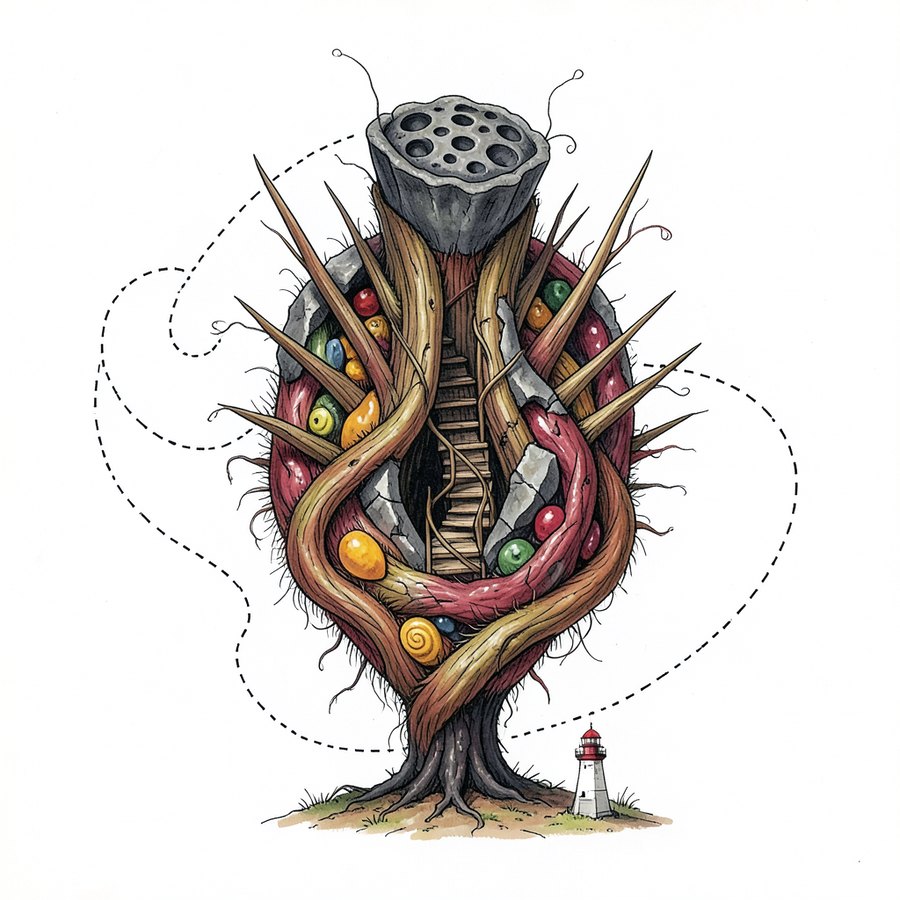
Water, wind and ice wear down whatever stands above them, grain by grain, and carry it to low places where it builds new ground, so erosion makes landforms by taking land away.
Whatever stands up is already being carried down.
behavior Lies almost still for centuries, works fastest in storms, and leaves its hardest parts standing alone as everything around them is carried off.
What hard part of an old memory still stands after the rest has worn away?
I Dissection
Each organ answers one question about the idea. The framed one, its output, is the dominant organ: the being's class, the one the idea could not lose and stay itself.
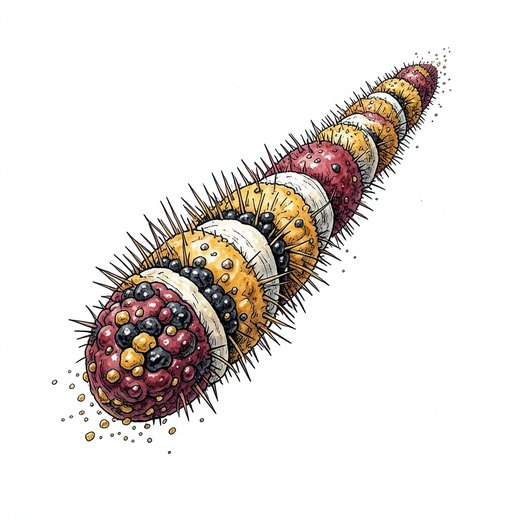
Fig. 1. Kernel
Deep time
Which premise, if it were false, would kill this idea?
Any height left open to water, wind and ice is worn down grain by grain, and small forces given enough time level mountains.1
drawn as: pattern · view: magnified
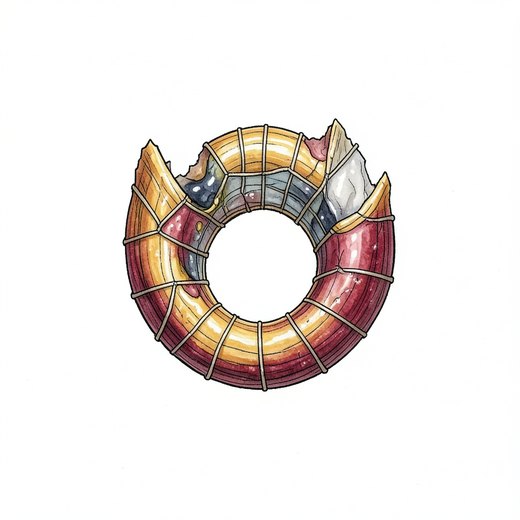
Fig. 2. Boundary
Base level
What sets it apart from what it is not, and how does it keep that distinction?
It is defined against what raises and lays down land, uplift, eruption and deposition. It works on ground standing above base level, the lowest level to which running water can cut.1, 2
drawn as: ring · view: transparent
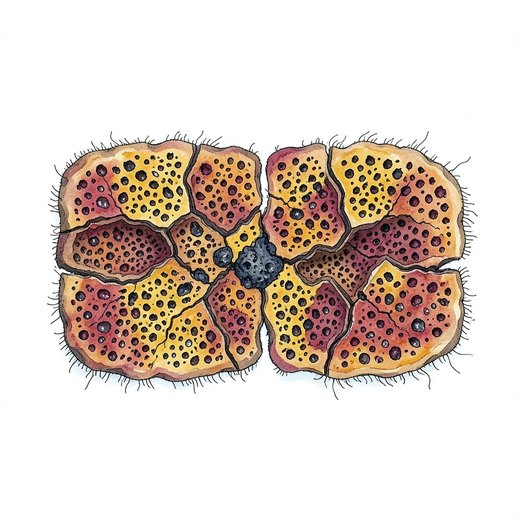
Fig. 3. Intake
Regolith
What must it feed on to work? What has to be present, noticed or supplied?
It feeds on bare rock and soil open to the weather, and on the cracks and loose grains that frost, roots and chemical weathering prepare for it.3
drawn as: materials · view: detached
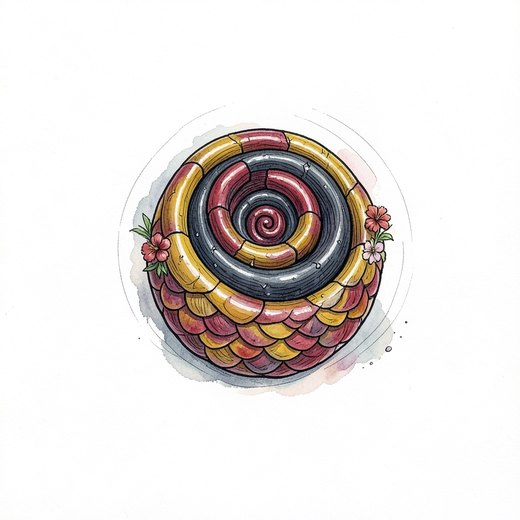
Fig. 4. Mechanism
Scour
How does it turn what it takes in into what it gives out?
Running water, moving ice and wind drag grains over the ground, and each pass scrapes a little away, so the work is done by repetition over long spans of time.3, 1
drawn as: spinneret · view: at work
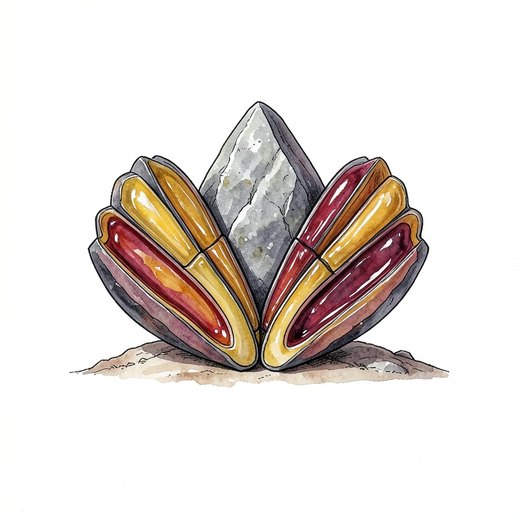
Fig. 5. Output
Inselberg
❦ dominant organWhat does it make possible, visible or knowable?
It carves valleys, canyons and cliffs, and leaves the hardest rock standing, such as an inselberg rising alone above the gentle slope of bare rock worn around it, the pediment or glacis.5
drawn as: structure · view: cross section
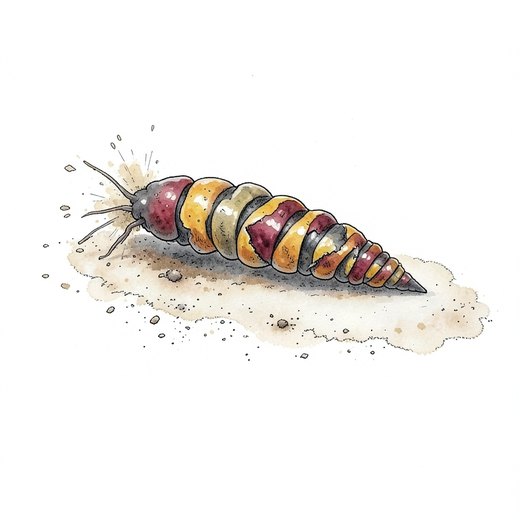
Fig. 6. Dispersal
Delta
What part of it travels into other minds, ideas and fields, and by what vector?
What it removes travels as sediment, carried by rivers and wind to deltas, dunes and the sea floor, where it settles in layers that become the rock of future land.1
drawn as: larva · view: in situ
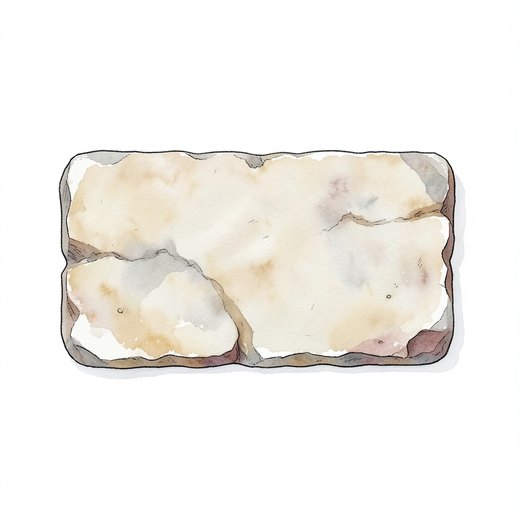
Fig. 7. Decay
Peneplain
What can it not digest, where does it fail, and what does it leave behind for others?
It slows as it succeeds. The lower the land, the slower the wearing, and an old landscape ends as a nearly level plain close to base level, the peneplain, until new uplift starts the work again.4, 2
drawn as: empty work · view: pressed
II Meaning associations
No relations recorded yet.
descent membership food web resemblance or friction
Lineage
A founder, dissected by hand.
Kin
same kind in Roget Fire, Rain, Salt, Storm, Wind
same kind in WordNet Breath, Entelechy, Entropy, Fire, Metamorphosis, The Common Lung, Self-Fulfilling Alarm, Shared Breath, Self-Ending Order, Tongue Horizon, Witnessed Relief, Witnessed Relief (Mycelia), Commemorative Revision, Fear's Breath
same kind in Llull Amber, Emergence, Entanglement, Entropy, Fire, Rain, Resonance, Resonance (Automata), Salt, Storm, Wind, Self-Ending Order
same phylum Faith, Innocence, Rain, Vertigo
same dominant organ Apophenia, Chiaroscuro, Echolalia, Emergence, Mimesis, Nostalgia, Placebo, Rain, Babelhum, Afterlistening, The Festival Calendar
Genome
- wearing
- repetition also in Echolalia, Ritual
- sediment
- relief also in Chiaroscuro, Witnessed Relief, Witnessed Relief (Mycelia)
- levelling
III In the world
Echoes
- the Grand Canyon
- Uluru rising above the central Australian plain
- a sea stack cut off from its cliff
- stone steps hollowed by centuries of feet
IV Record
How it was drawn
its draw 1, a point in the morphospace (laws §8), drawn by flux-2-klein-4b.safetensors.
| axis | value | |
|---|---|---|
| book | artes | |
| symmetry | amorphous | |
| organization | nested | |
| silhouette | discoid | |
| scale | immense | |
| proportion | compressed | |
| growth | apical | |
| articulation | jointed | |
| openness | spongy latent | |
| skeleton | woody | |
| locomotion | undulating latent | |
| pattern | plain latent | |
| coloration | warning latent | |
| substance | obsidian | |
| surface | filamentous | |
| palette | saffron | |
| luminosity | none | |
| transparency | opaque latent | |
| gesture | coils | |
| unity | fragment latent | |
| modality | contingent latent | |
| causation | efficient latent | |
| determinacy | unmarked latent | |
| fusion | graft | |
| anomaly | petrified | |
| graft | stair | |
| technique | watercolour | |
| viewpoint | motion | |
| value | chiaroscuro latent | |
| balance | leaning latent | |
| density | graded detail latent | |
| rhythm | regular latent | |
| saturation | unmarked latent | |
| appendages | tendrils, spines | |
| anchor (body) | a bowerbird's bower, an avenue of sticks decorated with collected bright objects | |
| anchor (detail) | a lotus seed pod, a flat-topped cone pitted with seed chambers |
Sources
- James Hutton, Theory of the Earth (1788)
- John Wesley Powell, Exploration of the Colorado River of the West and Its Tributaries (1875), on base level
- Grove Karl Gilbert, Report on the Geology of the Henry Mountains (1877)
- William Morris Davis, The Geographical Cycle (Geographical Journal, 1899)
- Lester C. King, Canons of Landscape Evolution (Bulletin of the Geological Society of America, 1953)
❦