a founder of the codex
Echolalia
Echomimus iterans·the Answering Conch
From Greek echo, a returning sound, and mimos, an imitator, and Latin iterans, repeating, for an imitator that repeats what it hears.
- Level
- Conceptorganism
- Book
- Artesthe natural history of animal builders
- Phylum
- Cycleimage schema
- Class
- Outputits structure
- Niche
- Consumerother ideas
- Mode
- Reproductionhow it keeps existing
- Stage
- Juvenileindividuating
- Status
- Living
- Habitat
- Dream
Its kinds · Roget, 1852: Communication of Ideas · Wilkins, 1668: Discourse · WordNet, 1990: Communication · Llull, 1308: E · Man
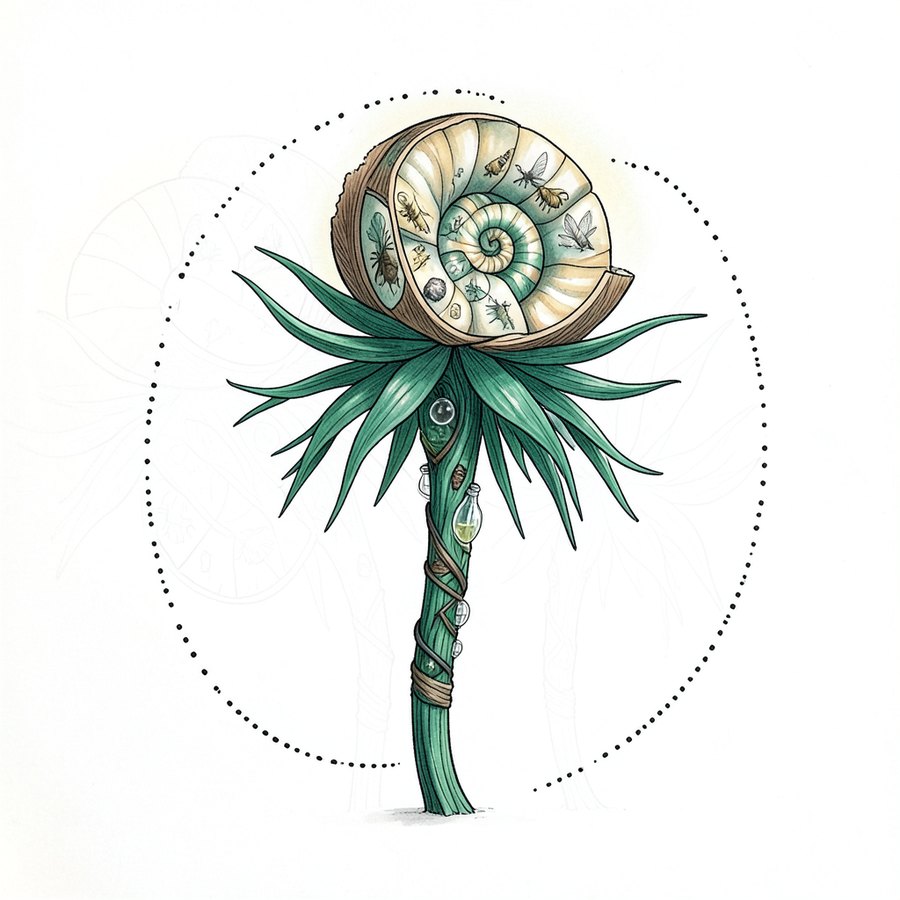
Echolalia gives back the words it hears, whole and in their own tune, and the borrowed phrase can answer, comfort, or grow into speech of one's own.
Speech begins as an echo, and a returned phrase means something new in its new place.
behavior Answers every sound with its own copy, sometimes at once and sometimes days later, and slowly breaks its copies into new calls.
Whose phrase did you last repeat, and what did it mean once it was yours?
I Dissection
Each organ answers one question about the idea. The framed one, its output, is the dominant organ: the being's class, the one the idea could not lose and stay itself.
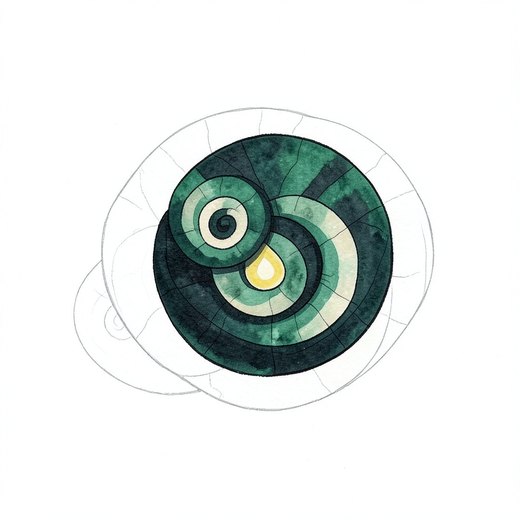
Fig. 1. Kernel
Gestalt
Which premise, if it were false, would kill this idea?
The words a speaker hears can be given back whole, and the returned words still carry meaning in their new place.3
drawn as: pattern · view: series
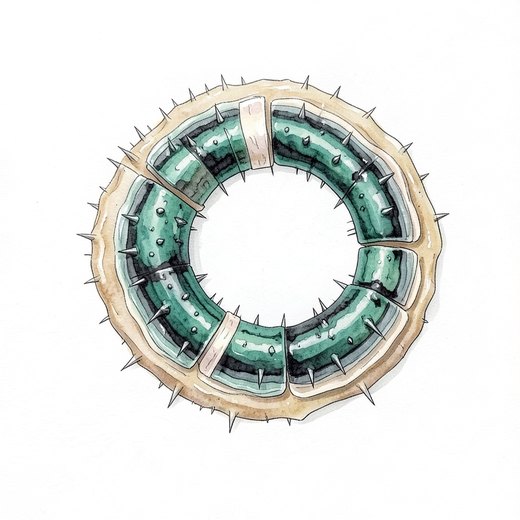
Fig. 2. Boundary
Verbatim
What sets it apart from what it is not, and how does it keep that distinction?
It is defined against original speech, words put together for the moment. Most talk mixes the two, so the line is drawn by how whole and exact the borrowing is.2, 3
drawn as: ring · view: in situ
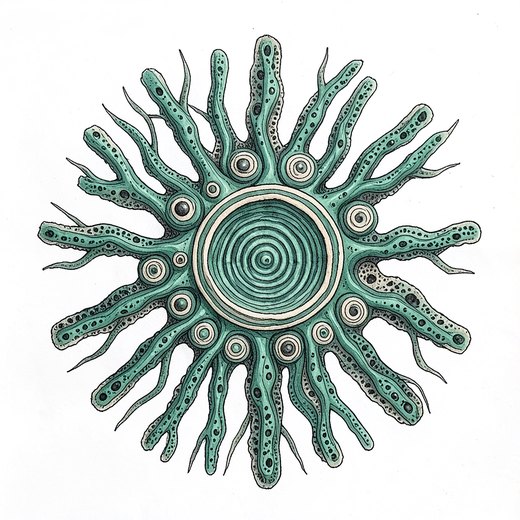
Fig. 3. Intake
Sound bite
What must it feed on to work? What has to be present, noticed or supplied?
It feeds on phrases heard whole, from carers, songs and screens, taken in as single chunks before their parts are understood.3, 4
drawn as: materials · view: magnified

Fig. 4. Mechanism
Mitigation
How does it turn what it takes in into what it gives out?
It repeats what it took in, at once or hours and days later, and repetition loosens each chunk until its parts can be recombined into new sentences.2, 4
drawn as: spinneret · view: exploded
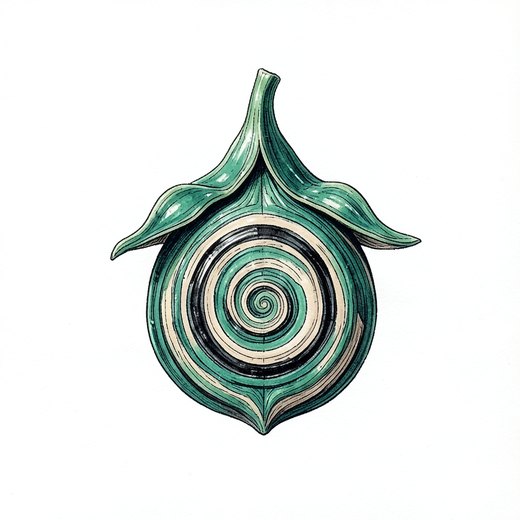
Fig. 5. Output
Scripting
❦ dominant organWhat does it make possible, visible or knowable?
It gives back speech in the voice and tune of its source, sometimes long after it was heard, and the echo can answer, ask, comfort or keep a turn in talk.3, 2
drawn as: structure · view: pressed
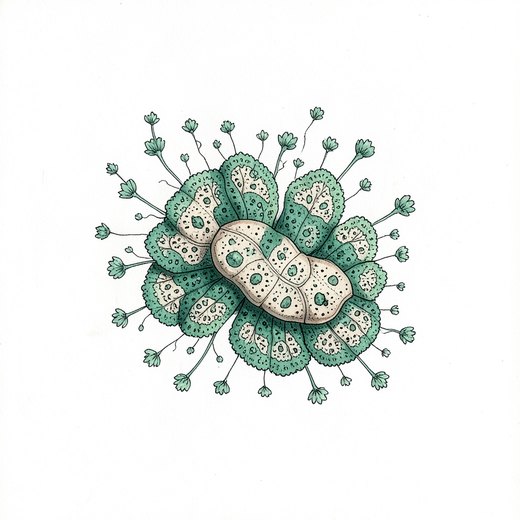
Fig. 6. Dispersal
Parroting
What part of it travels into other minds, ideas and fields, and by what vector?
It spreads by imitation, as toddlers take up the phrases of those around them, parrots copy voices, and a catchphrase passes through a family or a crowd.4
drawn as: larva · view: series
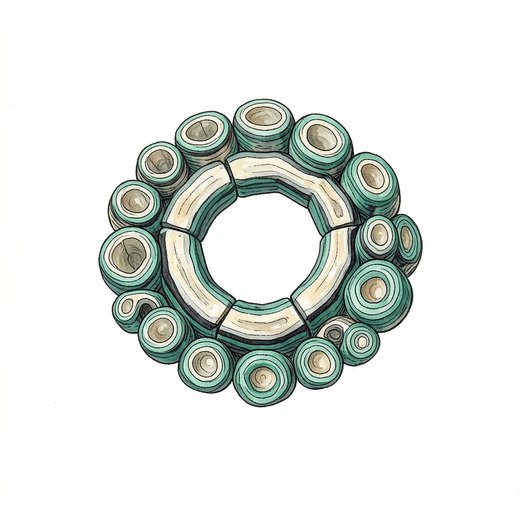
Fig. 7. Decay
Semantic satiation
What can it not digest, where does it fail, and what does it leave behind for others?
It fails as a closed loop, the same phrase returned until it is empty sound. In Ovid's telling, the nymph who could only repeat the last words of others wasted away until only her voice was left.1
drawn as: empty work · view: cast
II Meaning associations
No relations recorded yet.
descent membership food web resemblance or friction
Lineage
A founder, dissected by hand.
Kin
same kind in Roget Syllable, Symbol, Babelhum, Poetry
same kind in Wilkins Prophecy, Syllable, Symbol, Babelhum, Tongue Horizon, Poetry
same kind in WordNet Chiaroscuro, Music, Prophecy, Syllable, Symbol, Babelhum, Poetry
same kind in Llull Memory, Nostalgia, Placebo, Presence, Prophecy, Solitude, Volition, Knowing Trust, Self-Fulfilling Alarm, Tongue Horizon, Witnessed Relief, Witnessed Relief (Mycelia), Commemorative Revision, The Shared Cell, Simultaneous Remembering, Hesychology
same phylum Breath, Metamorphosis, Resonance, Commemorative Revision, Fear's Breath, The Festival Calendar, Simultaneous Remembering, Poetry
same dominant organ Apophenia, Chiaroscuro, Emergence, Erosion, Mimesis, Nostalgia, Placebo, Rain, Babelhum, Afterlistening, The Festival Calendar
Genome
III In the world
Echoes
- a toddler repeating the last words of a question
- a line from a film quoted at the dinner table
- a parrot speaking in its owner's voice
- an echo off a canyon wall
IV Record
How it was drawn
its draw 1, a point in the morphospace (laws §8), drawn by flux-2-klein-4b.safetensors.
| axis | value | |
|---|---|---|
| book | artes | |
| symmetry | concentric | |
| organization | nested | |
| silhouette | scroll | |
| scale | hand | |
| proportion | swollen latent | |
| growth | budding | |
| articulation | telescoping latent | |
| openness | hollow latent | |
| skeleton | woody | |
| locomotion | rolling latent | |
| pattern | spots latent | |
| coloration | plain latent | |
| substance | paper | |
| surface | banded | |
| palette | malachite | |
| luminosity | inner glow | |
| transparency | translucent latent | |
| gesture | interlaces | |
| unity | fragment | |
| modality | contingent latent | |
| causation | final | |
| determinacy | unmarked latent | |
| fusion | carried | |
| anomaly | echoes | |
| graft | vials | |
| technique | watercolour | |
| viewpoint | three quarter | |
| value | high key latent | |
| balance | cantilevered latent | |
| density | intricate latent | |
| rhythm | regular latent | |
| saturation | vivid latent | |
| appendages | petals | |
| anchor (body) | a sea lily, a cup of feathery arms on a long jointed stalk | |
| anchor (detail) | a nautilus shell cut open to show its spiral chambers |
Sources
- Ovid, Metamorphoses (8 CE), book 3, on Echo and Narcissus
- Leo Kanner, Autistic Disturbances of Affective Contact (Nervous Child, 1943)
- Barry M. Prizant and Judith F. Duchan, The Functions of Immediate Echolalia in Autistic Children (Journal of Speech and Hearing Disorders, 1981)
- Michael Tomasello, Constructing a Language (2003)
❦