a founder of the codex
Apophenia
Simulacrifex nebularis·the Cloud-Face Weaver
From Latin simulacrum, an image or likeness, -fex, maker, and nebula, cloud; the maker of figures out of clouds.
- Level
- Conceptorganism
- Book
- Semaphorathe bestiary of display
- Phylum
- Linkimage schema
- Class
- Outputits display
- Niche
- Parasitethe mechanism of a host idea
- Mode
- Habithow it keeps existing
- Stage
- Matureindividuated
- Status
- Living
- Habitat
- Dream
Its kinds · Roget, 1852: Formation of Ideas · Wilkins, 1668: Natural Power · WordNet, 1990: Cognition · Llull, 1308: F · Imaginative
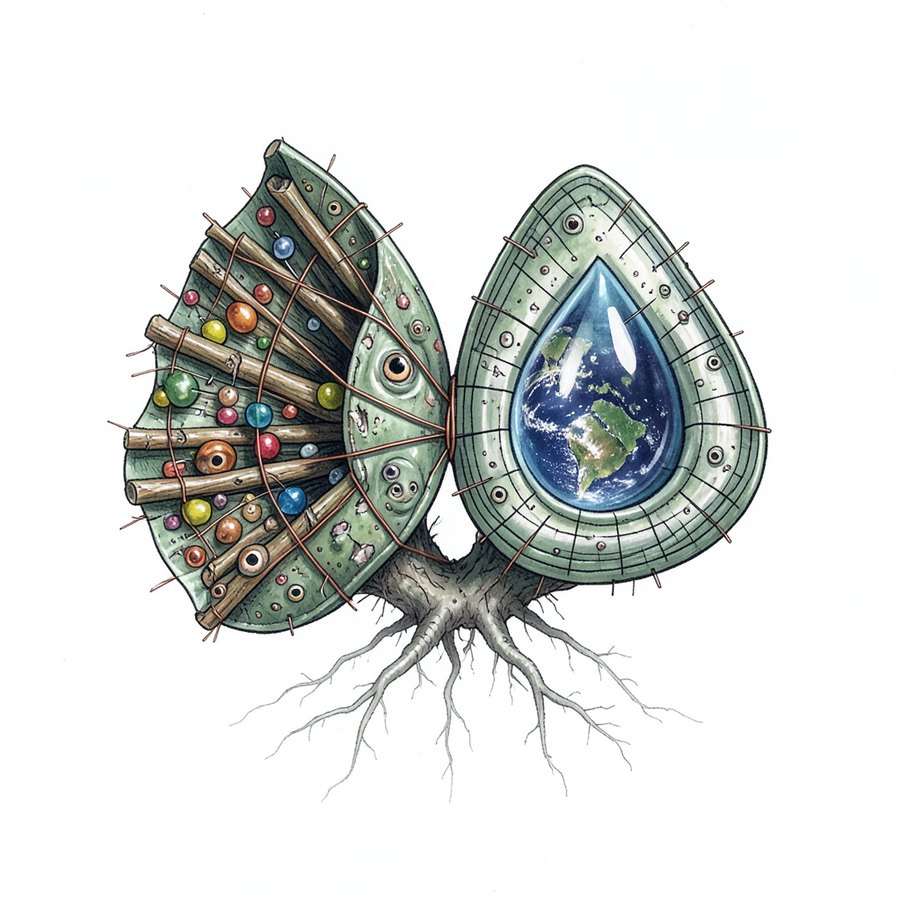
A mind tuned to find patterns finds them in noise too, and the meaning it feels is the same whether the pattern is there or not.
Every pattern is seen before it is proven.
behavior Gathers scattered specks into faces as it moves, and the faces fade when it stops looking.
Which pattern in your life have you never checked against chance?
I Dissection
Each organ answers one question about the idea. The framed one, its output, is the dominant organ: the being's class, the one the idea could not lose and stay itself.
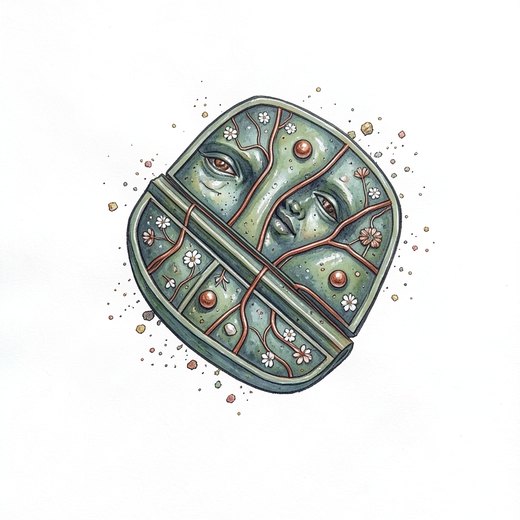
Fig. 1. Kernel
False alarm
Which premise, if it were false, would kill this idea?
A mind tuned to find patterns will also find them where there are none, and the finding comes with a feeling that it means something.2
drawn as: glyph · view: cross section
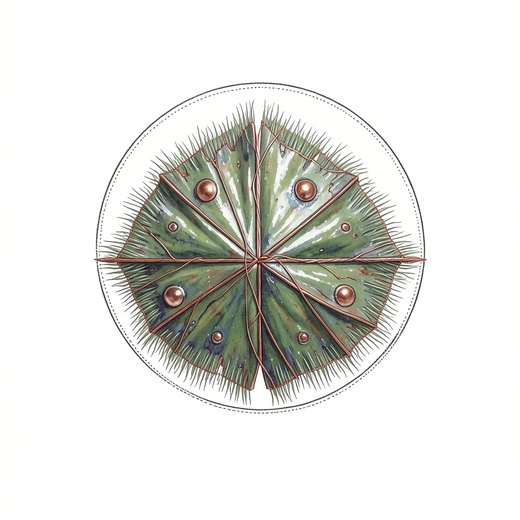
Fig. 2. Boundary
Illusory contour
What sets it apart from what it is not, and how does it keep that distinction?
It is set apart from discovery only by whether the pattern holds when the data change; the felt certainty is the same in both.3
drawn as: margin · view: microscope
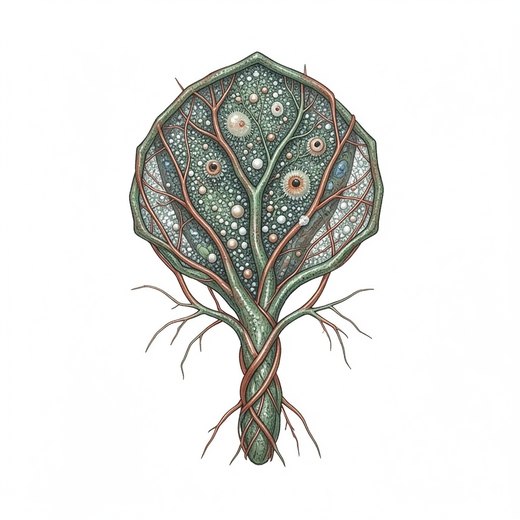
Fig. 3. Intake
Inkblot
What must it feed on to work? What has to be present, noticed or supplied?
It feeds on noise, stains on a wall, clouds, static, coincidences, any field rich enough to hold a face.1
drawn as: ocellus · view: transparent
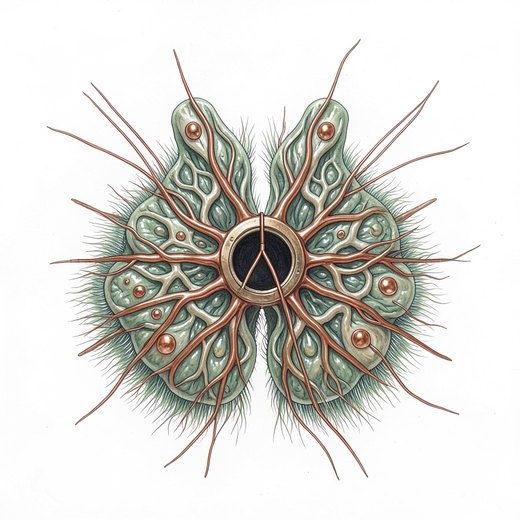
Fig. 4. Mechanism
Constellation
How does it turn what it takes in into what it gives out?
Fragments are joined to fragments by a likeness, and each joining makes the next more likely, until a figure stands out of chance.3
drawn as: chromatophore · view: pinned
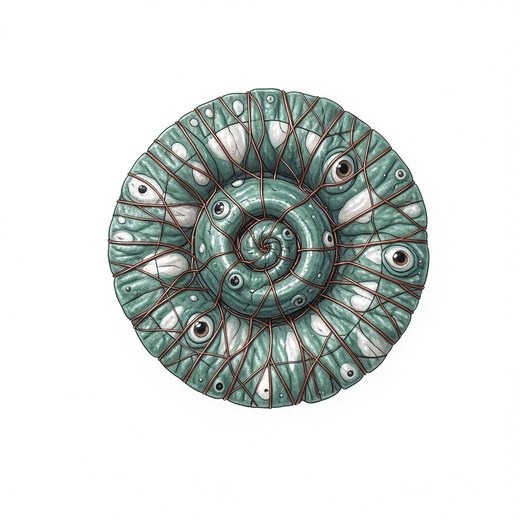
Fig. 5. Output
Omen
❦ dominant organWhat does it make possible, visible or knowable?
It gives invention and paranoia alike, the faces Leonardo saw in stains, the conspiracy, the omen.1, 4
drawn as: display · view: detached
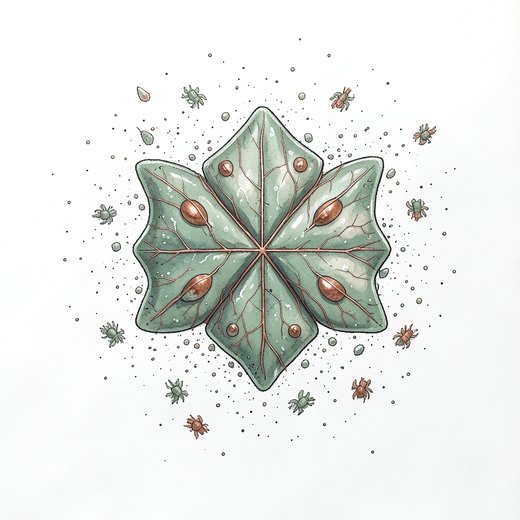
Fig. 6. Dispersal
Moon rabbit
What part of it travels into other minds, ideas and fields, and by what vector?
It travels by being shown; once someone points to the face in the cloud, everyone sees it.4
drawn as: ink · view: series
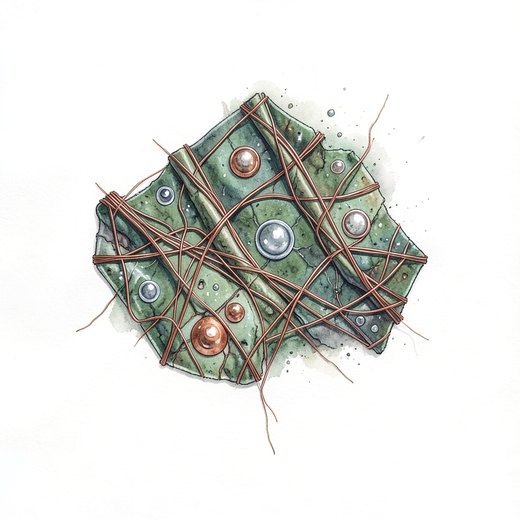
Fig. 7. Decay
Hot hand
What can it not digest, where does it fail, and what does it leave behind for others?
It cannot digest chance itself; shown a run of coin tosses it sees a hand behind them, and it leaves behind connections that cannot be unseen.2
drawn as: palimpsest · view: pressed
II Meaning associations
descent membership food web resemblance or friction
Lineage
A founder, dissected by hand.
Food web
- homology its kernel resembles the kernel of Geomancy
Both make a figure out of chance. Apophenia finds one where there is none; Geomancy builds one on purpose, out of marks made without counting. - feeds its intake → the intake of Geomancy
They eat the same food, noise and random marks. Two beings on one food compete rather than feed each other. - friction its boundary rubs against the boundary of Geomancy
Apophenia is told from discovery only by whether the pattern holds; Geomancy is told from chance by its fixed alphabet of sixteen figures. One has no rule, the other is nothing but rule.
Kin
same kind in Roget Dream, Faith, Memory, Placebo, Presence, Prophecy, Knowing Trust, Afterlistening, Commemorative Revision, Simultaneous Remembering, Hesychology, Subtractive Phenomenology
same kind in Wilkins Dream, Memory, Presence, Afterlistening, Simultaneous Remembering
same kind in WordNet Dream, Faith, Memory, Qualia, Silence, Volition, Afterlistening, Simultaneous Remembering, Hesychology, Subtractive Phenomenology
same kind in Llull Dream, Mimesis, Symmetry, Afterlistening, Poetry
same phylum Entanglement, Mimesis, Resonance (Automata), Symbol, Shared Breath, Witnessed Relief, Witnessed Relief (Mycelia)
same dominant organ Chiaroscuro, Echolalia, Emergence, Erosion, Mimesis, Nostalgia, Placebo, Rain, Babelhum, Afterlistening, The Festival Calendar
Genome
- pattern
- noise
- meaning also in Placebo
- coincidence
- conviction
III In the world
Echoes
- a face in the clouds
- Leonardo's stained wall
- a board of pins and string
- an omen
IV Record
How it was drawn
its draw 3, a point in the morphospace (laws §8), drawn by flux-2-klein-4b.safetensors.
| axis | value | |
|---|---|---|
| book | semaphora | |
| symmetry | asymmetric | |
| organization | segmented | |
| silhouette | bell | |
| scale | microscopic | |
| proportion | sheared latent | |
| growth | accretion | |
| articulation | jointed latent | |
| openness | solid latent | |
| skeleton | endoskeleton latent | |
| locomotion | gliding latent | |
| pattern | reticulate | |
| coloration | nuptial latent | |
| substance | wire tissue | |
| surface | mottled | |
| palette | verdigris | |
| luminosity | sheen | |
| transparency | opaque latent | |
| gesture | gathers | |
| unity | composite latent | |
| modality | contingent | |
| causation | formal latent | |
| determinacy | doubled | |
| fusion | seam | |
| anomaly | inverted | |
| graft | stitches | |
| technique | gouache | |
| viewpoint | profile | |
| value | high key latent | |
| balance | grounded latent | |
| density | intricate latent | |
| rhythm | clustered latent | |
| saturation | muted latent | |
| appendages | ocelli, cilia | |
| anchor (body) | a bowerbird's bower, an avenue of sticks decorated with collected bright objects | |
| anchor (detail) | a dew drop holding a tiny inverted image of the world |
Sources
- Leonardo da Vinci, Treatise on Painting (compiled c. 1540), on seeing figures in stained walls
- Klaus Conrad, Die beginnende Schizophrenie (1958)
- Peter Brugger, From Haunted Brain to Haunted Science (2001)
- Michael Shermer, Patternicity (Scientific American, 2008)
❦