a founder of the codex
Solitude
Eremocardia intenta·the Hollow Listener
From Greek eremos, alone or deserted, and kardia, heart, and Latin intentus, attentive; a lone heart that attends.
- Level
- Conceptorganism
- Book
- Myceliathe mycological monograph
- Phylum
- Containerimage schema
- Class
- Boundaryits mantle
- Niche
- Extremophileabsence
- Mode
- Metamorphosishow it keeps existing
- Stage
- Matureindividuated
- Status
- Living
- Habitat
- Forest
Its kinds · Roget, 1852: Sympathetic Affections · Wilkins, 1668: Manners · WordNet, 1990: State · Llull, 1308: E · Man
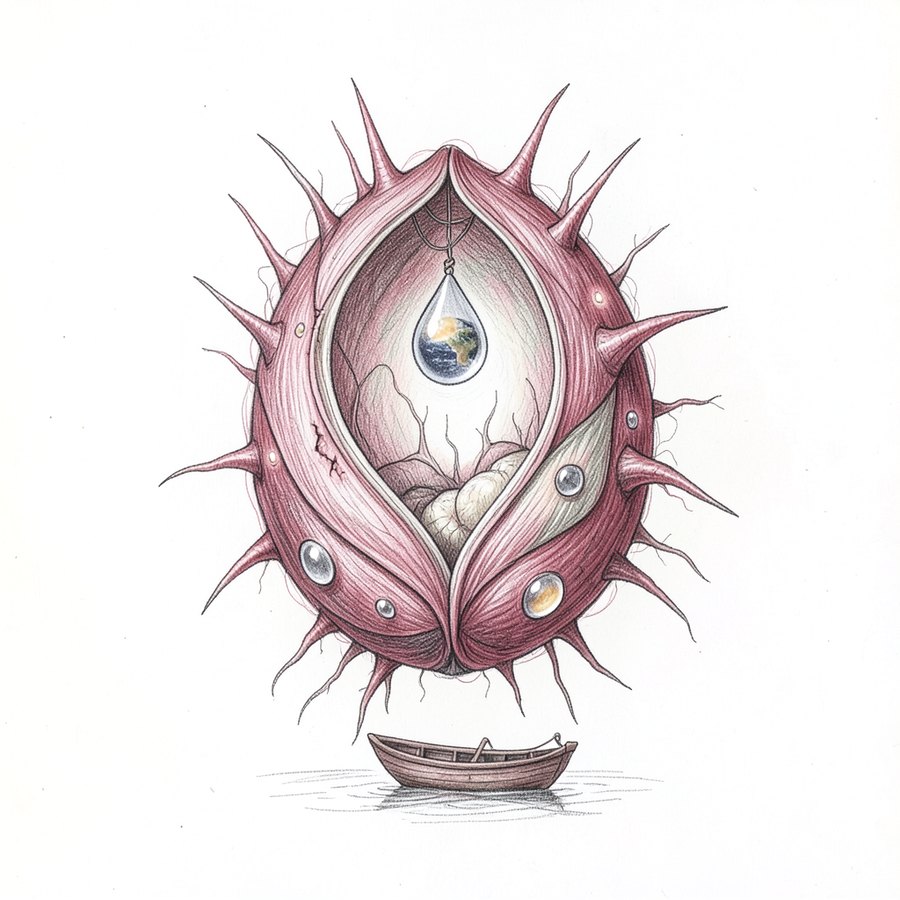
Withdrawing from others changes what can be perceived, and solitude differs from loneliness only in whether the withdrawal was chosen.
The capacity to be alone is a strength, not an absence.
behavior Draws in on itself when others come near, and opens its colours only in empty, silent places.
What could only be noticed in a place made so that no one is watching you?
I Dissection
Each organ answers one question about the idea. The framed one, its boundary, is the dominant organ: the being's class, the one the idea could not lose and stay itself.
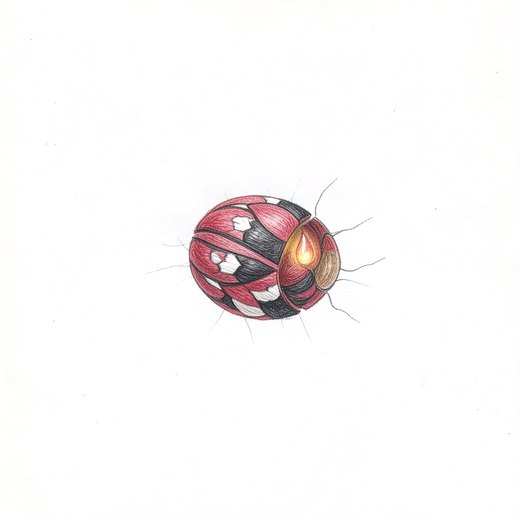
Fig. 1. Kernel
Inner light
Which premise, if it were false, would kill this idea?
Being apart from others, by choice, changes what a mind can notice in itself and in the world.1, 2
drawn as: spore · view: exploded
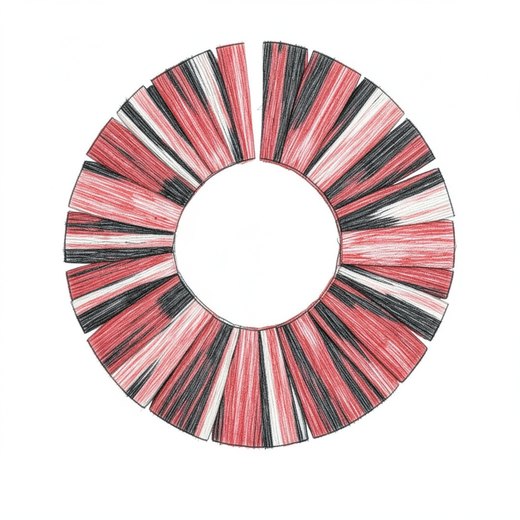
Fig. 2. Boundary
Cloister
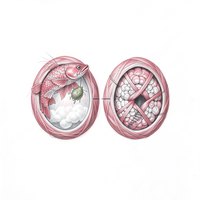
❦ dominant organWhat sets it apart from what it is not, and how does it keep that distinction?
It exists only while a chosen distance from others is kept; when the distance is imposed, or when it closes, solitude becomes loneliness or company.1
drawn as: mantle · view: pinned
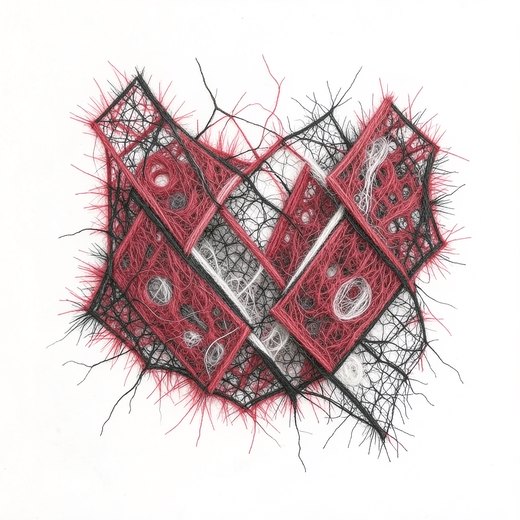
Fig. 3. Intake
Great silence
What must it feed on to work? What has to be present, noticed or supplied?
It feeds on silence, unclaimed time and the absence of other people's attention.2
drawn as: hyphae · view: pinned
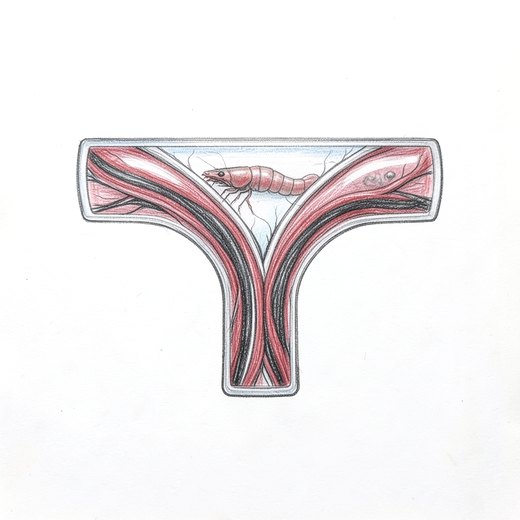
Fig. 4. Mechanism
Recollection
How does it turn what it takes in into what it gives out?
With no one to answer, attention stops being spent on others and turns to thought, landscape and the body.3
drawn as: anastomosis · view: cast
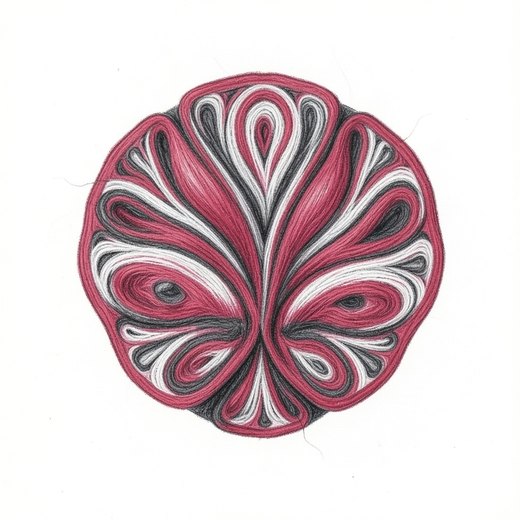
Fig. 5. Output
Reflection
What does it make possible, visible or knowable?
It gives reflection, self-knowledge and the slow work that only uninterrupted time allows.2
drawn as: fruiting body · view: cross section
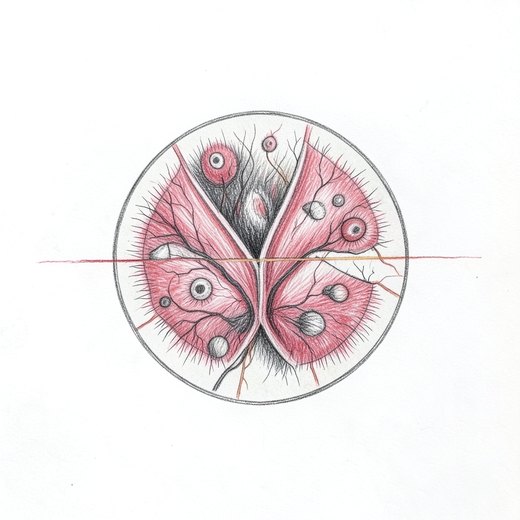
Fig. 6. Dispersal
Hermit's lantern
What part of it travels into other minds, ideas and fields, and by what vector?
It travels in the figures of the hermit, the retreat, the walk alone and the room of one's own, which carry its promise into other lives.4, 3
drawn as: spore print · view: microscope
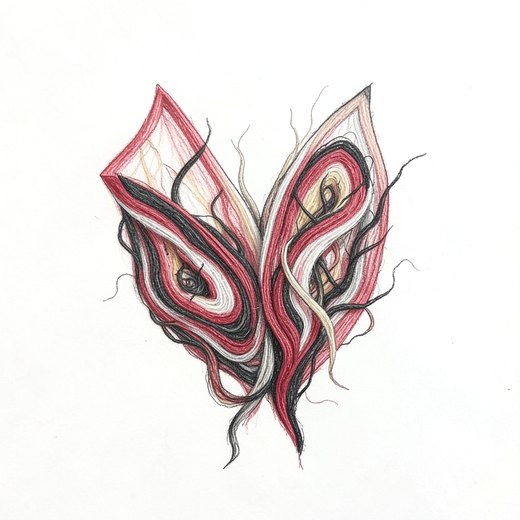
Fig. 7. Decay
Noonday demon
What can it not digest, where does it fail, and what does it leave behind for others?
Forced or prolonged it turns into loneliness, which wounds instead of feeding, and it cannot digest the need to be known by others.5
drawn as: rot front · view: cross section
II Meaning associations
descent membership food web resemblance or friction
Lineage
A founder, dissected by hand.
Offspring
Food web
- friction its kernel rubs against the kernel of Entanglement
Solitude is one mind apart; Entanglement is a pair with no state of its own. Each denies the other's unit. - homology its intake resembles the intake of Entanglement
Both need isolation, Solitude from other people's attention, Entanglement from everything that would touch the pair.
Kin
same kind in Roget Witnessed Relief, Witnessed Relief (Mycelia), The Shared Cell
same kind in WordNet Presence, The Shared Cell
same kind in Llull Echolalia, Memory, Nostalgia, Placebo, Presence, Prophecy, Volition, Knowing Trust, Self-Fulfilling Alarm, Tongue Horizon, Witnessed Relief, Witnessed Relief (Mycelia), Commemorative Revision, The Shared Cell, Simultaneous Remembering, Hesychology
same phylum Amber, Dream, Placebo, The Common Lung, Knowing Trust, The Shared Cell
same dominant organ Amber, Equinox, Tongue Horizon, The Shared Cell
Genome
- withdrawal also in The Shared Cell
- attention also in Afterlistening, Presence, Prophecy, Silence
- silence
- interiority
- autonomy
III In the world
Echoes
- Thoreau's cabin at Walden Pond
- a monk's cell
- a long walk taken alone
- an artist's retreat
IV Record
How it was drawn
its draw 1, a point in the morphospace (laws §8), drawn by flux-2-klein-4b.safetensors.
| axis | value | |
|---|---|---|
| book | mycelia | |
| symmetry | asymmetric | |
| organization | solitary | |
| silhouette | crown | |
| scale | immense | |
| proportion | compressed latent | |
| growth | regenerated | |
| articulation | tethered latent | |
| openness | hollow | |
| skeleton | endoskeleton latent | |
| locomotion | sessile | |
| pattern | plain latent | |
| coloration | countershaded latent | |
| substance | silk | |
| surface | scaled | |
| palette | vermilion | |
| luminosity | points | |
| transparency | clouded latent | |
| gesture | closes | |
| unity | unmarked latent | |
| modality | possible latent | |
| causation | unmarked latent | |
| determinacy | crisp latent | |
| fusion | nested | |
| anomaly | inverted | |
| graft | mirrors | |
| technique | crayon | |
| viewpoint | cutaway | |
| value | unmarked latent | |
| balance | leaning latent | |
| density | sparse | |
| rhythm | unmarked latent | |
| saturation | vivid latent | |
| appendages | rhizoids, spines | |
| anchor (body) | a silk cocoon, an oval case of wound threads around an insect pupa | |
| anchor (detail) | a dew drop holding a tiny inverted image of the world |
Sources
- D. W. Winnicott, The Capacity to be Alone (1958)
- Anthony Storr, Solitude: A Return to the Self (1988)
- Henry David Thoreau, Walden (1854)
- Virginia Woolf, A Room of One's Own (1929)
- John Cacioppo and William Patrick, Loneliness (2008)
❦