a founder of the codex
Fear
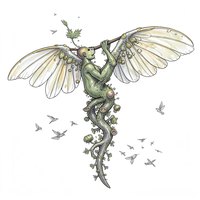
Horripila vigilans·the Bristling Sentinel
From Latin horripilatio, the bristling of the hair, and vigilans, watchful; the watcher that bristles before it sees.
- Level
- Conceptorganism
- Book
- Pathematathe treatise on the passions
- Phylum
- Forceimage schema
- Class
- Intakeits nerve net
- Niche
- Extremophileabsence
- Mode
- Metamorphosishow it keeps existing
- Stage
- Matureindividuated
- Status
- Living
- Habitat
- Forest
Its kinds · Roget, 1852: Personal Affections · Wilkins, 1668: Spiritual Action · WordNet, 1990: Feeling · Llull, 1308: G · Sensitive
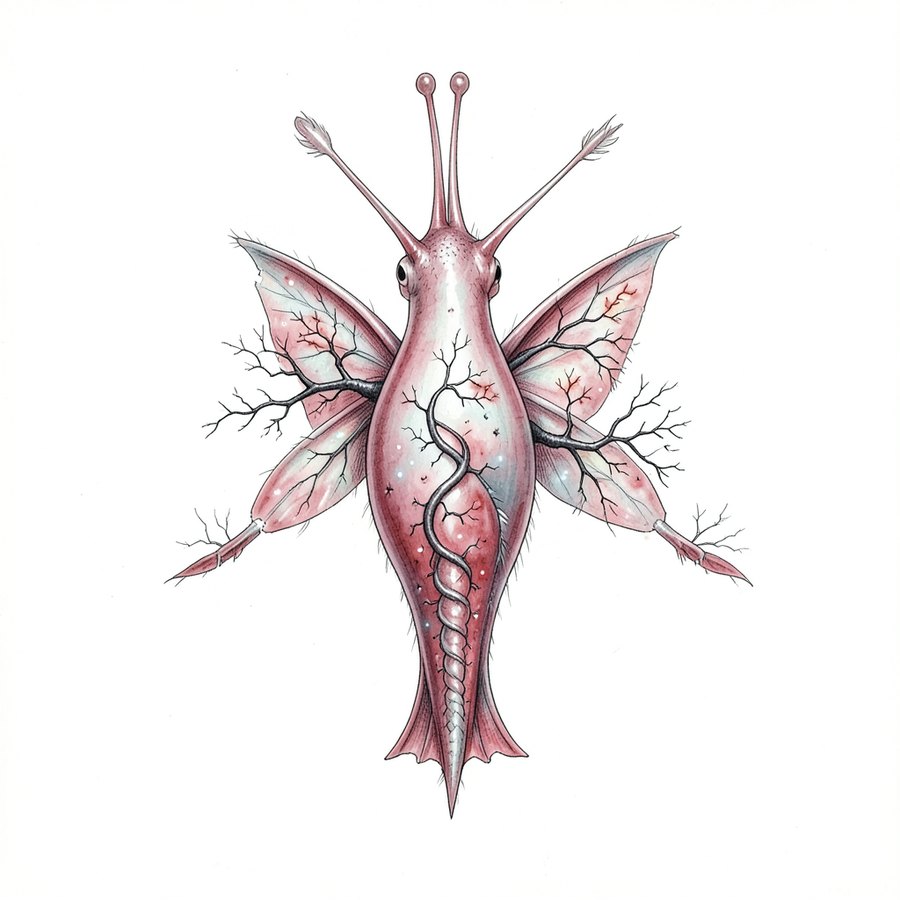
A body that acts on a warning before it understands it survives more often, so fear moves first and asks afterwards.
Fear acts before it knows.
behavior Bristles and freezes at the faintest movement near it, and its colours drain at once.
What did your body decide before you did?
I Dissection
Each organ answers one question about the idea. The framed one, its intake, is the dominant organ: the being's class, the one the idea could not lose and stay itself.
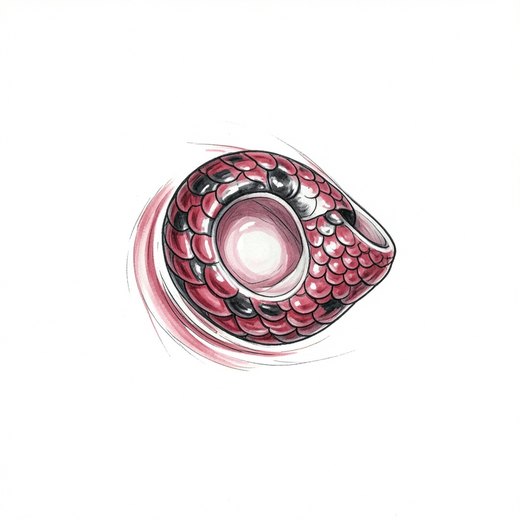
Fig. 1. Kernel
Amygdala
Which premise, if it were false, would kill this idea?
Harm can be sensed before it arrives, and a body that acts on the warning before it understands it survives more often.4
drawn as: spark · view: transparent
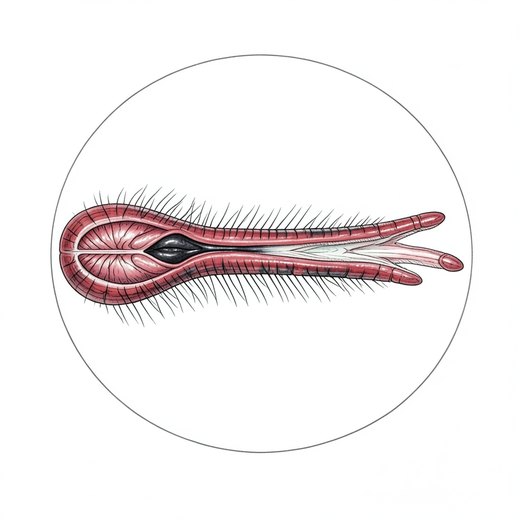
Fig. 2. Boundary
Raised hackles
What sets it apart from what it is not, and how does it keep that distinction?
It is set apart from anxiety by having an object; fear is of something, anxiety of nothing in particular.1
drawn as: skin · view: microscope
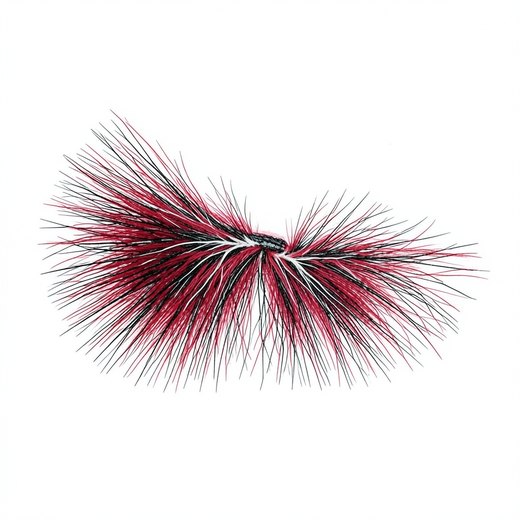
Fig. 3. Intake
Low road
❦ dominant organWhat must it feed on to work? What has to be present, noticed or supplied?
It feeds on signs of threat, a shape in the dark, a sudden sound, a word, and fast routes in the brain take them in before they are seen clearly.4
drawn as: nerve net · view: detached
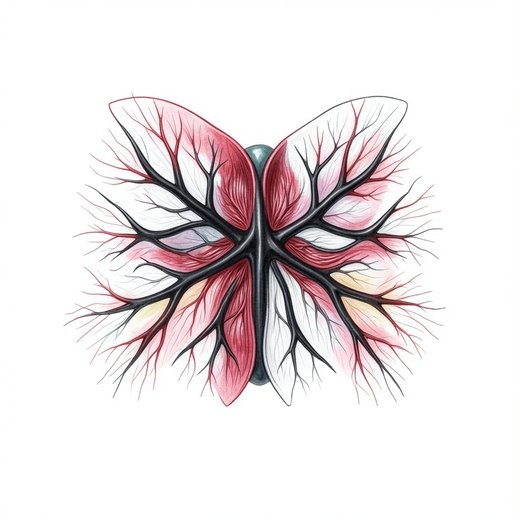
Fig. 4. Mechanism
Fight-or-flight
How does it turn what it takes in into what it gives out?
The warning floods the body; the heart races, breath quickens and blood leaves the skin for the muscles, ready to fight, flee or freeze.3
drawn as: flush · view: transparent
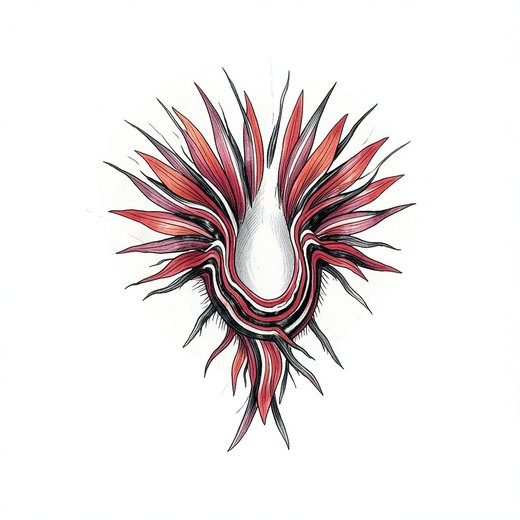
Fig. 5. Output
Startle reflex
What does it make possible, visible or knowable?
It gives flight and stillness, the startle and the hiding, and a memory that marks the place as dangerous.2, 4
drawn as: signal · view: at work
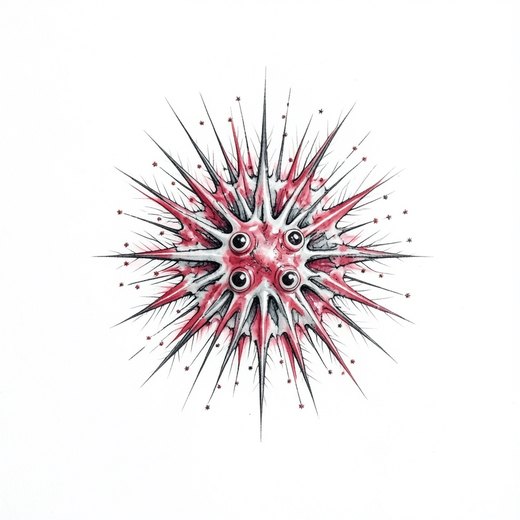
Fig. 6. Dispersal
Stampede
What part of it travels into other minds, ideas and fields, and by what vector?
It travels from face to face faster than words; one frightened animal turns a whole herd, one cry empties a square.2
drawn as: contagion · view: in situ
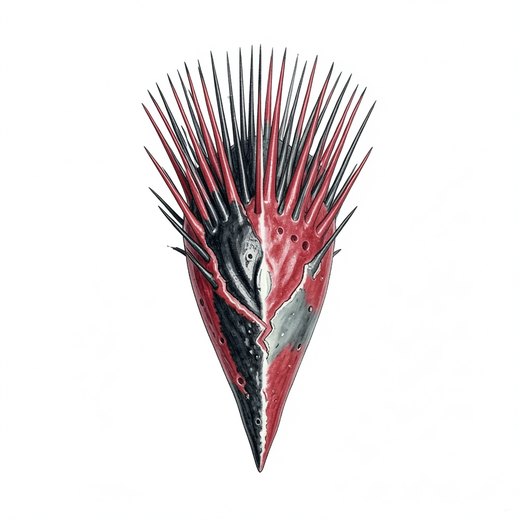
Fig. 7. Decay
Bugbear
What can it not digest, where does it fail, and what does it leave behind for others?
It cannot tell an imagined threat from a real one, and held too long it hardens into dread and phobia, leaving places that cannot be returned to.1, 4
drawn as: afterglow · view: magnified
II Meaning associations
descent membership food web resemblance or friction
Lineage
A founder, dissected by hand.
Offspring
Food web
- feeds its mechanism → the mechanism of Breath
Fear floods the body and quickens the breath; the rhythm Breath keeps without thinking is the first thing fear changes. - feeds the output of Breath → its intake
Breath gives a pace that calms or quickens the whole body; Fear feeds on signs of threat, and a fast shallow breath is read as one. - friction its decay rubs against the kernel of Breath
Breath cannot stop; Fear held too long hardens into dread. The one keeps going, the other gets stuck. - feeds its output → the intake of Storm
Fear gives flight and a startle; Storm feeds on a store of energy held under a lid until something lifts it. A startle is such a lift. - homology its mechanism resembles the kernel of Storm
Both release at once what was held. Storm's instability breaks its cap; Fear floods the body in a moment. - friction its boundary rubs against the boundary of Storm
Storm is held by a physical lid; Fear needs an object. A storm happens to no one in particular, while fear is always someone's. - grafted its intake grafted the mechanism of Storm
Storm's runaway loop, each rise driving the next, can be fed by Fear's food, signs of threat taken in before they are checked. In a crowd, each who flees is a sign of threat to the next. - friction its kernel rubs against the kernel of Symmetry
Symmetry is what stays the same under a change; Fear is a change that sweeps everything before it. One is an invariant, the other a disturbance. - friction its output rubs against the decay of Symmetry
Symmetry breaks in motion; Fear gives motion, the startle and the flight. What Fear makes, Symmetry cannot hold. - homology its dispersal resembles the dispersal of Symmetry
Both travel through faces, Symmetry as a standard of beauty and Fear as an expression caught from one face by the next. The meeting is on the face.
Kin
same kind in Roget Nostalgia, Fear's Breath
same kind in Wilkins Faith, Nostalgia, Silence, Volition, Knowing Trust, Witnessed Relief, Witnessed Relief (Mycelia), Fear's Breath
same kind in WordNet Nostalgia, Vertigo
same kind in Llull Chimera, Qualia, Silence, Vertigo, Babelhum, The Common Lung, Shared Breath, Fear's Breath
same phylum Fire, Storm, Volition, Self-Fulfilling Alarm, Self-Ending Order
same dominant organ Faith, Patience, Prophecy, Resonance (Automata), Silence
Genome
- threat
- alarm also in Fear's Breath
- flight
- vigilance
- contagion also in The Common Lung, Witnessed Relief, Witnessed Relief (Mycelia)
III In the world
Echoes
- a startled herd
- a shadow in the doorway
- a bristling cat
- a held breath
IV Record
How it was drawn
its draw 3, a point in the morphospace (laws §8), drawn by flux-2-klein-4b.safetensors.
| axis | value | |
|---|---|---|
| book | pathemata | |
| symmetry | helical | |
| organization | solitary | |
| silhouette | spire | |
| scale | hand | |
| proportion | tapering | |
| growth | swelling | |
| articulation | seamless latent | |
| openness | hollow latent | |
| skeleton | endoskeleton latent | |
| locomotion | gliding latent | |
| pattern | spots latent | |
| coloration | warning latent | |
| substance | porcelain | |
| surface | crackled | |
| palette | vermilion | |
| luminosity | points | |
| transparency | clouded latent | |
| gesture | quivers | |
| unity | fragment | |
| modality | contingent latent | |
| causation | efficient latent | |
| determinacy | unmarked latent | |
| fusion | sprouting | |
| anomaly | none | |
| graft | pipes | |
| technique | silverpoint | |
| viewpoint | below | |
| value | high key latent | |
| balance | top heavy | |
| density | unmarked latent | |
| rhythm | alternating latent | |
| saturation | vivid latent | |
| appendages | antennae | |
| anchor (body) | a sea angel, a translucent sea snail swimming on two wing-like lobes | |
| anchor (detail) | a Lichtenberg figure, a branching tree of discharge burned into a surface |
Sources
- Søren Kierkegaard, The Concept of Anxiety (1844)
- Charles Darwin, The Expression of the Emotions in Man and Animals (1872)
- Walter B. Cannon, Bodily Changes in Pain, Hunger, Fear and Rage (1915)
- Joseph LeDoux, The Emotional Brain (1996)
❦